Showing posts with label Performance. Show all posts

Sunday, February 26, 2012

"A Choral Reading" (1972) by Gerald Ferguson at Canada

Excerpts of 26 people reciting Gerald Ferguson's A Choral Reading (1972) at Canada, New York, February 11, 2011. Video: 16 Miles

"Someone said Gerry’s life is like trying to get through February in Nova Scotia, it’s really what Gerry’s work is," artist and curator Luke Murphy told Paddy Johnson early this month, referring to the pioneering Canadian conceptual artist Gerald Ferguson (a lifelong resident of the province), who died in 2009, and whose work was recently on view at the Lower East Side's Canada gallery. Ferguson's 1972 work, A Choral Reading, certainly seems to fit that description, requiring intensive labor to create—plenty of hard work to forget about life.

To make A Choral Reading, Fergus set his 50,000-word Standard Corpus of Present Day English Language Usage Arranged By Word Length and Alphabetized Within Word Length piece—its title pretty much sums up its contents—for 26 voices, one voice for each letter. (Amazon has a listing for the work with some nice background information.) Murphy again: "I mean, what else are you going to do in your French village in Nova Scotia–which is really way bleak?"

But it's also February-beating material when it's read aloud. When it was recited on Saturday, February 11, by a group of readers at Canada, the room was warm, the crowd convivial. It was easily one of the most pleasant, unpretentious performances or readings I have ever attended.
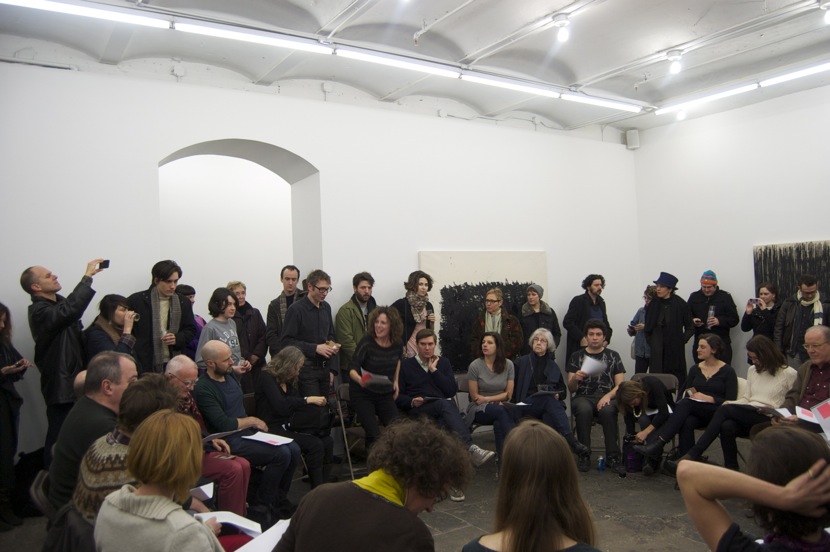

Performance stills.
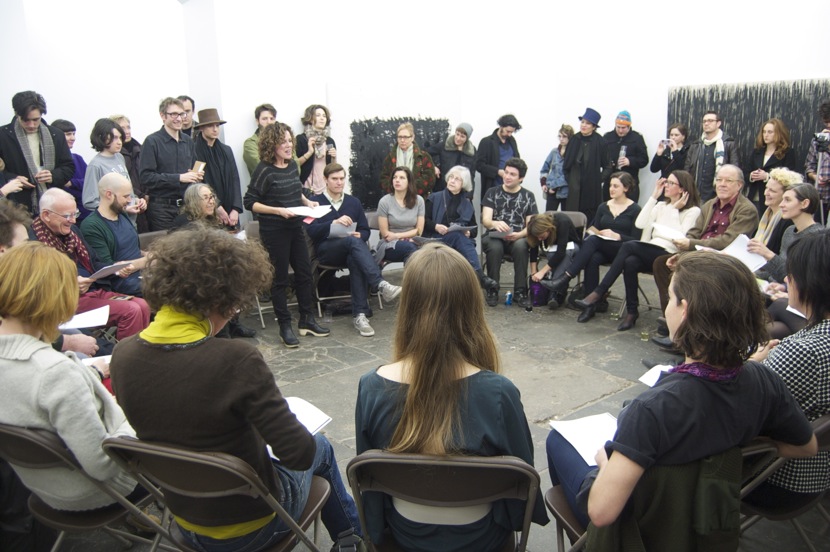

The published version of Ferguson's Standard Corpus includes 20 sections, for words with one letter up to those with 20. At the reading at Canada, the 26 performers read through the first seven sections. Every person speaks at the same time, so each movement begins with a cacophony that gradually gives way to a few people reciting words for quite a while.

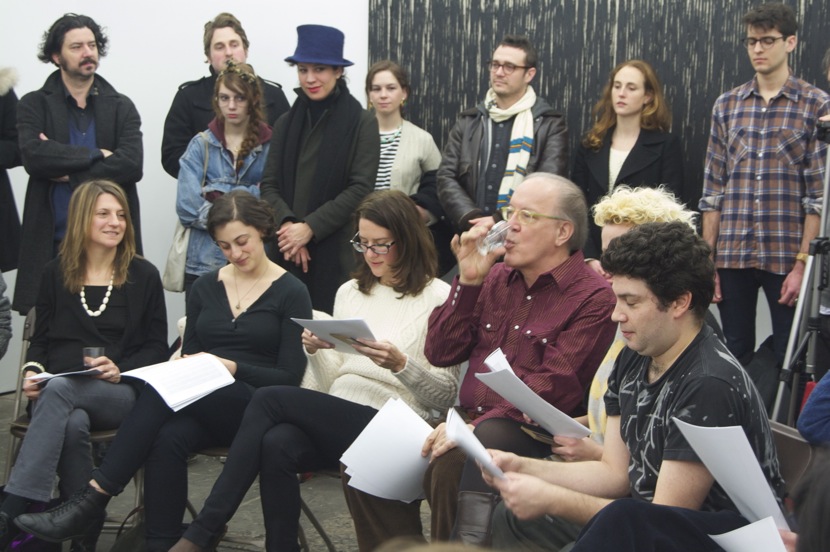
The readers completed the first three sections—one-letter, two-letter, and three-letter words—in less than 90 seconds. The remaining four sections took about 30 minutes, with P, R, and especially S putting in lengthy performances. Readers varied their tempos, and words spilled into, through, and over each other. Some tripped over words and charged on. Though most kept a low profile, dutifully reciting their lists, a few embraced the moment with a bit of theatricality. R, a gentleman in a dark red shirt and lime-green glasses, spoke boldly at times.

It's a hard piece not to love. Built on a ridiculously simple premise, it spirals out in weird ways, random words rubbing up against one another. One man in the audience closed his eyes and listened, while some others whispered to each other, one ear on the action. As the piece fell down to four, then three, then two voices reading seven-letter words (the last few moments are recorded on the video above), most everyone became quiet and watched. S brought it home with "systems." And then there was applause.

There are artist names sprinkled throughout the thousands of words—I heard Ryman, Suvero, and Tuttle, who are part of the same generation as Ferguson, men born in the 1930s. Unlike those artists, though, Ferguson never achieved widespread acclaim, despite being among the first generation of North American conceptual artists and appearing in Kynaston McShine's famed "Information" show in 1970 at the Museum of Modern Art. (The press release and checklist for that show, with notes about Furguson's [sic] work is available on MoMA's site.)

It's not just an art-historical problem. The market has also not been kind to Ferguson, Canada co-owner Phil Grauer made clear to Johnson. "That painting," he said, referring to an early work, "that’s from 1968 and it’s like $18,000. I sell paintings by 33 year olds for that much. The show is very painful like that." It takes a lot of work to bring under-known artists into a canon (and to boost their prices). But one way to start in the case of Ferguson would be to stage a few more of these readings. All you need are 26 art students—or just 26 people who can read. Once the work is over, one is left with a nice-size group for a party, and plenty of camaraderie to go along with it, enough to trounce February in even the least hospitable places.
Wednesday, July 13, 2011

The Outsider: Rachel Mason and Little Band of Sailors at Asia Song Society


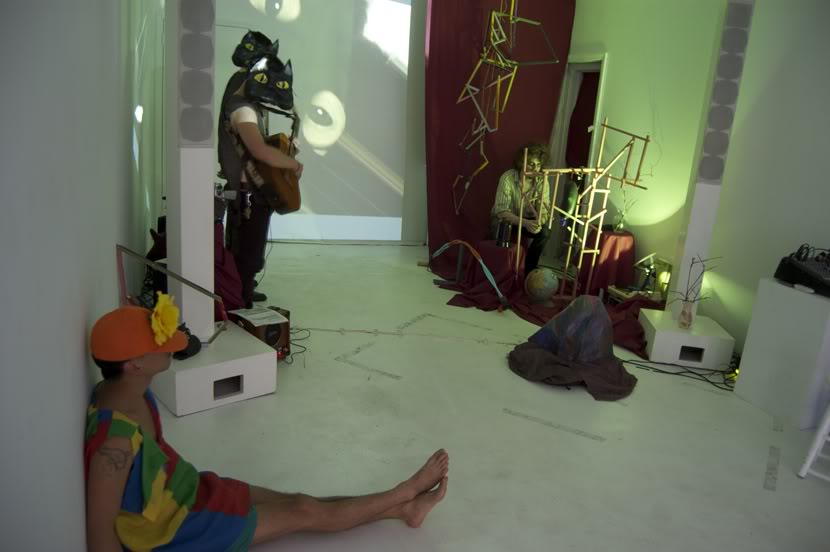
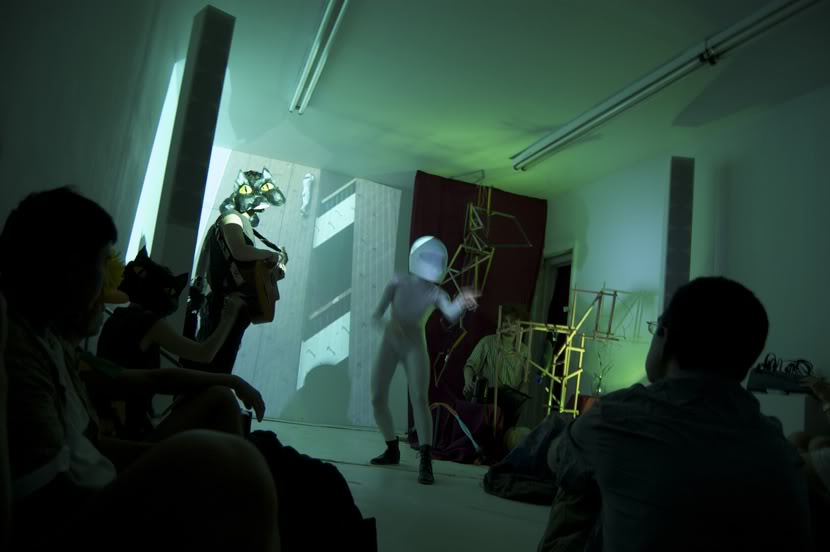
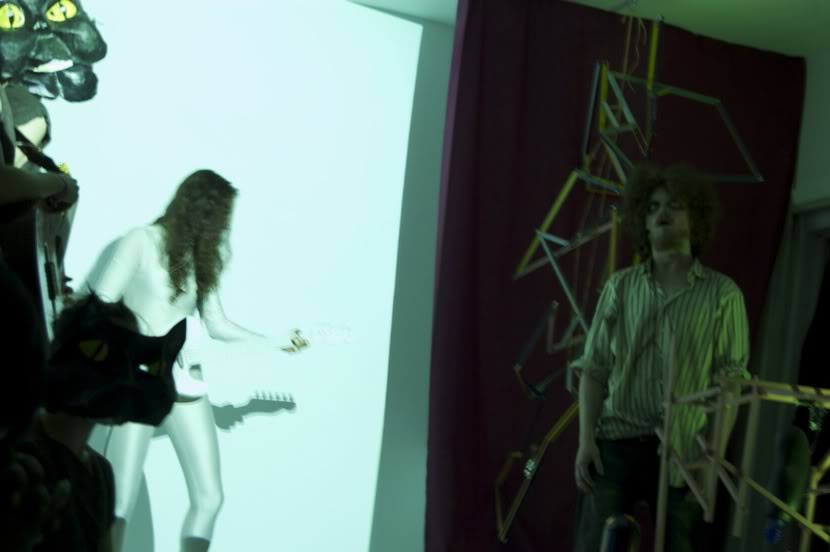
Performance stills of Rachel Mason and Little Band of Sailors, The Outsider, at Asia Song Society, New York, July 12, 2011.

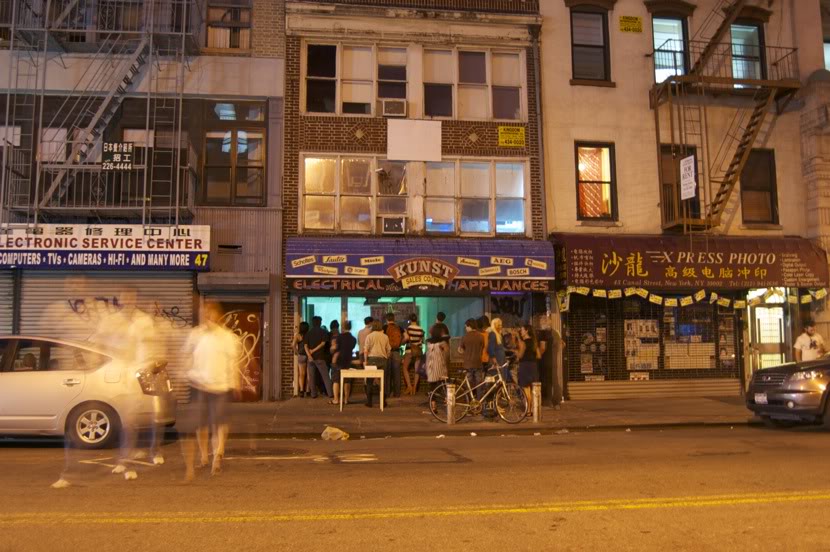
"The breeze is actually quite pleasant," an Asia Song Society employee advised me by email yesterday, letting me know that if I arrived at ASS after all the seats for Rachel Mason's performance were filled, I'd still be able to see through the front window from the street. I made it just in time to find a spot, and discovered members of Mason's backing band, Little Band of Sailors, already in position, bravely waiting to begin the performance in the scorchingly hot gallery. (Those who chose to watch from the outside had made a more prudent choice.)


Performance excerpts of Rachel Mason and Little Band of Sailors, The Outsider, at ASS, July 12, 2011. Video: 16 Miles


Mason and Little Band of Outsiders also performed the work at the Terence Koh-backed gallery on Monday night.

Just before 8:30, a man near the back of the stage, wearing thick makeup around his eyes, intoned the opening lines of H. P. Lovecraft's 1926 short story "The Outsider": "Unhappy is he to whom the memories of childhood bring only fear and sadness…" Two guitarists wearing cat masks, their huge yellow eyes pointed at the audience, accompanied him, lending an ominous, albeit vaguely corny, prog-rock touch to the affair. It seemed clear that things were going to get weird. They did.

Mason and her crew proceeded to enact Lovecraft's story, a tale about a man escaping from a deserted castle in search of life, with films, costume changes, and songs, a gesamtkunstwerk that veered wildly from bracingly literal moments from the story (a video of the main character, somewhat mysteriously clad in a white Spandex suit and white motorcycle helmet, climbing the side of a building), to more bizarre, abstract passages in the form of musical interludes sung by Mason.

Lovecraft's character eventually escapes his prison and finds another castle, where he encounters a spectral presence, "a compound of all that is unclean, uncanny, unwelcome, abnormal, and detestable." Mayhem ensues, as it did in the gallery, with a large group of people (visible in one of the video excerpts) screaming and dancing wildly about a tall, ghastly looking creature, who later sang a haunting, chant-like song.

There was much more. The Venezuelan punk musician Yva Las Vegas provided a surprise entr'acte, singing and madly strumming an acoustic guitar from a stool at the back of the gallery. A limber woman in another cat mask crawled around the stage, twisting her body into a bridge. Mason, song after song, costume after costume, dominated the audience like a ghostly, contemporary Patti Smith. (She has also been described as "Alice Cooper meets Carol King in another dimension," which is a fine description.)


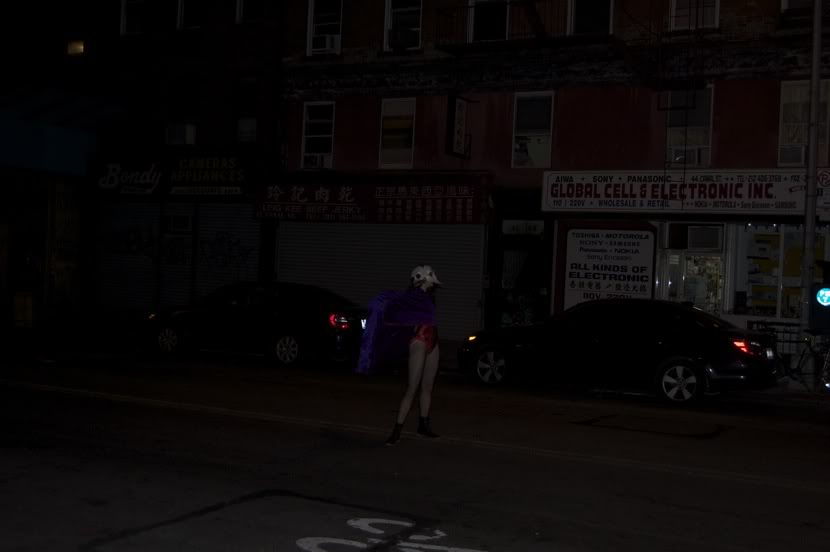
A three-masked chanteuse dashed out onto Canal Street, and sang into ASS via a wireless microphone.

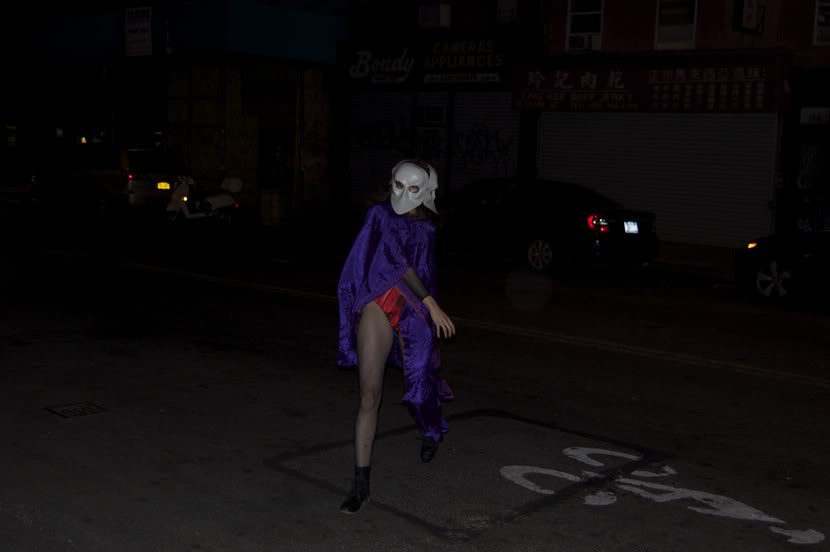
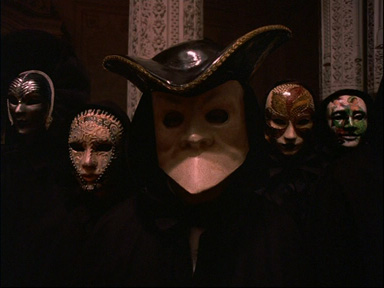
And near the end of the show, a performer wearing three Eyes Wide Shut-style masks, a red leotard, and a purple cape — it appeared to be Mason again — burst through the open door of the gallery and dashed out to the center of Canal Street, spinning in place and singing into the gallery via a wireless microphone. She moved gracefully from one side of the road to the other when a car approached, and then retreated inside.

At the end of Lovecraft's story, his protagonist returns to his castle and attempts to resume his life as a hermit. He fails and becomes a wanderer in the world, "an outsider; a stranger in this century and among those who are still men." That line could very well apply to Mason's sublime and strange work, for which she has melded the intricate stagecraft and high drama of theater with the raw, apparently improvisational nature of performance art.


Sunday, June 19, 2011

DIS Magazine, Herbalife™, at Gresham's Ghost


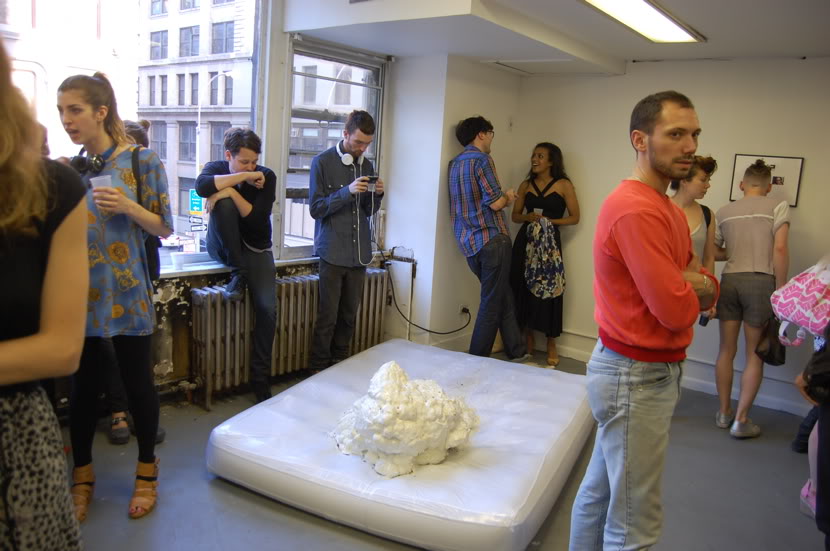
Brian Clifton, Us, 2011. Inflatable mattress, psychological dross, fat, blood, mattress cover, plastic, 80 x 60 x 34 in., in "Skin So Soft," at Gresham's Ghost, through June 25, 2011.

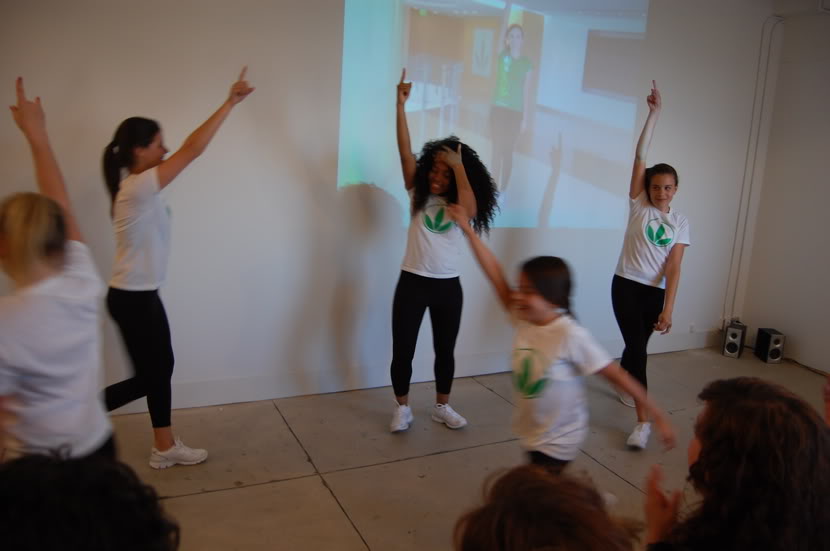
If you have spent even a small portion of your life going to contemporary art galleries, you may occasionally have had the feeling that you have seen it all. Everything has been done, you may think. We're just playing out the endgame. But then, inevitably, for better or worse, something shocks that suspicion out of you — like, for instance, a group of five girls enthusiastically performing a variation of the official dance of the perhaps-dubious wellness company Herbalife to small groups in a TriBeCa office building as part of a pop-up gallery show. Which is what happened to me on Wednesday night.

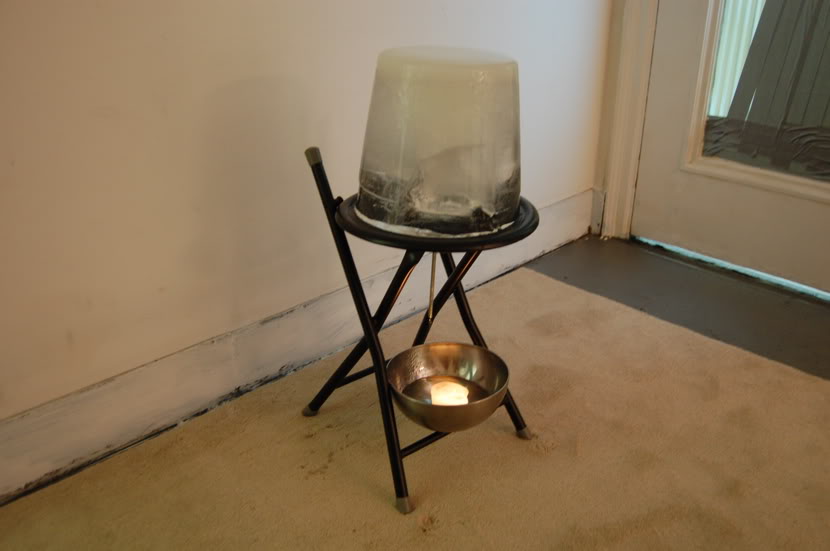
The evening began in a compact second-floor office at 401 Broadway, where Gresham's Ghost, the itinerant art gallery, has set up its latest exhibition, "Skin So Soft," which was curated by artist Josh Kline and is on view through June 25. Guests arrived around seven and, as they waited for the performance by the "Tweens of Herbalife™" — as one announcement from the organizer, DIS Magazine, billed them — inspected the art on view, which includes typically tony photographs by Michele Abeles, a viscous–looking bed by Brian Clifton, and a self-destructing sculpture by Paul Kopkau, with a candle slowly melting away a block of ice.


Paul Kopkau, lodestone/narrator, 2011. Rubber, stainless steel, ice, galvanized metal, 26 x 12 x 12 in.

About a quarter past seven, word spread that we'd soon be whisked up to the sixteenth floor for the performance, and one group was ushered upstairs as the rest of us waited. After about ten minutes, I rode up for the second viewing, finding a seat in a long narrow room, along with about twenty other people. Once we were seated, the dancers burst through a door at the end of the room and performed as Herbalife's (apparently) model performer danced away in a projection behind them. Audience members recorded the action on their iPhones, cheered occasionally, and shared lots of nervous looks. After five minutes, the dancers skipped out of the room to applause, and we headed toward the exit, passing a mother waiting in the hallway, bottle-feeding a baby.


Excerpt of performance by Tweens of Herbalife, choreographed by Richard Kennedy, presented by DIS Magazine and Alaina Feldman, June 15, 2011, in "Skin So Soft," organized by Josh Kline, at Gresham's Ghost, 401 Broadway, 2nd floor (performance on 16th floor), New York, through June 25. Video: 16 Miles


Still of performance by Tweens of Herbalife, choreographed by Richard Kennedy, presented by DIS Magazine and Alaina Feldman, June 15, 2011.

"I have some problems with that," an audience member said on the street below, expounding on the exploitative nature of the performance. For a moment, I wholeheartedly agreed. Thoughts of Santiago Sierra came to mind. But then it occurred to me that the dancers — the tweens, to use DIS's term (its just-released "Tweenage Issue," was the justification for the performance) — may have known that the dance was obviously ridiculous, that they were mocking a bit of corporate cheerleading by dramatically parroting it. They may or may not known that Herbalife is considered by some to be a pyramid scheme that promotes medical quackery, and that its founder overdosed on alcohol and anti-depressants in 2000, but it seems possible that they knew that they were presenting a joke. With DIS and choreographer Richard Kennedy, they took a castoff cultural fragment with a questionable past and recast it in a space in which irony and sincerity coexisted and bolstered one another: the dance was terrible, and their performance was awesome.

That may, of course, just be wishful thinking. If that's the case, I shudder to think about what comes next.


The view from Gresham's Ghost, looking north on Broadway toward SoHo.

Friday, June 10, 2011

After 38 Years, Trisha Brown's "Roof Piece" Ventures from SoHo to the Meatpacking District


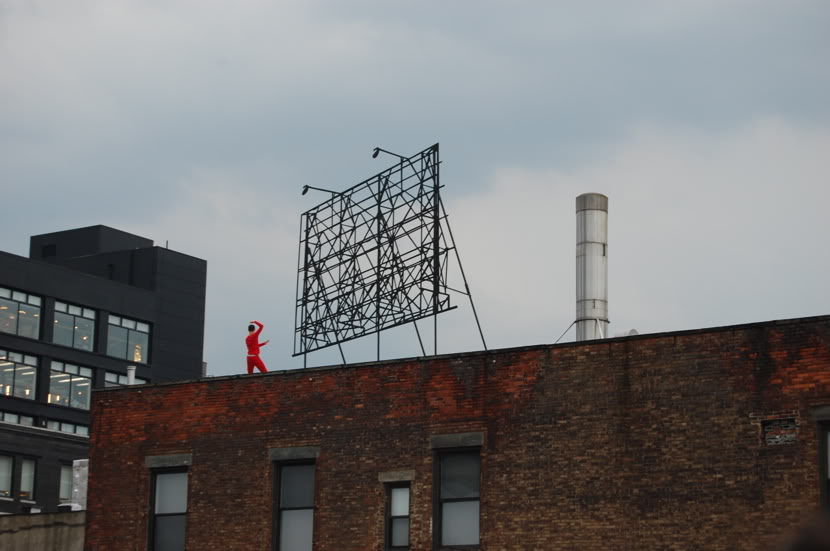
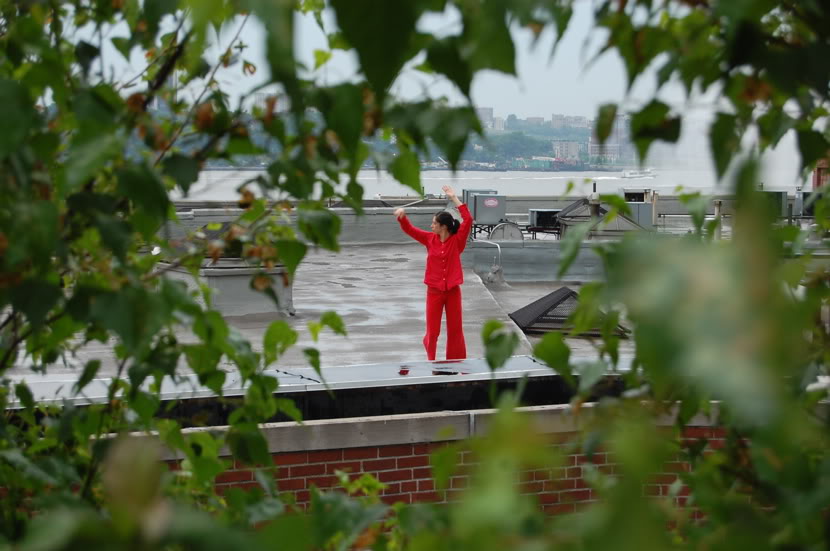
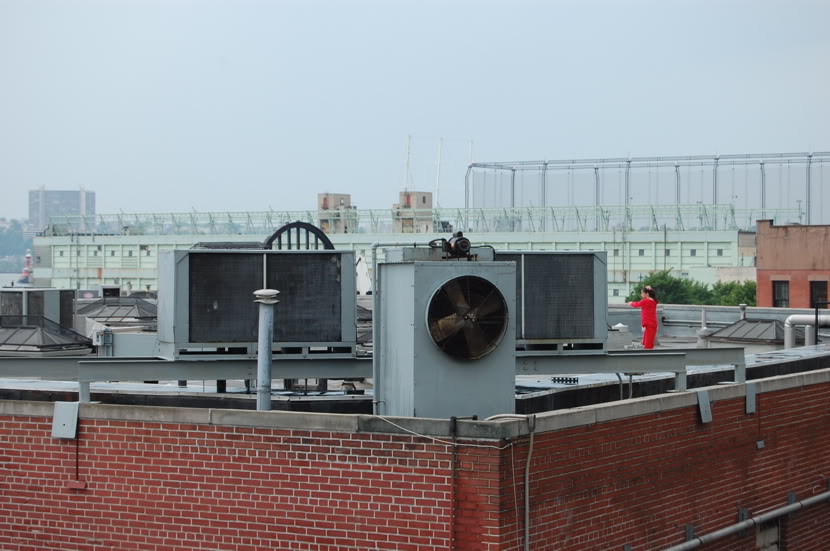
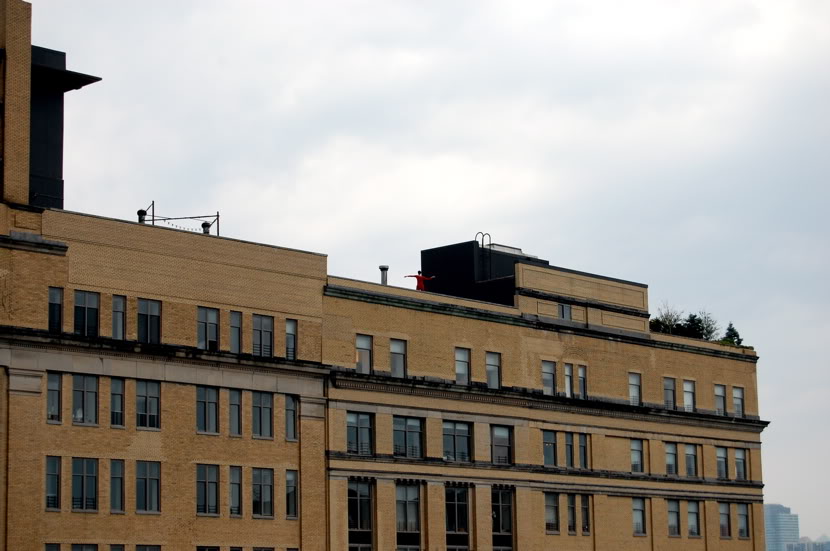
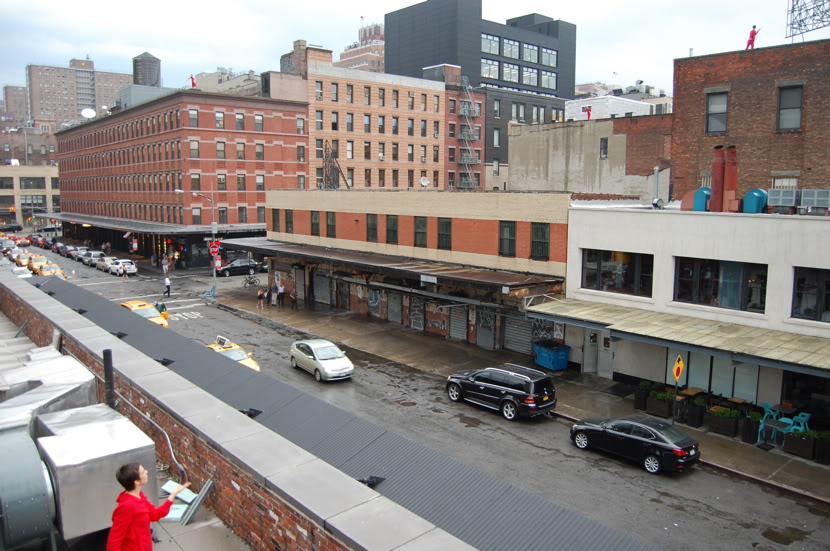
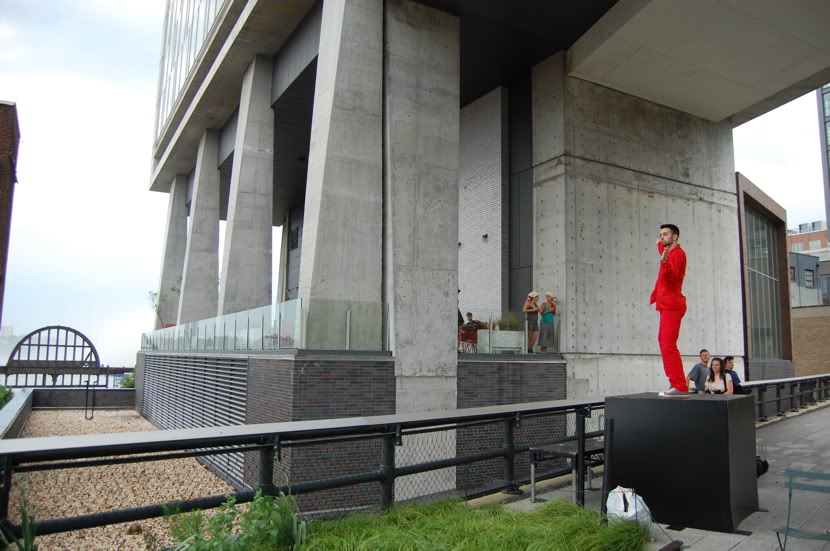
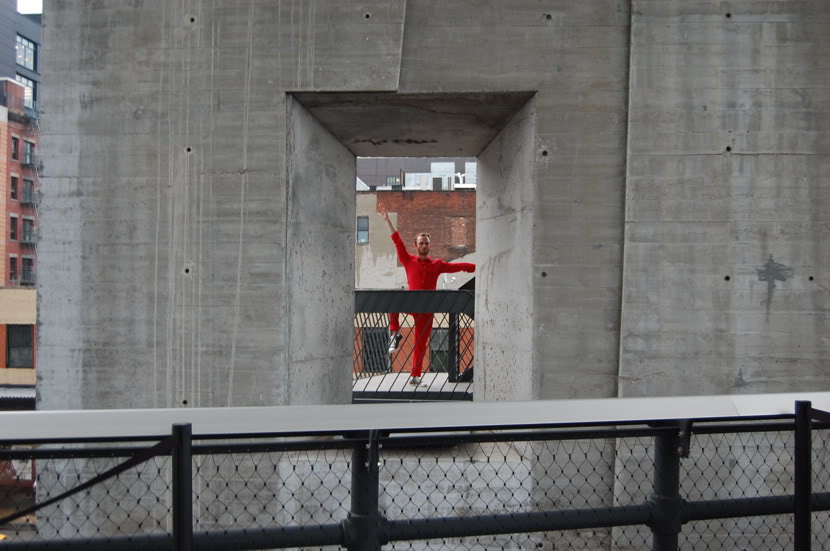
Performance views of Trisha Brown Dance Company performing Trisha Brown, Roof Piece, 1971/2011, on and around The High Line, New York, June 9, 2011.


Excerpts from Trisha Brown, Roof Piece, 1971/2011, on and around The High Line, New York, June 9, 2011. Video: 16 Miles.

The gods favor Trisha Brown and her dance company. That's the only conclusion I can draw after watching a devastating torrential thunderstorm suddenly clear just moments before 7 pm last night, right before the scheduled start of a performance of Brown's seminal 1971 Roof Piece along the southern stretch of The High Line. The piece was performed without a hitch, and the storms resumed within hours of its conclusion. Unbelievable.


It's hard to believe, but this is the first time that Roof Piece has been performed on outdoor rooftops since 1973, when it was staged in — or above — SoHo. Earlier this year, some New Yorkers saw a modified version of the piece, titled Roof Piece Re-Layed, at the Museum of Modern Art, with Brown's dancers sending choreographic signals around Yoshio Taniguchi's airy atrium. Each performer watches another in Roof Piece, miming the movements they see, creating a chain of slowly evolving dance over the course of about 30 minutes. Even in the austere environment of MoMA, it was a thrill to see. But a thought lingered: What would this look like outside, with a dancers transmitting the piece along an expanse of roofs?

We now know that it looks gloriously fresh — and wonderfully strange.


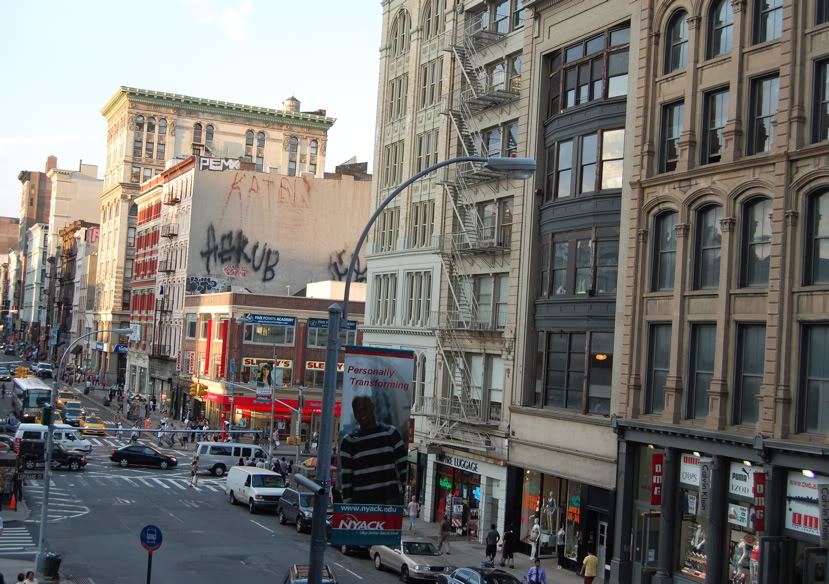
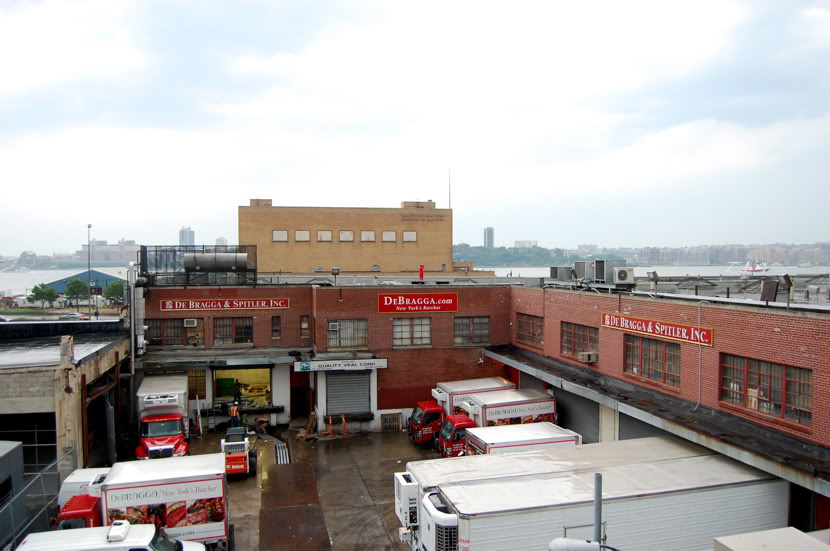
Brown's dancers, all sporting bright red outfits were positioned throughout the area. There was one high atop a building just south of Gansevoort Street, and two standing on the long, low roofs of the DeBragga warehouse (one of the last remaining meat companies in the Meatpacking District). They were secreted in semi-hidden positions along the elevated park and the base of the Standard Hotel — did passersby think the large crowd had gathered to watch one of its notorious displays of flashers? — and arrayed across the buildings to the east of the walkway, where Sperone Westwater once resided.

When Roof Piece was performed in 1973, viewers watched the string of dancers from the top of a building on Wooster Street. The High Ligh, though, allows for a more participatory spectacle. You can spot dancers through the leaves of the thick shrubbery along the bottom of the path — enjoying a personal show — and then wander up to the Standard, where the largest crowds gathered last night. If you go, walk back and forth between the sides of the park and follow the passage of the dance's movements. Seeing every dancer requires some work, but as you suddenly spot each one — shimmying, popping, and swaying away — you may feel a refreshing shock of recognition, a humane sense of alarm.


Another 7 pm show is scheduled for tonight, and 5 pm and 7 pm performances are to follow tomorrow. There are reports of incoming thunderstorms. Keep your fingers crossed.

Monday, April 25, 2011

There and Back Again: Robert Whitman's "Passport" in Beacon, New York


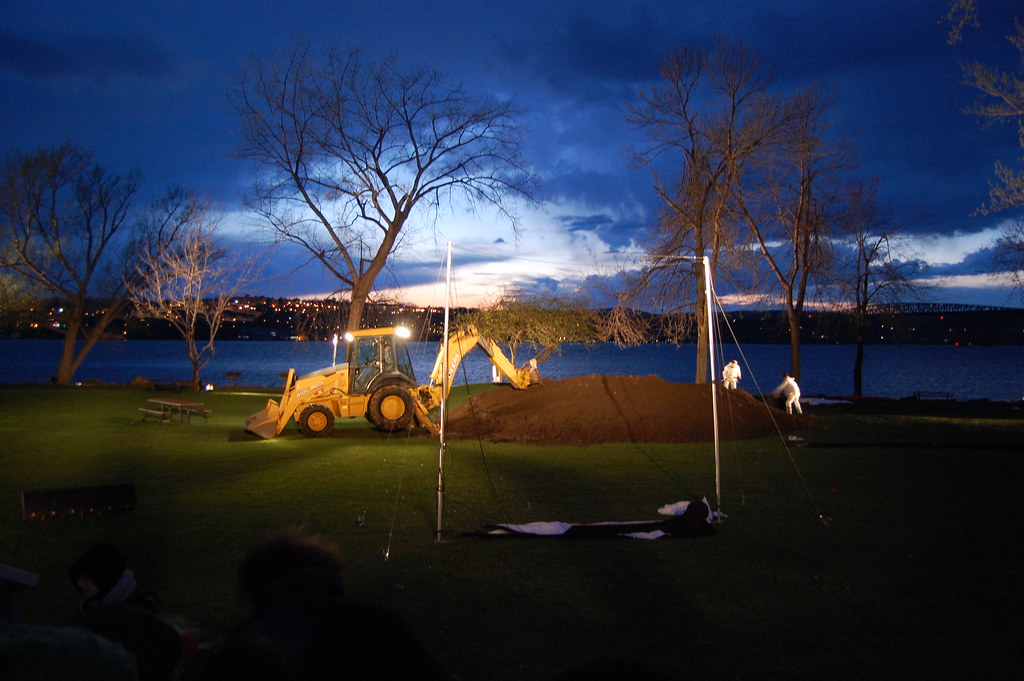
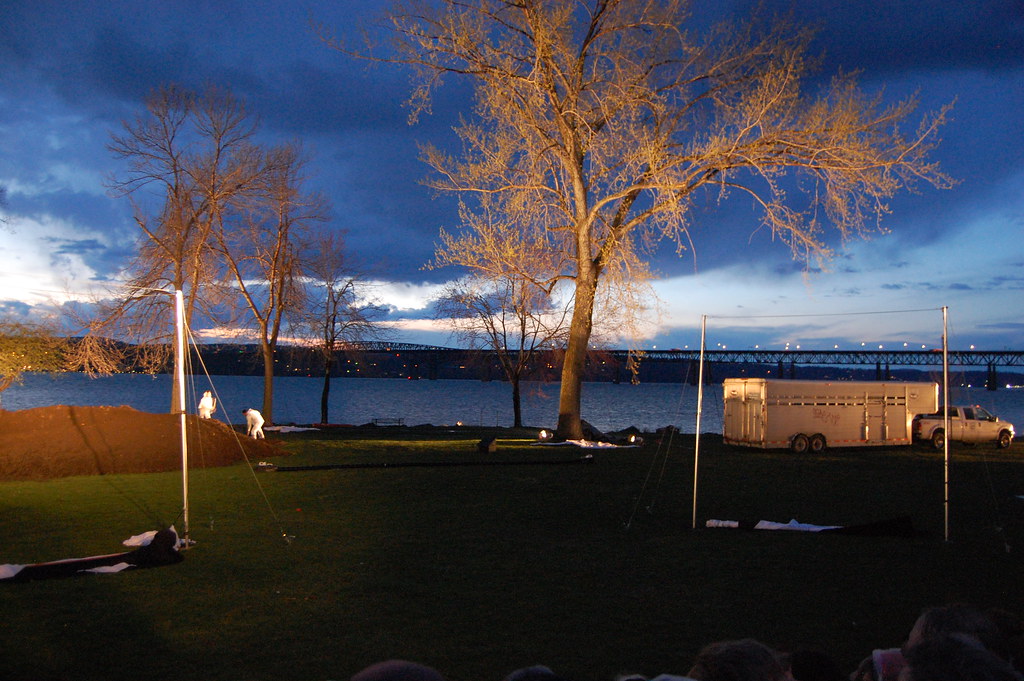
Pre-performance view of Robert Whitman's Passport, 2010, at Riverfront Park, Beacon, New York, April 17, 2011. Photos: 16 Miles [more]

"It’s not written in scripture that everyone has to see the same thing at the same time."

"Why am I here and not over there?"
The Dirty Projectors, "Stillness Is the Move," 2009

"This is just like the opening of the final act of Hamlet," a woman said to a young boy as they sat together on bleachers awaiting the start of Robert Whitman's Passport (2010) on Sunday, April 17, in Beacon, New York. We were just a few yards from the Hudson River, not far from Dia:Beacon, and two poncho-clad men with shovels — gravediggers of a sort — moved about a dirt mound as a yellow backhoe stretched its limb and growled. Lightning had forced the cancellation of the previous night's performance, and it felt like thunderstorms could break out again at any moment, shuttering this second, final show. "What's Hamlet?" the boy asked. "It's a play by the English writer Shakespeare," his mother said. She didn't mention that it ends badly.

I arrived by bus from the city just before 8 pm and entered Beacon's Riverfront Park to find Dia director Philippe Vergne handing out ponchos and directing people toward the haunting scene along the water. Another contingent of Passport viewers was filing into the Alexander Kasser Theater, in Montclair, New Jersey, some 60 miles away, at the same time. Whitman planned to stage two different performances simultaneously, beaming video of the actions in between them. As the clouds grew darker and the temperature dropped, the New Jersey theatergoers seemed like the far smarter group, but we were in this together: if a storm started, both parts of the performance would be canceled.


Another pre-performance view, with the diggers hard at work and the horse trailer at the ready.

"I like things that stay pretty abstract, even though you could put meaning," Whitman tells Joan Waltemath in this month's Brooklyn Rail, and Passport proved to be nothing if not abstract, a series of slow–moving, seemingly unrelated episodes floating through the space in front of us. A video projected on the side of a horse trailer showed fire spewing from a faucet, an image that Jonathan T. D. Neil explores in his take on Passport in ArtReview. Whitman's poncho-clad crew used rope to hang three gigantic white shirts from trees, which served as screens for video projections of rotating, flaming orbs. People ran up the dirt mound from behind, jumped over the top and rolled slowly down the other side, the soil sticking slightly to their plastic clothing. A man to the left of the audience shouted a lengthy definition of the word "word."

A man piloted a rowboat along the river from right to left (north to south). Its edges were limned with a roaring fire and another person — a woman, it seemed — sat still inside. "[A] boat on fire is probably one of the worst things in the world," Whitman tells Waltemath. Still burning, it returned later, heading in the opposite direction, a mirror image, a repetition undermining any traditional sense of narrative progression. Repeated, it seemed caught in a moment of perpetual destruction, a representation of terror. This doubling recurred throughout the piece. A white horse appeared twice carrying a young woman, once with her upright, the other time with her on her back, her eyes closed. Two screens made from white fabric served as a backdrop for video footage, close-ups of eyes and mouths that recalled Marilyn Minter.

The formal aspects of Whitman's work were filled with doubles as well: the two scheduled performances (Saturday and Sunday) and the two locations, Montclair and Beacon. Segments of the Montclair performance were beamed into the Beacon show onto the side of a horse trailer. We watched as white–clothed performers brought a brown mound on stage in the video. In front of us, our performers did the same. Both of the strange brown constructions spewed paint in a rainbow of colors, gushing down the sides like lava flowing from a volcano. The video footage was grainy and occasionally halting, the interruptions making the images seem more live, more real, underscoring our partial view and perhaps even carrying political connotations. "It has that look of cell phone reports that we are getting from these war zones," Whitman says to Waltemath, perfectly accurately, of the film stream.

The footage from Montclair was sparse and often closely cropped. We could not see the audience there or hear the sounds they were hearing, and one wondered what they were seeing of us, and our performance, on the video that they were receiving from our end. Could they see or hear the Metro-North trains shooting by behind us? Did they know that rain was beginning to fall up north? This devoutly non-programmatic pitch of Passport — with the mysteries that surround its content and form — sharply departs from the straightforward, rule–based structures of today's most popular performance works. Like our times, Whitman's work was instead provisional and fractured, literally — and generously — dispersed.

Friday, April 15, 2011

The Light Touch: Dominique Gonzalez–Foerster’s “T.1912” at the Guggenheim


Dominique Gonzalez-Foerster with The Wordless Music Orchestra, T.1912 at the Solomon R. Guggenheim Museum, New York April 14, 2011. Photo: Enid Alvarez, © Solomon R. Guggenheim Foundation, 2011

When I read that French artist Dominique Gonzalez-Foerster had been commissioned to create a one-night "site-specific staged audience experience" in the Guggenheim’s rotunda called T.1912, inspired by the sinking of the Titanic, it sounded, to my prejudiced ears, like a recipe for disaster. Gonzalez-Foerster’s past outings in New York have been relatively lackluster, and there was no sign that this epic spectacle, designed to accompany a performance of Gavin Bryars' piece The Sinking of the Titanic (1969–ongoing) by the Wordless Music Orchestra, would be any different.

Gonzalez-Foerster is loosely affiliated with the globetrotting relational aesthetics crew, though many of her work tend more toward immersive environments and installations than the interactive situations — read: Rirkrit Tiravanija meals — that have come to define the movement. For perhaps her best-known work, she transformed Tate Modern's Turbine Hall in 2008 into a science-fiction-infused refugee camp set in London in 2058, with the city engulfed in endless torrential rain. The next year, she built natural history museum–style displays at Dia's temporary space at the Hispanic Society of America, and then scattered books around inside. It was a bland display, roughly on par with her contribution to the Guggenheim's relational-aesthetics-filled "theanyspacewhatever" exhibition (2008–09), for which she walled off a portion of the rotunda with a white scrim and played an audio recording of rain along the ramp.

Last night at the Guggenheim, however, Gonzalez-Foerster engineered a remarkable experience over the course of one hour inside Frank Lloyd Wright's building, a feat that is making me think back to and reconsider all of her previous work. Visitors waited in the museum's basement theater until shortly after 8:40 pm, when the doors were opened. They were then led up along the ramps. White noise buzzed up from the central space, where the more than two-dozen members of the Wordless Music Orchestra, all wearing white, were waiting to play, blanketed with amber light cast down from the surrounding rotunda. Viewers spread out along the ramp, each person finding a spot along Wright's low handrail.

At about 9 pm, the white noise faded and a line of percussionists set to work, launching clicks and clanks and scrapes, performing the opening bars of The Sinking of the Titanic. The lights shifted to a deep blue, and then the strings entered — an octet plus a trio of cellos — all bowing long notes, individual drones combining into luxurious, slowly shifting chords that were derived from "Autumn," the Episcopal hymn that the Titanic’s band reportedly played as the ship sank into the sea. "The way the band kept playing was a noble thing," Harold Bride, a junior wireless operator told the New York Times later. "How they ever did it I cannot imagine." (According to the Wall Street Journal, there was another trio of strings stationed at the top of the ramp, though I missed that.)

As the chords continued, gliding and drifting, the musicians took turns at brief solos. A chorus of three singers, Caroline Shaw, Kate Mulvihill, and Michele Kennedy, held a series of ethereal tones, and a rumbling bass clarinet solo glided through (it could almost have been the opening lines of Gershwin's 1924 Rhapsody in Blue), as a tape of a woman’s voice, a survivor of the Titanic, her emphatic, rhythmic words measuring time. A bright white spotlight burst onto one side of the rotunda, causing a momentary pain in my eyes, which had adjusted to the darkness. Then it cascaded across the oculus at the top of the building and vanished. A handful of guides in white jackets — stewards, the program called them — motioned the audience down the ramp to the ground floor, ushering them around the musicians in a thin half-circle.

The strings continued, punctuated occasionally by solos. Double bassist Ike Sturm provided a bracing passage of improvised pizzicato, bouncing back and forth between octaves, working quietly against the tonal mass, against his fellow bassist Eleonore Oppenheim who continued with her bow, finally entering with pizzicato of her own as Strum returned to arco. (Gavin Bryars is a double bassist.) The washes of sound continued. And then they fell quickly away. The musicians rose to applause and walked off. Sixty minutes had passed. It was the 99th anniversary of the night that the ship struck the iceberg. Early in the morning, on April 15, just hours after it began taking on water, it sank.


Dominique Gonzalez-Foerster with The Wordless Music Orchestra, T.1912 at the Solomon R. Guggenheim Museum, New York April 14, 2011. Photo: Enid Alvarez, © Solomon R. Guggenheim Foundation, 2011

Gonzalez-Foerster’s involvement had been minimal — just a few lights, a line of white life-preservers hung around one level of the rotunda, and some signage, each level labeled as a lettered deck. She had placed works by Kandinsky, Picasso, Chagall, and others, the entire "Great Upheaval" exhibition, in darkness, and those icons had taken on eerie and uncanny qualities, but the experience had not been grandiose or melodramatic, the silent dangers of any all–encompassing museum experience. The temptation in such circumstances is to try to make "the big statement," as Rem Koolhaas said it in an interview last year in Artforum, discussing the Tate’s Unilever Series. Koolhaas added that all those works presented in the Turbine Hall "seem to bear an apocalyptic message" and cited as one of his examples Gonzalez-Foerster’s "postdisaster camp," a phrase that I have to read as a pun. Last night, she elegantly and easily sidestepped such a caricature. T.1912 was haunting and spiritually rich.

Discussing Olafur Eliasson’s 2003 Turbine Hall project, art historian James Meyer writes that it "delivers a mass audience that cannot fail to be overwhelmed by the magnitude of the installation itself." He adds that, in contemporary art, size "is often marshaled to overwhelm and pacify." Gonzalez-Foerster, in sharp contrast, manipulated space throughout the evening in T.1912 using only lights and the members of her audience, utilizing scale in the way that Meyer says Charles Ray's work does, "in the phenomenological sense as a formal quality capable of inducing awareness and provoking thought." We began in a crowded theater and were then spread along a dark winding ramp, looking down at the performance and out at our fellow viewers who stretched around the rotunda. We ended on the sprawling floor below, together, in the center of it all.

Also: NPR has a complete recording of a 2008 performance of Bryars' Sinking of the Titanic.

Monday, April 4, 2011

The Headlines: Elizabeth McAlpine's "Words and Music" at Laurel Gitlen

Performance excerpt of Elizabeth McAlpine's Words & Music (Headlines)," 2010, at Laurel Gitlen, New York, April 3, 2011. Video: 16 Miles

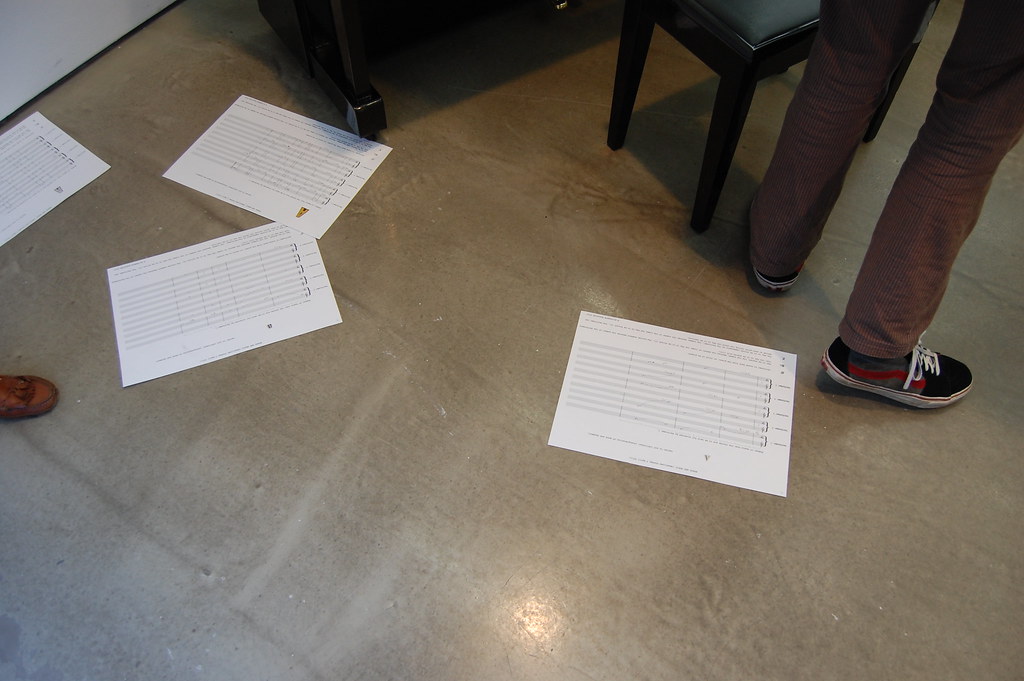
Elizabeth McAlpine's Words and Music (Headlines) (2010) sounds like a straightforward enough piece of piano music when you're listening to it, hearing mostly-dissonant chords come and go, one at a time. Seeing it in person, though, as I did last night at Laurel Gitlen, reveals a work with a complicated conceptual structure and tricky technical requirements, with five performers playing the work on a single piano, navigating the gallery and the keyboard as they move through the piece.

The instructional text for Words and Music, hung on a wall, provides an outline of the work's intricate framework. It notes that 26 uppercase letters, 26 lowercase letters, 10 numbers, and 26 punctuation marks and symbols equal 88 total signs, which happens to be the same number of keys that are found on a standard piano. Why is this arbitrary equivalence relevant, you ask? McAlpine has set each letter, number, or mark to a different piano key, and used that system to transliterate the headlines of the day's newspapers into a series of chords, with each headline filling a page of the score. (The work has been presented previously in London; the instructional text for a July 15, 2010, performance is available on the artist's web site.)

The headlines for Sunday, April 3, 2011, as you can hear, yielded disquieting, sometimes lonely sounding music, but also some moments of unusual beauty and hard-won consonance. The work will be performed again on the final day of the show, May 1, using that day's headlines. Certain words will no doubt reappear, like prepositions, articles, and perhaps even some proper nouns — Yemen, Bachmann, Obama? — and they will generate a familiar cascade of notes. But others names, other sounds, will be new. What will they sound like? How much will the news change over the course of one month?


Post-performance installation view of Elizabeth McAlpine, Words and Music (Headlines), 2010. Performance(s), two instruction texts, and one drawing, installation dimensions variable, instruction texts: 30 x 60 cm each, drawing: 60 x 150 cm. Photo: 16 Miles

On a tangentially note, McAlpine's piece reminds me of the joyous video of Sonic Youth performing George Maciunas's Piano Piece #13 (for Nam June Paik) (1964).

Sunday, March 27, 2011

Kenya (Robinson) Eats a Cracker in The Kitchen


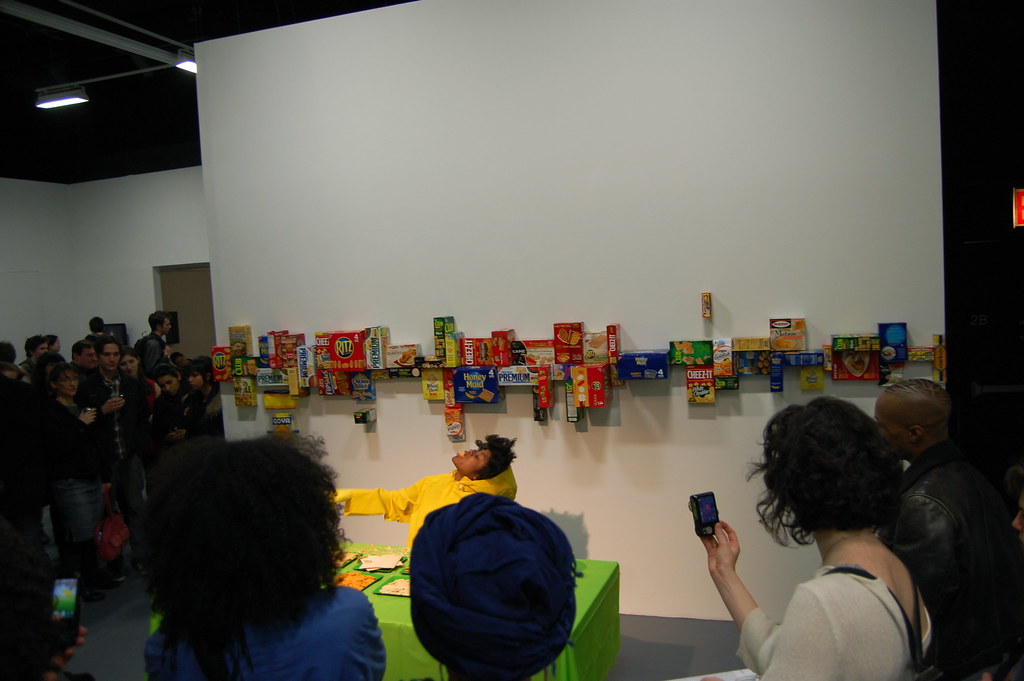
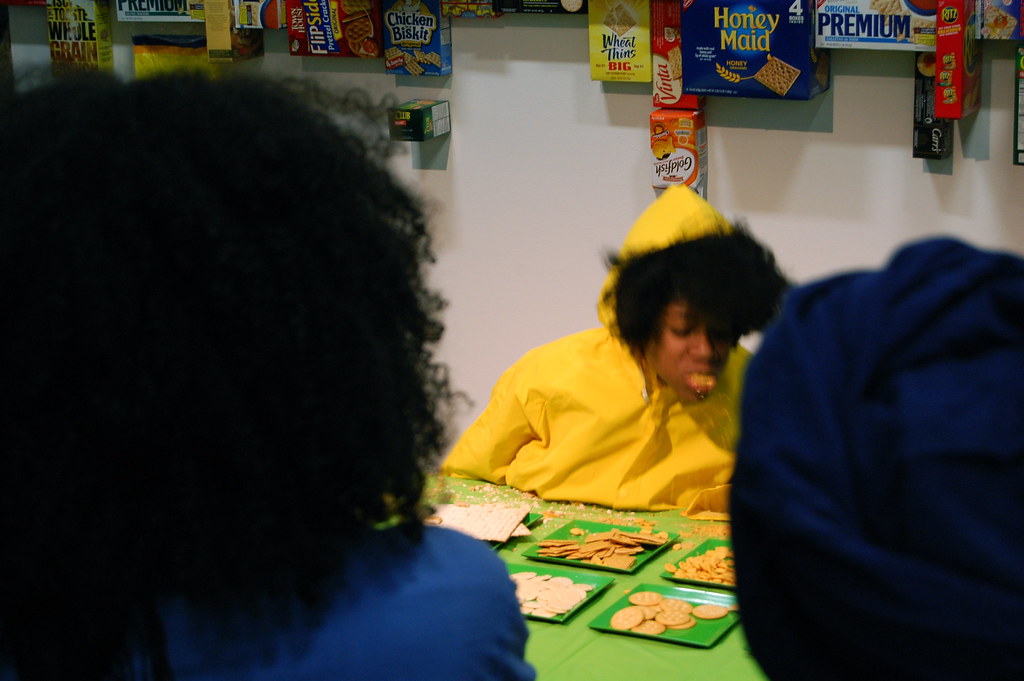
Performance still of Kenya (Robinson), Kenya Eats a Cracker, 2010. Cracker boxes and audio. The Kitchen, New York, March 17, 2011. Photos: 16 Miles


There were Ritz crackers, Club crackers, Triscuits, Chicken in a Biskits, Honey Maid graham crackers, and even Premium Saltines (those great objects of desire in Ed Ruscha's 1970 film Premium) sitting on plates on a table at the opening of The Kitchen's latest show, "Shame the Devil," on March 17th. Very much ready to eat, I was sad to learn that the fine spread was not for the visiting public, though my pain subsided somewhat when I learned that they were to be used for a performance by artist Kenya (Robinson). At least someone would be enjoying the tasty snacks.

(Robinson) last popped up at the Dependent Art Fair, where she occupied Recess Activities' bed as part of a long-term performance piece, The Inflatable Mattress, which involves serving as a house guest for 13 weeks, spending seven days at each location. (The Dependent was a special one-night stay.) This time, at The Kitchen, she shifted her attention from sleeping to eating, offering up Kenya Eats a Cracker. Wearing a yellow raincoat, she walked up to the cracker–covered table, sat down, and started eating. A crowd formed around her as she grabbed crackers by the handful, stuffing them in her mouth, staring up at the crowd, and chewing in rapid bursts as crumbs fell from her lips.

A voice came from nearby speakers as (Robinson) enacted her feasting. "At Triscuit, we believe less is more," the affectless narrator intoned. "That's why we bake our crackers with quality ingredients like Soft White Winter Wheat." (All quotes come from a paper available at The Kitchen, where (Robinson)'s cracker boxes are still on view.) The narrative traveled from the production of Triscuits to the history of Carr's Crackers ("Jonathan Dodgson Carr created the first table water cracker in 1890…") to the Israelites' exodus from Egypt. (Robinson) kept eating. She took rapid-fire bites, then slow, languorous chews, and then steady open-mouthed munches, offering a full compendium of eating options.

"It's best when used by January 29, 2011, or better still on January 29, 1954, when Oprah Winfrey was born," the voice continued. "Open here. Made with smiles and a product of the USA." (Robinson) continued her dining. "Open other end. Lift tab to open. Push to open. Open here." And then the voiceover ended. (Robinson) got up from her chair and walked off. There was some light applause. (Does anyone really know what to do at the end of a performance piece?)

(Robinson) seems wonderfully out of touch with the times. Much of the most acclaimed (or at least most visible) performative art recently has involved the glorification of long-term suffering (Marina Abramovic's The Artist Is Present (2010) at MoMA and Terence Koh's nothingtoodoo (2011) at Mary Boone, for instance) or the celebration of middlebrow interactivity (Tino Seghal at the Guggenheim — see Joe Scanlan's "Fair Use" in the May 2010 Artforum for more on that — and perhaps even Rirkrit Tiravanija's current show at Gavin Brown's enterprise).

In contrast, (Robinson) — while very much present in her work — engineers for herself a great and pleasurable time: she enjoys the hospitality of friends and acquaintances in The Inflatable Mattress or the bounty of an unusual buffet in Kenya Eats a Cracker. All the while, she twists the codes that govern our basic needs — shelter and food — in ambiguous ways and pushes them toward the precarious point when they may break, when the house guest outstays her welcome or when the woman munching maniacally on crackers moves from a representative of freewheeling fun to an object of ridicule. And then there are the racial overtones in Cracker's title and text. What are we to make of them? "Open other end. Lift tab to open. Push to open. Open here."

Monday, March 14, 2011

Rirkrit Tiravanija, Brendan Fowler, the Calder Foundation, Black Dice


Installation views of Rirkrit Tiravanija, FEAR EATS THE SOUL, at Gavin Brown's enterprise, New York, March 5, 2011. Photos: 16 Miles [more]


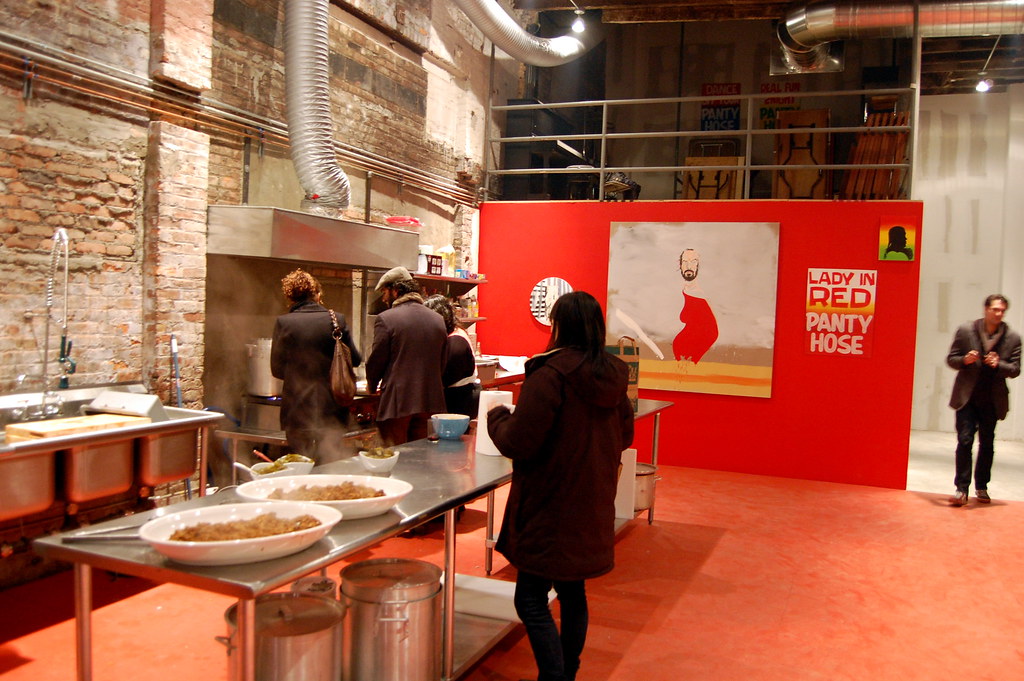
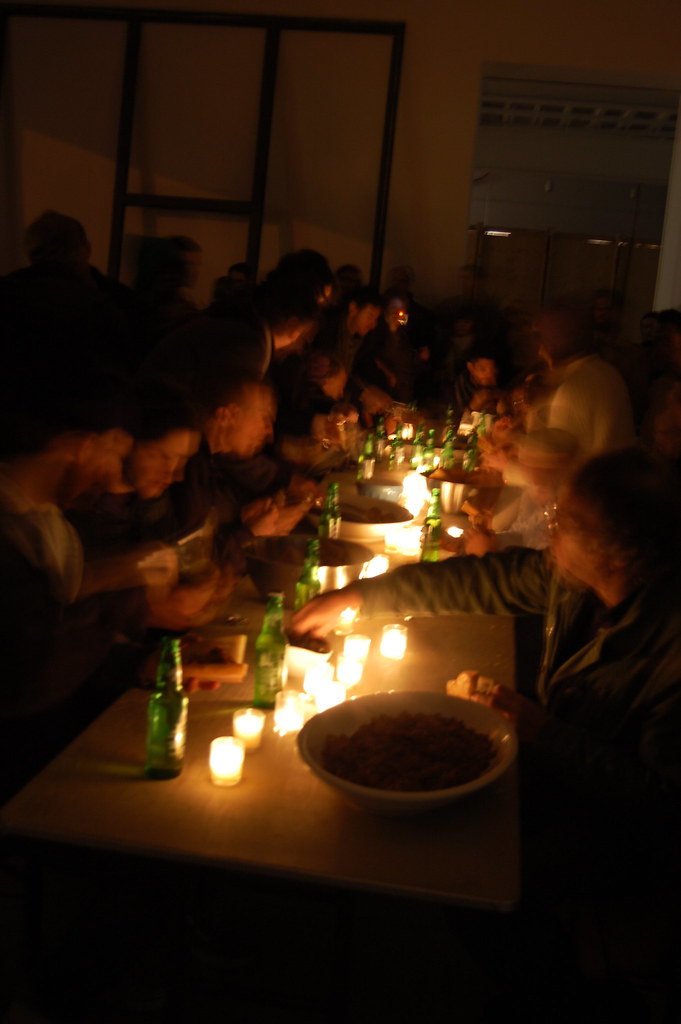
The smell of leek soup wafted through the galleries. The crowd waited. What would be served?

"Whatever this is, it isn't relational aesthetics," a friend said to me in a giddy tone at the opening of Rirkrit Tiravanija's new show at Gavin Brown's enterprise on March 5. She was sipping warm soup — a hearty chicken base blessed with a trove of butter-soft leeks — from one hand and holding an ice-cold bottle of Rolling Rock in the other. Many of the few hundred other people gathered inside the cavernous gallery were doing the same, and the luckiest ones, who had arrived early, were finishing off hearty sandwiches, thick baguette slices filled with pulled pork and sweet pickles.


Cock-a-leekie soup cooking on the enterprise stove, sweet pickles at the ready. Tiravanija's weekly soup recipes are available at soupnosoup.com.

It has been more than two decades since Tiravanija first served food for free in an art gallery (at the Paula Allen Gallery in New York, which also offered Rolling Rock, because the gallerist happened to be able to get a discount on it) and roughly 15 years since French curator Nicolas Bourriaud coined the term relational aesthetics to categorize art practices like Tiravanija's. As my friend's comment indicated, Bourriaud's theory has come to seem quaint and outmoded since then. Artworks encompassed by — or, in the worst cases, designed to illustrate — the theory have proved boring, as Joe Scanlan has argued, and their supposed political efficacy has been disputed by art historian Claire Bishop in her 2004 essay "Antagonism and Relational Aesthetics."

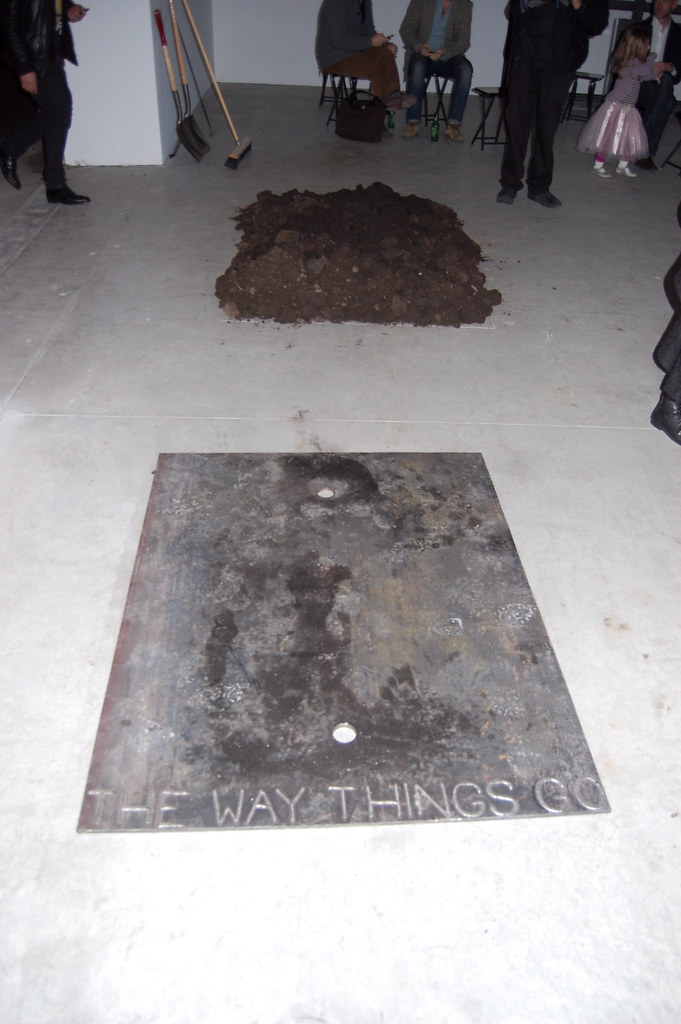
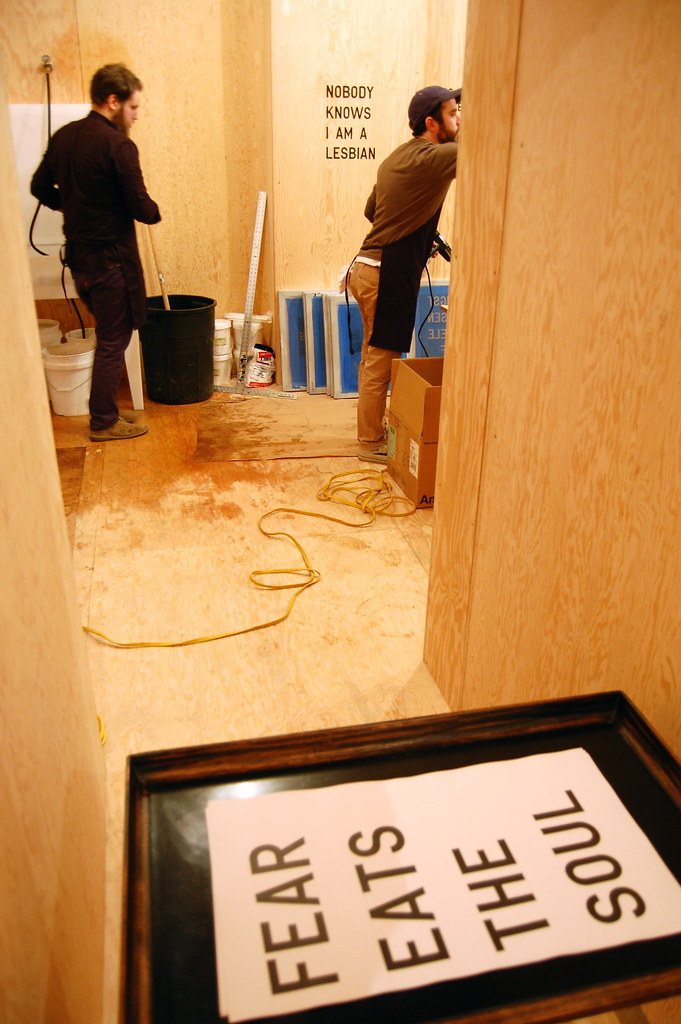
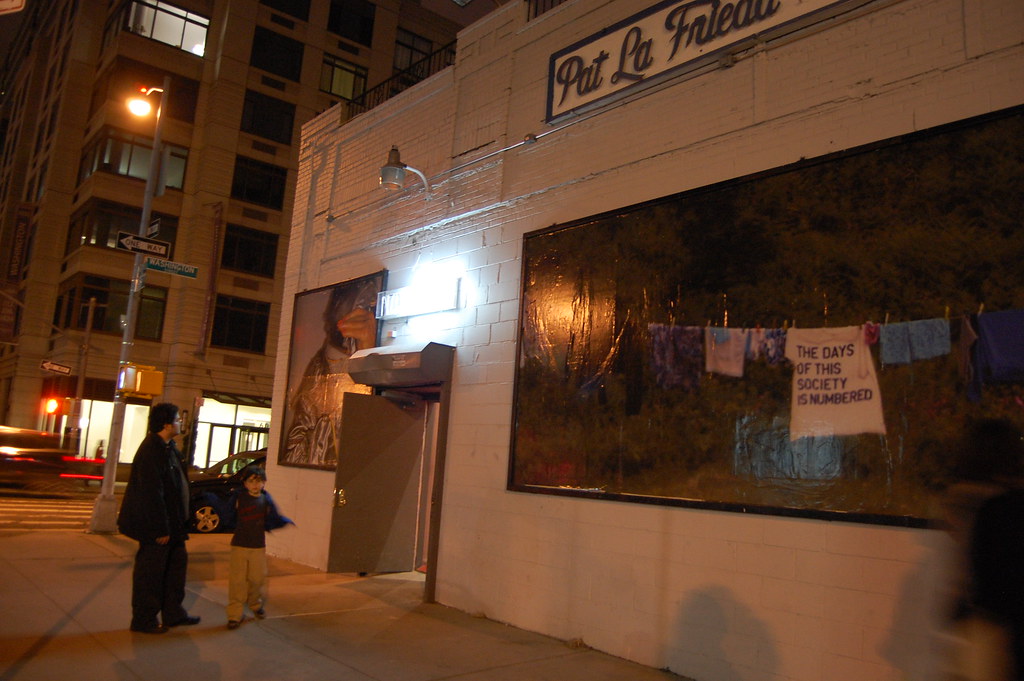
Nevertheless, there was an unmistakable thrill in the air on opening night. Tiravanija, sporting his trademark rose–colored glasses, wandered back and forth between the gallery and the kitchen, supervising the production of the soup, which was addictive and delicious. Each time he changed locations, he had to wander back out onto the street, since the doors from the kitchen to the gallery (and from the front reception area to the gallery) are walled off with thick cinder blocks. The exhibition space's doors and windows have been removed, leaving it completely open to the street. On the gallery walls, a message has been spray–painted in black: "FEAR EATS THE SOUL."


Meat, pickles, baguettes: the feast begins.


The transformed space looks like an abandoned warehouse, not so different from those that once existed along the Hudson River just a few years away, which Gordon Matta-Clark documented and detourned in the 1970s. Tiravanija has been more welcoming in past exhibitions, offering continuous access to a model of his East Village apartment at a 1999 exhibition at the enterprise (people are rumored to have had group sex there, Jerry Saltz reported later) and presenting a reconstruction of his home in Thailand for a 2009 show in Madrid. This time he has built a life-size replica of Brown's former gallery space on Broome Street and a fully operational T-shirt shop, in which employees screen shirts on-demand. The shirts are available in three sizes, printed with one of 24 different slogans (e.g. "NOBODY KNOWS I AM A LESBIAN" or "NO NO AMERICA"), for $20.


Tiravanija's T-shirt factory: 24 slogans available at $20 a pop

The shared "microtopian" communities that Bourriaud believed were created in Tiravanija's works, which Bishop characterizes in her essay as "feel-good" constructions, are perversely and joyfully parodied in "FEAR EATS THE SOUL." The only two enclosed, hospitable spaces, after all, are a model of a commercial art gallery and what amounts to a souvenir shop. The gallery may be open to the public 24 hours a day, but the only places you will want to spend time are where something is available for consumption. (The T-shirt shop and soup kitchen are open Thursday through Saturday, 10 am to 6 pm, through April 16.) There are other uncomfortable truths embedded in Tiravanija's practice, like the fact that the hearty bowl of soup arrives only due to the munificence of an established art dealer, and that those who actually need a bowl of soup will almost certainly not happen upon, or even hear about the exhibition, as Bishop has emphasized.

Tiravanija is surely aware of these issues, which give lend his works a fragile sense of existence dashed with melancholy, a feeling that is underscored by the sheer transience of the event: the reality that, while we can return to our favorite painting at the Met again and again for hours at a time, the few minutes shared with friends over a bowl of soup will happen only once, and then exist only as a memory. Tiravanija has organized a Trojan horse of an exhibition, an ostensibly celebratory meal that morphs into something darker, or at least sadder, once he gets you thinking.


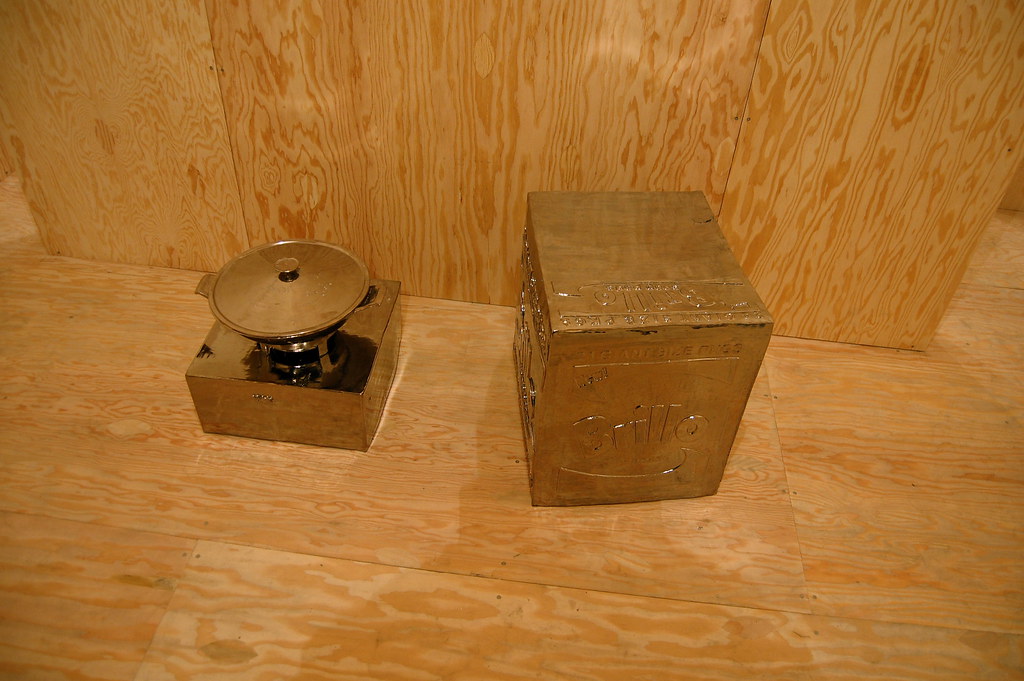
Outside the plywood T-shirt studio and art gallery, people gazed in at the chrome


The full neon sign, not legible here, reads "NOSOUP." Only the last four letters were illuminated once the soup started flowing.


Brendan Fowler in the Spare Room at West Street Gallery

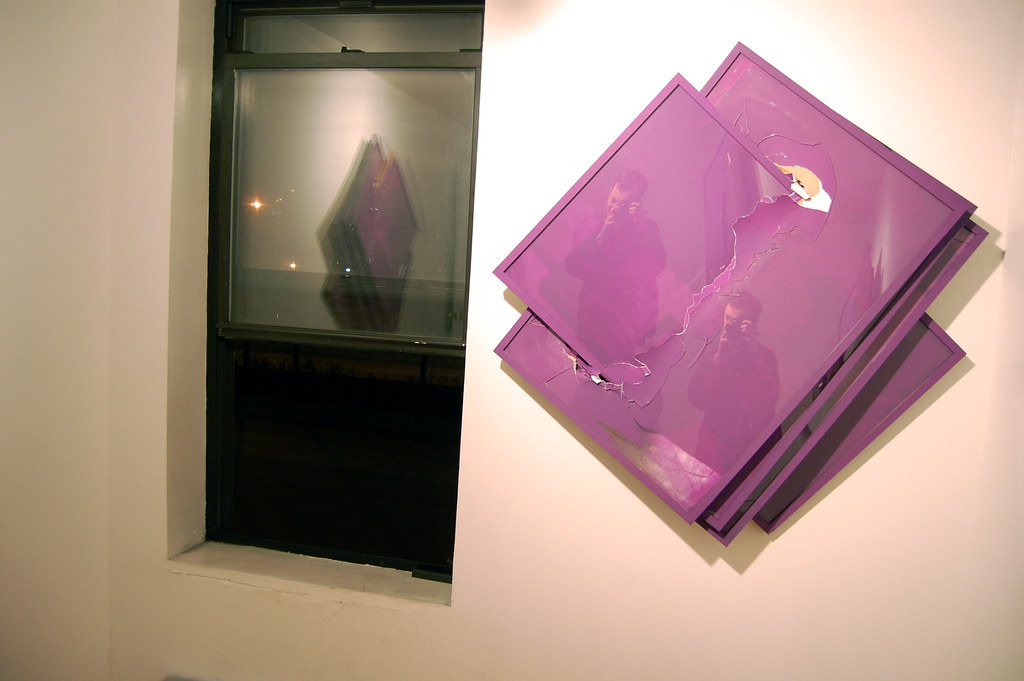
A few blocks away, Brendan Fowler unveiled new works from his already-classic frame-through-frame series in West Street Gallery's Spare Room. Instead of his typical subjects — concert posters and photographs — he's hung purple monochromes, and they are the best of the bunch.


Dan Friel performing at the Calder Foundation's "Maybe I should have called it 'My Life in Nineteen Minutes,'" 74 Pine Street, New York, March 5, 2011. [more]

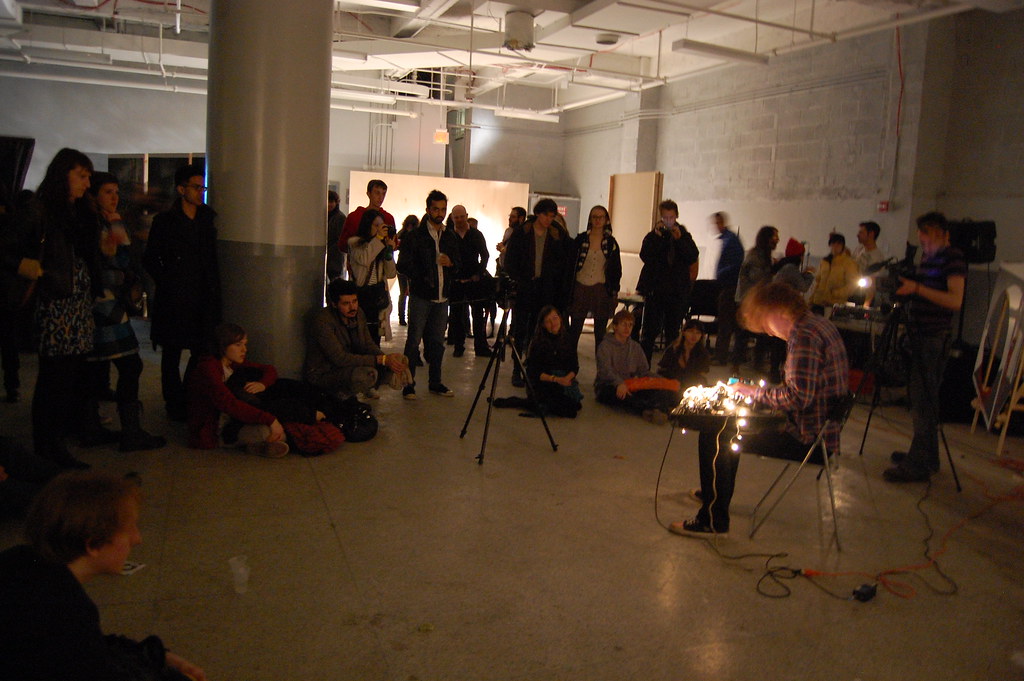
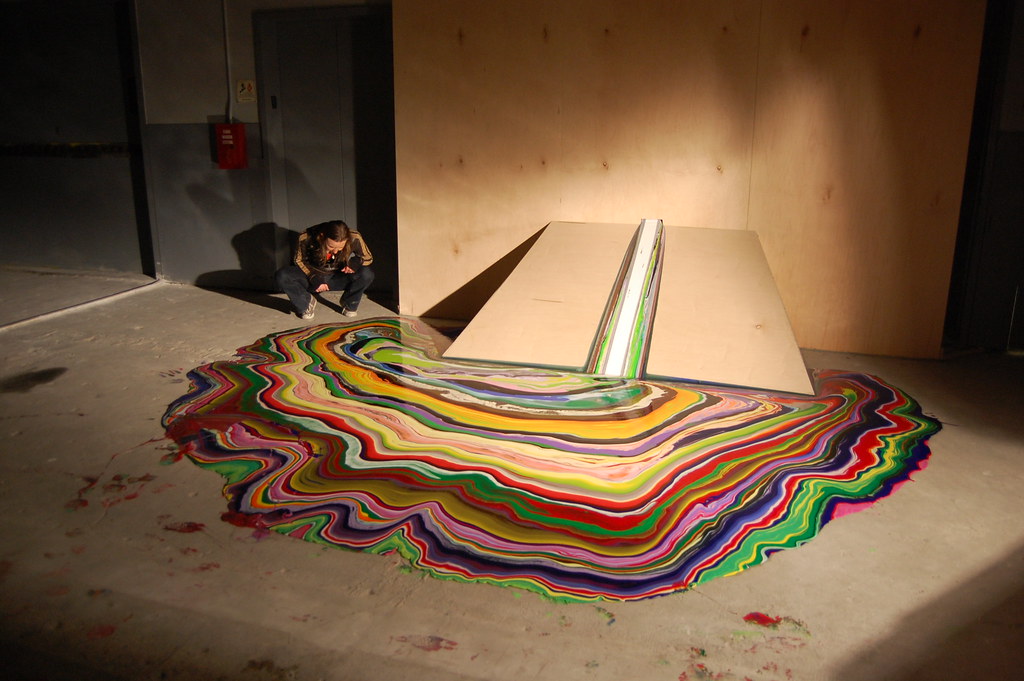
Later that evening, at 74 Pine Street, some visitors had the chance to see Courtney Love wandering around another abandoned warehouse space (she dashed past me as I entered), this one commandeered by the Calder Foundation for a 12-hour exhibition conceived by Victoria Brooks that was titled "Maybe I should have called it 'My Life in Nineteen Minutes,'" which featured a formidable lineup of performances and films, including works by Mika Tajima, Hans Richter, Yves Klein, Dara Birnbaum, and Calder. There were art objects, too, like a luscious Holton Rower floor piece, below — thin waves of paint piling up into a pitch-perfect mash-up of Jim Lambie and Lynda Benglis. Parts & Labor member Dan Friel was playing a solo set when I arrived, carefully leading a gigantic noise-orchestra — actually a large bank of controls perched on his lap — through a series of static–laced pop instrumentals.


Holton Rower, Pour 03052011, 2011, at the Calder Foundation's "Maybe I should have called it 'My Life in Nineteen Minutes,'" 74 Pine Street, New York, March 5, 2011. [more]


Black Dice performing as part of their residency at Secret Project Robot, Brooklyn, New York, morning of March 6, 2011.

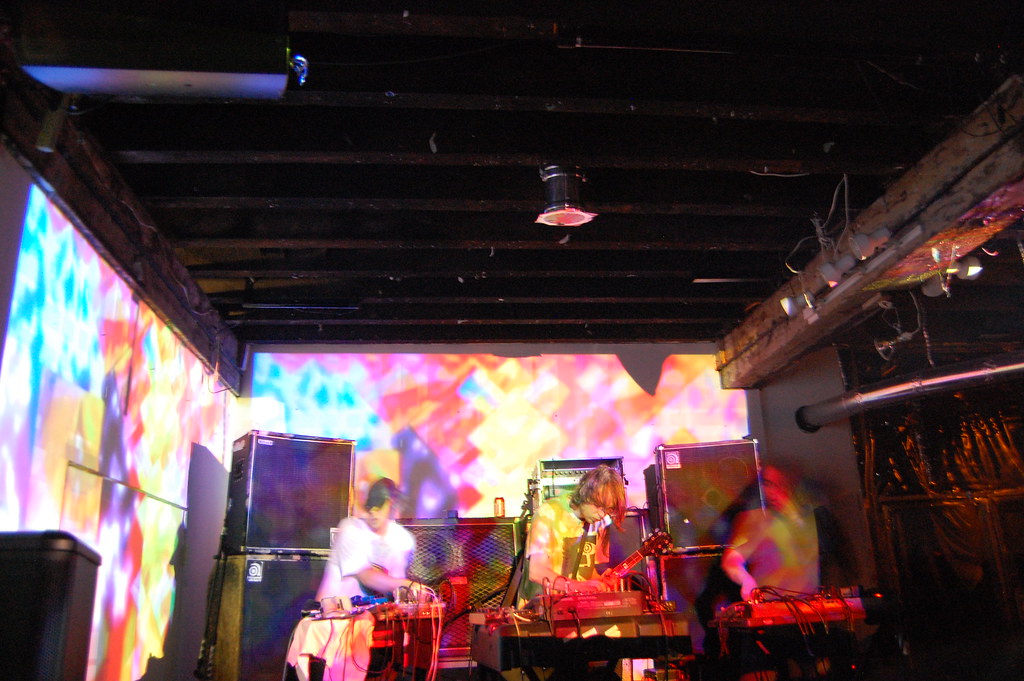
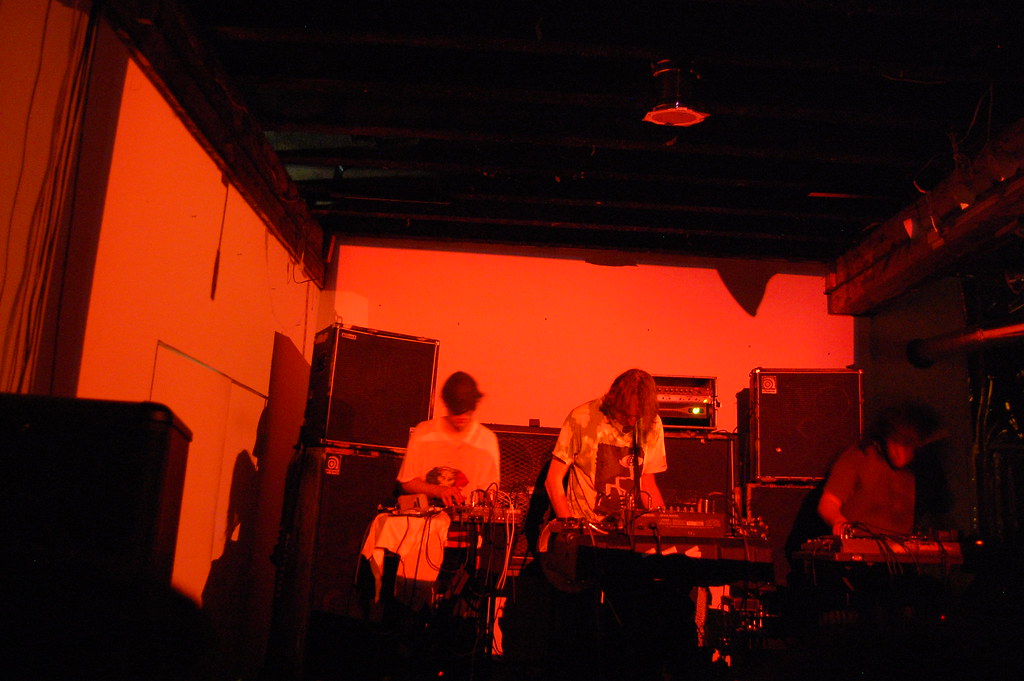
Across the East River, at the performance space/gallery/residence Secret Project Robot in Williamsburg, Brooklyn, Black Dice concluded their week-long miniature residency with a barn-burner of a set that was even louder than Friel's cacophonous display had been an hour earlier. In 2002, curator Bob Nickas described the group as "the New York art world's favorite band at the moment." (Who holds that title now? Kalup Linzy and James Franco? Patti Smith?) The fickle crowd may have moved on to other bands in the past nine years, but the group has lost none of its brio, playing new, vaguely funky noise songs from behind their tables of equipment for a solid hour, as gorgeous abstract projections by Danny Perez spilled over them.

Wednesday, February 16, 2011

Terence Koh with "nothingtoodoo" at Mary Boone


Terence Koh, performance still of nothingtoodoo, February 12, 2011, at the Mary Boone Gallery, New York. Photos: 16 Miles


Outside of Koh's gallery, Asia Song Society, 45 Canal Street, February 13, 2011


Terence Koh, performance still of nothingtoodoo, February 16, 2011, at the Mary Boone Gallery, New York

Sadly, there are no white-chocolate mountains on view in Terence Koh's one-person debut at Mary Boone. Koh has, at least for now, excised such easy, giddy pleasures from his work. Instead, there is a massive pile of salt sitting in the center of the gallery. There is also Koh himself, clad all in white, slowly working his way around the sculpture on his knees. This looks painful, though Koh gave no hint of discomfort on Saturday evening at his opening reception.

When I returned this afternoon, slipping through the white curtains that obscure the entrance to the main gallery, I was momentarily startled — first, to discover that Koh was still at it, and, second, that I was all alone with him. His back was faced away from me at that moment, as he went about his labor, which reads as a more masochistic, isolated version of Marina Abramović's recent MoMA performance, The Artist Is Present (2010). He performs for one more hour each day than she did, though he gets two days off to her one.

During one of those days off, Sunday, I walked from Reena Spauling Fine Arts and its charmingly low-key Matias Faldbakken show (more on that later) to Canada's divisive Joe Bradley affair, passing on the way the Asia Song Society, Koh's gallery and residence at 45 Canal. There were two white shoes sitting outside, one filled with flowers. Yesterday, I realized that he has been performing without shoes.

On Saturday evening, the gallery had been nearly still, as the crowd somberly watched Koh, silently rooting him on. Today, though, the silence was the result of emptiness. I felt guilty standing and watching as he went about his unending crawl, and I felt worse as I got ready to walk away. (Abramović had no shortage of supporters at MoMA.) I stayed for a few more minutes, and then, turning to go, quickly indulged an involuntary (and perhaps selfish) urge to pass in front of him, to let him know that someone had been staring.

Previously:
Terence Koh, Silent March, November 21, 2009

Wednesday, January 19, 2011

Tom Thayer, Scenographic Play, at Tracy Williams, Ltd.


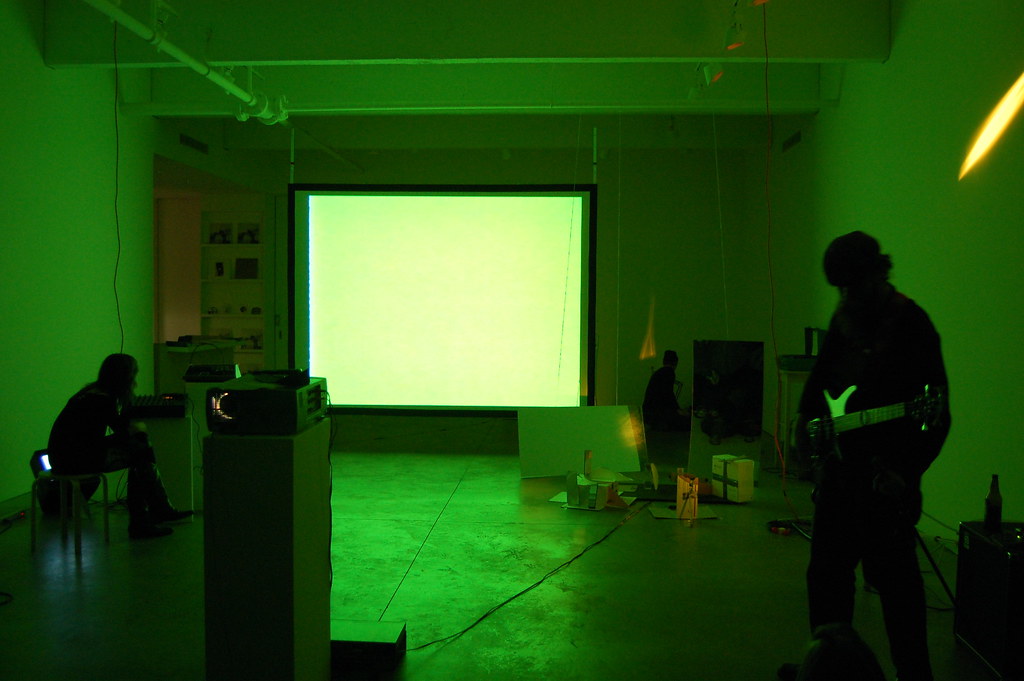
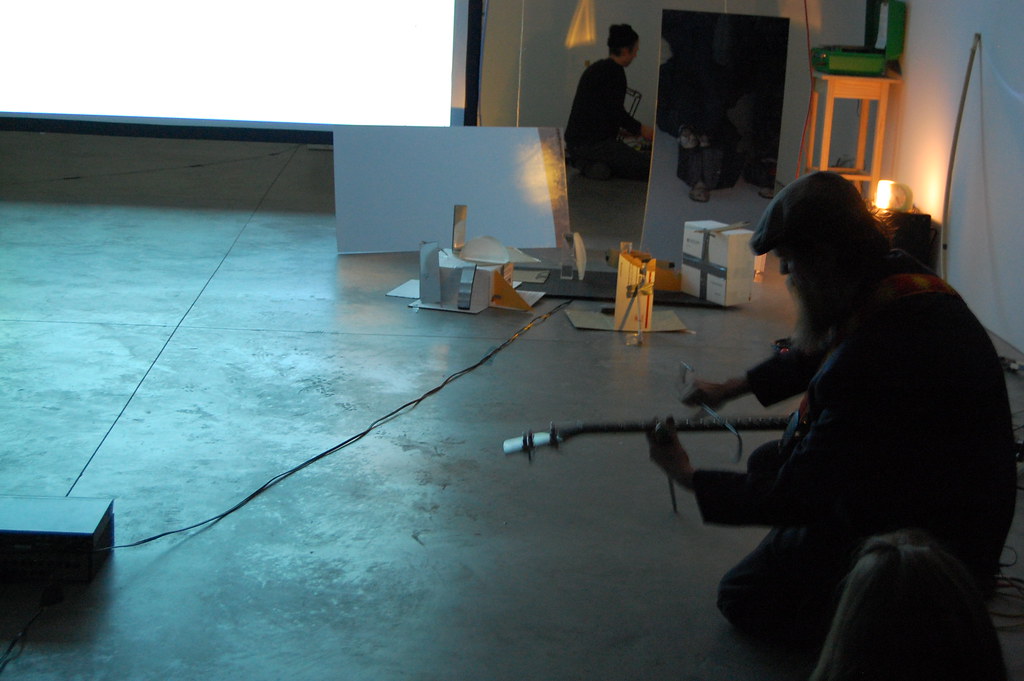
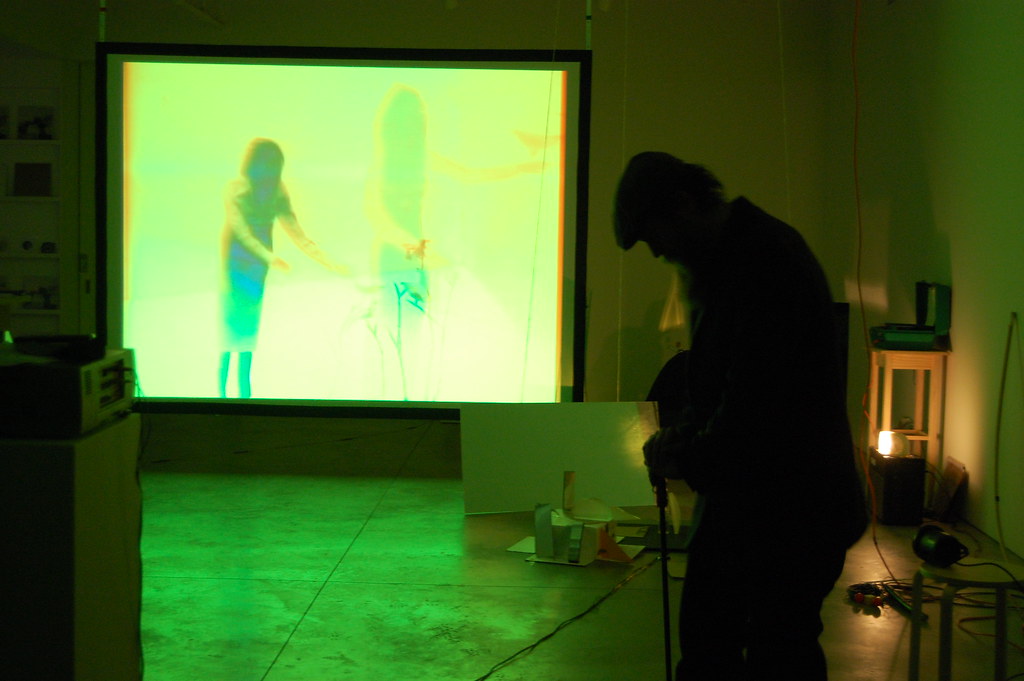
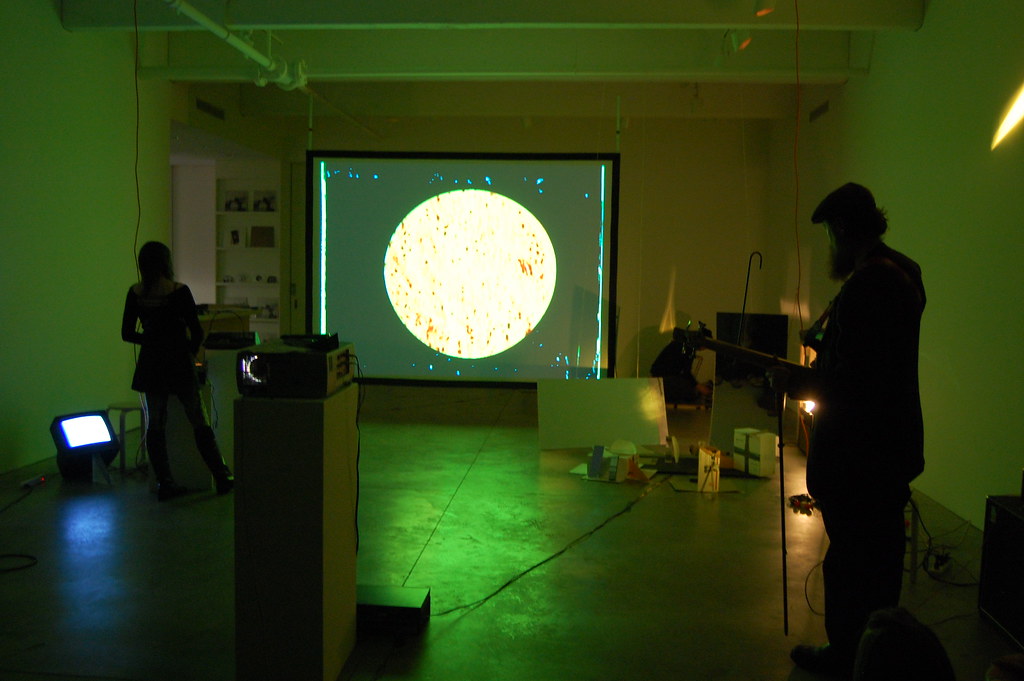
Performance of Tom Thayer's "Scenographic Play," at Tracy Williams Ltd., January 13, 2011. Photos: 16 Miles [more]

If Brooklyn artist and musician Tom Thayer so chose, I suspect that he could be a YouTube sensation, a music-video auteur courted by pop culture's most famous and adventurous performers. I say that because his video Old Smelly Haircut, a three-minute jewel that SculptureCenter curator Fionn Meade included in his delectable "Knight's Move" show last year remains one of the most exciting video works I have seen in a long while, a series of photomontages set in motion and allowed to swirl down weird visual pathways. It looked entirely fresh and fecund in SculptureCenter's wonderful old basement, and, should he ever tire of George Condo's paintings, I would like believe that Kanye West would swoon at the sight it.

However, Thayer seems uninterested in such easy acclaim, much less anything resembling accessibility. His work feels most at home alongside the ostensibly shambolic music of freewheeling experimental Brooklyn groups like the No-Neck Blues Band and Amolvacy, whom he has collaborated with in the past. (Wire has the video he did for a No-Neck track in 2008). His videos, reportedly spliced together on outmoded equipment (think VHS apparatuses), display a virtuosic command of the possibilities of such lo-fi technology. People and animals cut roughly from bits of paper appear in these short videos, enact quick hints of a story, and then melt away in the wake of warm analog bleeds of pure color.


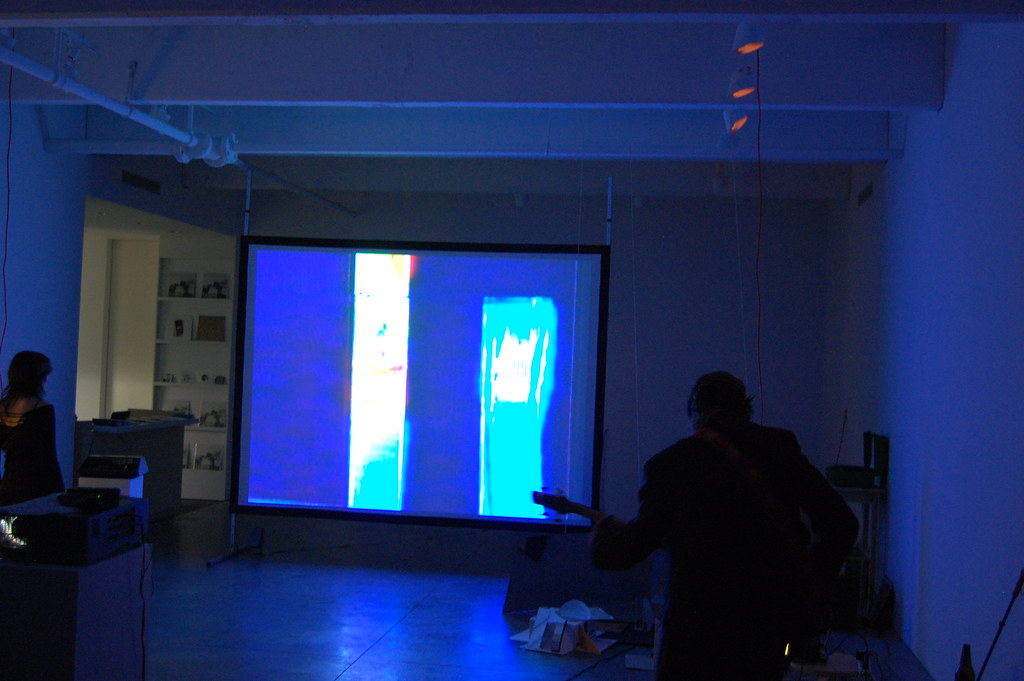
On the evenings of the 13th, New Yorkers had a chance to see more than 30 minutes of Thayer's video work on a large screen at Tracy Williams, Ltd., as he performed with Wednesday Knudsen, Kyle Clyde, Caleb Considine, Alex Hubbard, and No-Neck member Keith Connolly. The doors for the show opened at 7 p.m., allowing the evening's gallery goers to swing by other openings beforehand — an ultra-minimal Tony Feher affair at Pace, followed by Patrick Hill at Bortolami and Marcel Odenbach at Anton Kern, in my case.

By 7:30, most of the standing room in the gallery — which is to say, the area that had not been filled with video projectors, keyboards, and a handful of the artist's installations, comprised of aging record players, televisions, marionettes and drawings — was occupied. The ensuing show was an amalgam of theater, performance art, and music compositions. Connolly looked imperious at the front of the action, sporting a large beard and a flat cap, brutally forcing a long curved metal rod under the strings of a bass guitar, sending knotted lines of notes through the amplifiers.

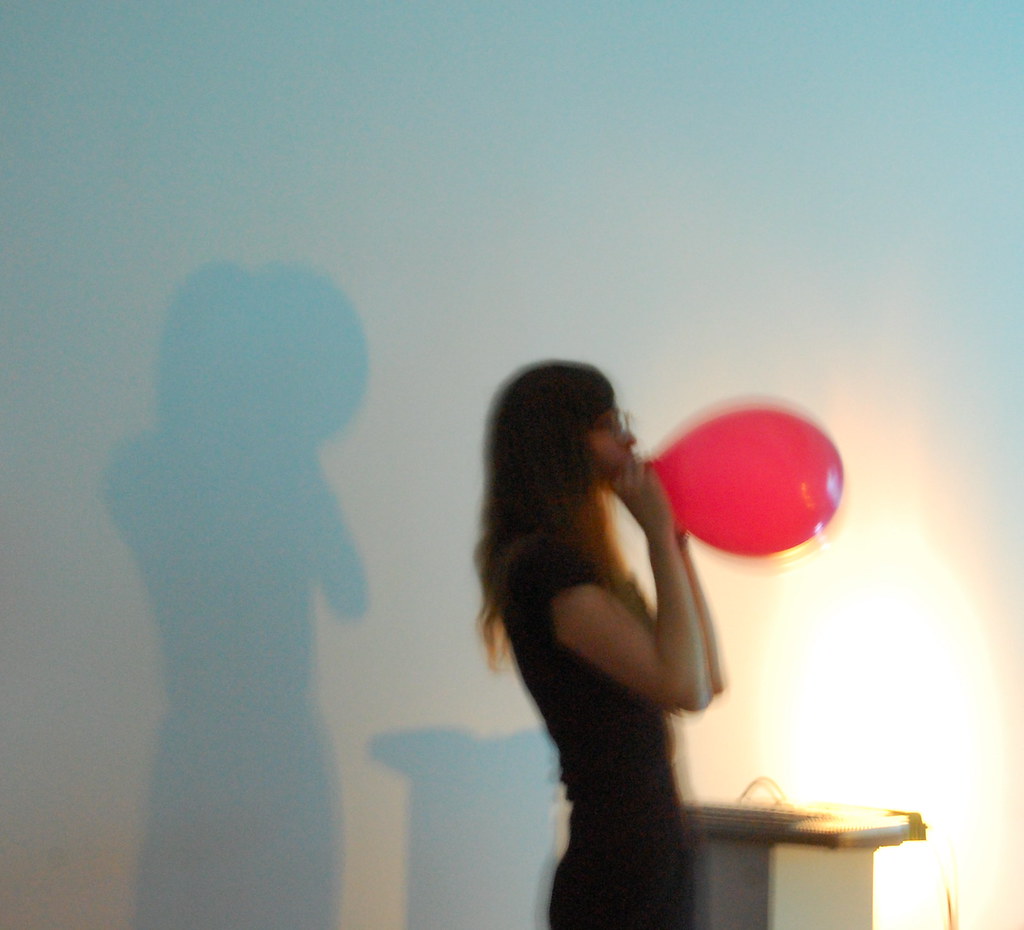
Knudsen manned a keyboard and saxophone, and at one point inflated balloons before noisily draining the air from them in long streaks, or popping them. Connolly dragged a metal walking stick across the floor, creating aching shrieks, as other rhythms and hints of melody bubbled around him. In the more theatrical realm, a towering giant of a man emerged from the gallery behind the audience, wearing a long cloak and bearing a bouquet of flowers. The crowd parted, allowing him through, and he passed in front of the video, disappearing into the gallery in the back. Then the performance continued.


As the music finally came to an end and the lights came up, a bit after 8 p.m., I was entirely confused about what had just occurred. Was it a success or a failure? And by what standards? Friends that attended the second, final performance, two days later, shared similar feelings. Mixing and matching elements of various media, Thayer seemed to be slowly piecing together some strange, handmade new art form based on shared, lived experiences. In a statement accompanying the show, Thayer provides a hint about what Scenographic Play means. He asks: "What, in essence, comes to constitute our shared 'now'?" We go to art galleries to try figure that out.


Tom Thayer, "Scenographic Play"
Tracy Williams, Ltd.
521 West 23rd Street
New York, New York
Through January