Showing posts with label Manhattan. Show all posts

Wednesday, August 3, 2011

"Flowers for Summer" at Michael Werner Gallery


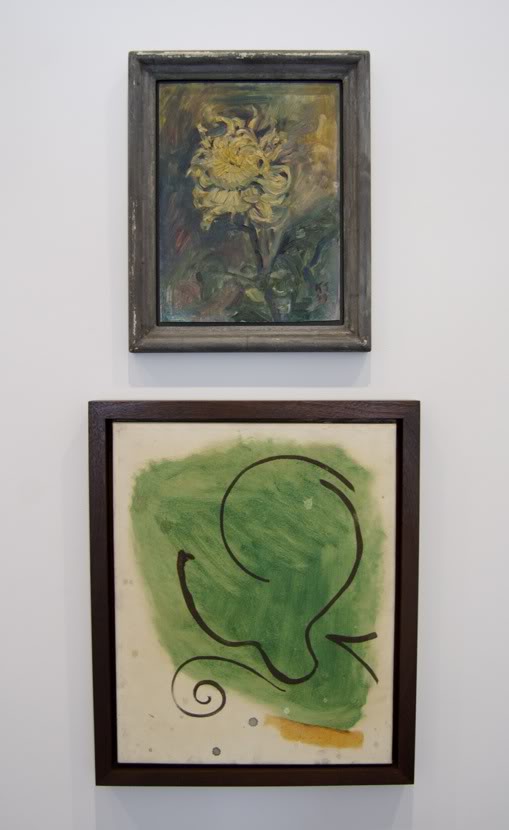
Top to bottom: Kurt Schwitters, Chrysanthemum, 1946. Oil on board, 13 x 10 in.; Sigmar Polke, Farbprobe (Color Study), 1986. Mixed media, malachite, silver oxide on canvas, 19 3/4 x 15 3/4 in., in "Flowers for Summer," at Michael Werner Gallery, New York, through September 10, 2011.

In 1946, two years before his death, Kurt Schwitters painted a bright, burning yellow chrysanthemum on a board just a bit larger than a slice of paper. It suggests a manic, almost terrifying, intensity and, as it happens, is hanging at the Michael Werner Gallery right now, alone worth a trip to East 77th Street.
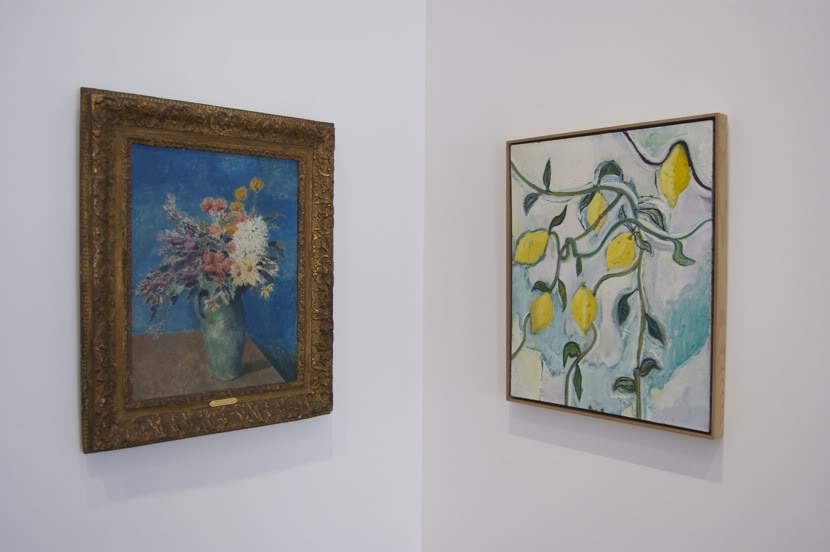

Pablo Picasso, Vase de fleurs, 1904. Oil on canvas, 25 1/2 x 19 3/4 in.; Peter Doig, Lemons, 1989. Oil on board, 30 x 25 in.

The current show one will find there is called "Flowers for Summer," a simple title and self-explanatory premise that belies the high quality of work on view. That Schwitters, for instance, hangs above a spare and elegant Sigmar Polke, just a few black lines curving over a green cloud. It's a minor work — Farbprobe (Color Study), it's called — but it's also a prototype for a good percentage of the abstract paintings being made today.

Mere inches from this German doubleheader is another thrilling pairing: a brushy 1904 vase with flowers by Picasso next to a 1989 scene of lemons (flowers gone mature) hanging on the branches of a tree, by Peter Doig. The latter is vaguely surreal, the branches wiggling in from every side of the painting like green snakes, and it holds its own against the Spanish master's work.
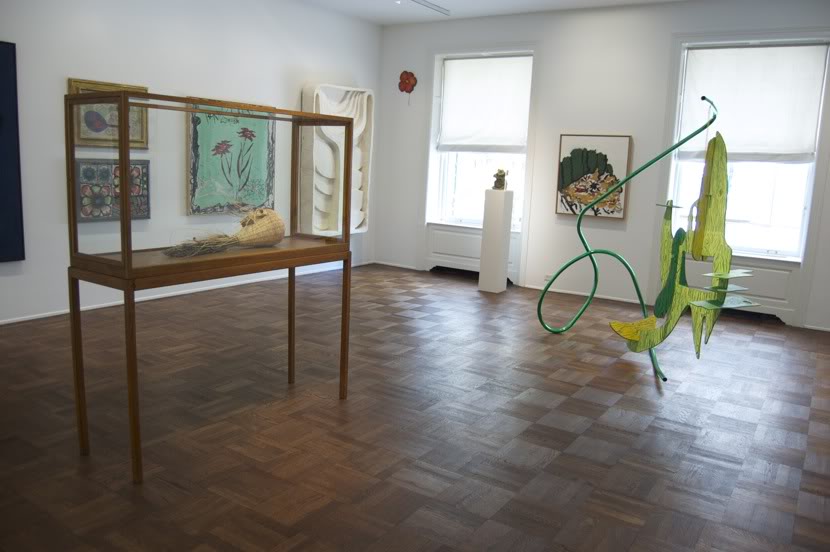

Installation view

Lucio Fontana offers a flower vase, as well, though his is a ceramic sculpture and sharply angled, violently brushed with washes of light color. It is from 1938, when Fontana was not yet quite 40. His iconic slashed and punctured canvases were still years away, but here one can see all of the strange energy he would hone and then channel into them.
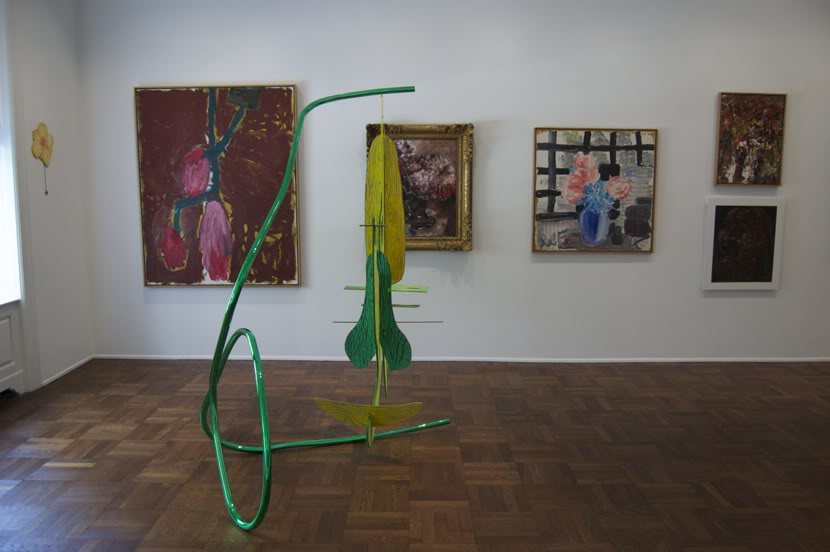

Installation view; foreground: Aaron Curry, Greenegalbwrry, 2011. Steel, wood, wood stain, cardboard, ink, gouache, rope, 81 x 54 x 71 in.

The gallery has taken a charmingly lax approach to its theme, meaning that a tall 1941 canvas with bulbous undulating shapes — all black, white, and dark blue — by Léger can qualify as a flower for summer, as can a still life by Kirchner, in which a wine glass sprouts into something resembling a flower in its shadow, which falls on a table covered with floral motifs. In a piece from 1911 by the Swiss painter Félix Vallotton (which appeared in Werner's revelatory 2010 exhibition of the artist's work), the flowers appear on a woman's white shawl. She looks out of the picture and holds a fan in her hand, teasing an offer of a cool, refreshing breeze.
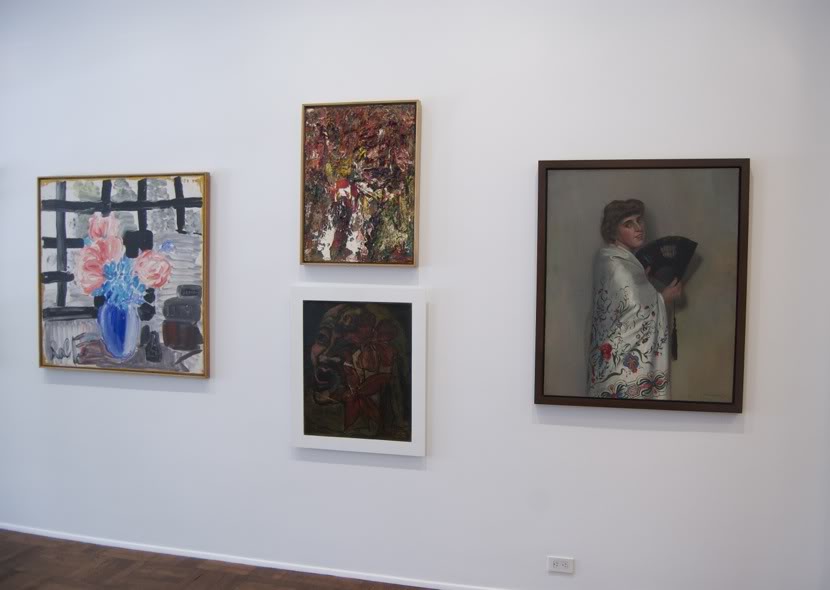

Clockwise from left: A.R. Penck, Pfingstrosen, 1974. Acrylic on canvas, 39 1/4 x 39 1/4 in.; Eugène Leroy, Ides de mars-iris, 1992. Oil on canvas, 28 3/4 x 21 1/4 in.; Félix Vallotton, "Le châle blanc," 1911. Oil on canvas, 39 1/2 x 32 in.; Francis Picabia, Papion, ca. 1936-38. Oil on canvas, 25 1/2 x 21 1/4 in.

Nearby, in a Picabia from the latter half of the 1930s, flowers connote darker, more mysterious urges. Two orange-red flowers hover in the center of the canvas, sharing the frame with a nude woman, a large head, and other subjects that are harder to discern: Picabia, ever an arch provocateur, makes it difficult to focus on a single image. Here, summer — reality, really — is coming undone.
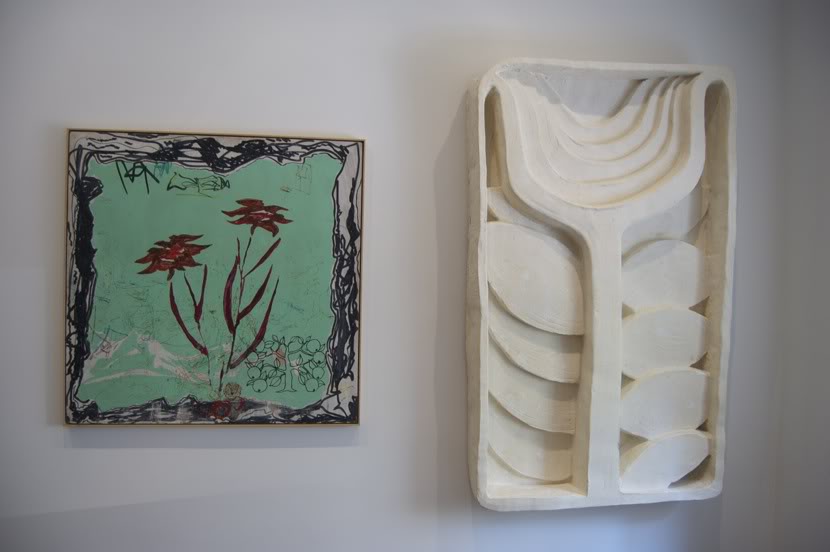

Per Kirkeby, Energy, 1969. Mixed media on Masonite, 48 x 48 in.; Thomas Houseago, Flower/Plant Panel I, 2011. Tuf-Cal, hemp, iron rebar, 75 x 46.5 x 8.5 in.

Monday, August 1, 2011

Grand Openings at the Museum of Modern Art, New York


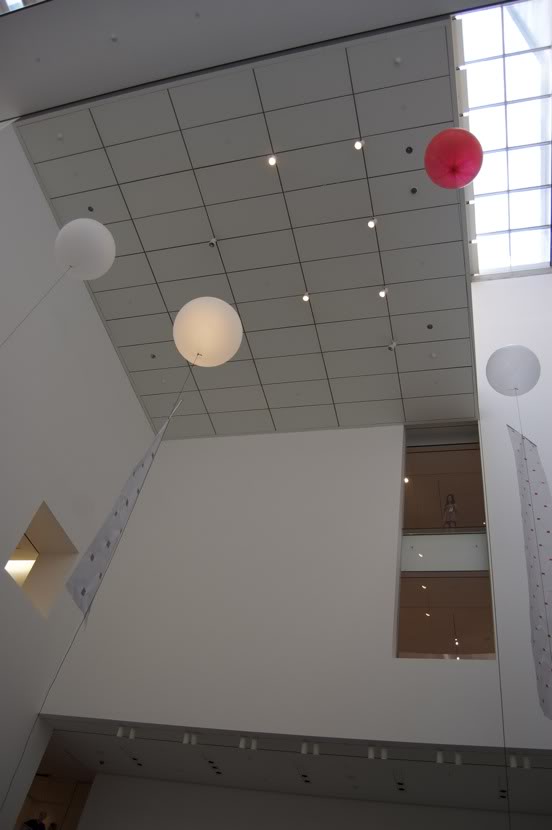
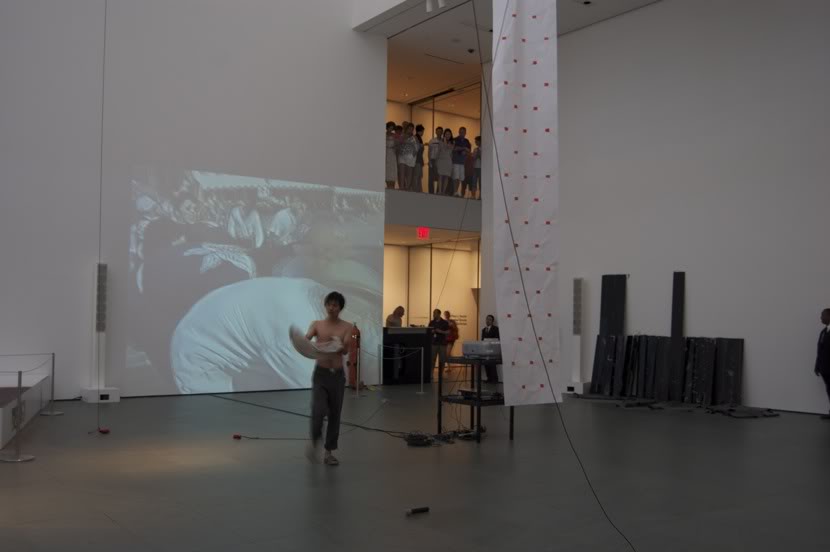
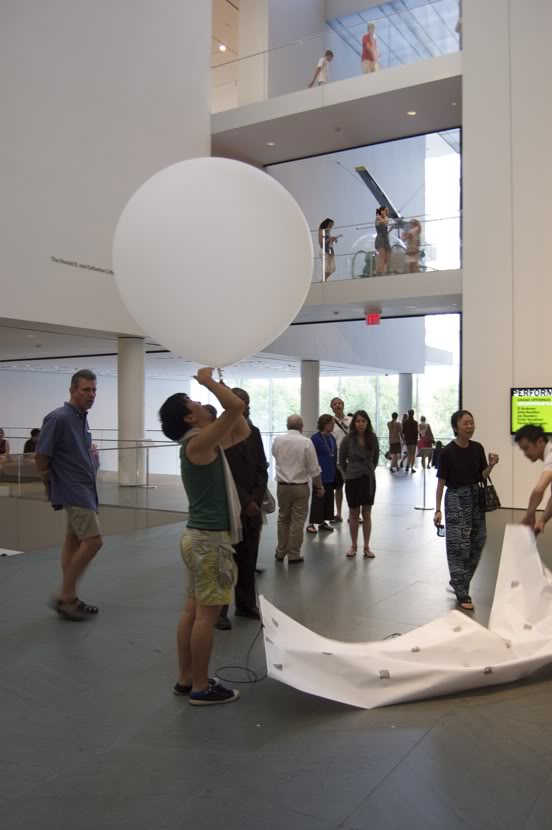
Ei Arakawa sending a weather balloon into the air, in Grand Openings Return of the Blogs, at the Museum of Modern Art, New York, July 20, 2011.


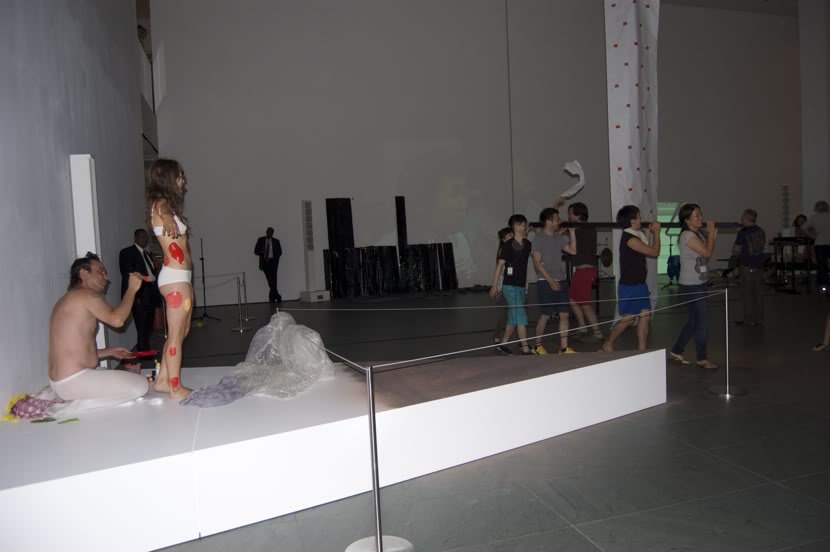
Today, Monday, August 1, is the final day of Grand Openings' 13-day run at the Museum of Modern Art. The five-member group — comprised of curator Jay Sanders, artist and gallerist Emily Sundblad, artist Ei Arakawa, musician Stefan Tcherepnin, and artist Jutta Koether — has staged a variety of events at the museum over the past two weeks, ranging from discussions with curators to a performance by the black-metal band Liturgy.

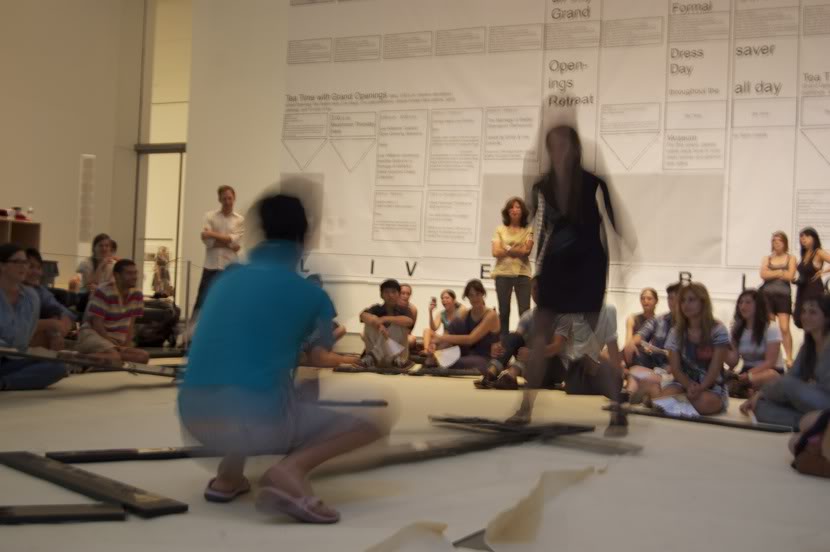
On Friday, July 22, the group staged a singles night in the museum's atrium that was emceed by Arakawa. Dozens of self-identified single people performed Koether's Mad Garlands piece, using black wooden planks (some splashed with liquid glass) to enact a variety of actions at Arakawa's direction. It was pure mayhem. A dance contest, with two partners sharing a plank, followed. I participated, and wrote about it as part of my piece on Grand Openings' MoMA appearance, published in last week's New York Observer.

The members of Grand Openings spent much of their time in the atrium working on laptops while sitting on benches or wandering around the space, preparing for later events, inviting that old question: "Is this art?" -- or, perhaps more precisely: "Are they performing?" The show seemed intent on tossing aside any attempt at an answer. Sure, it's art: it's in a museum. But maybe we're at a point where we need to start asking better questions. This weekend, a writer friend told me he thought the whole affair smacked of "half-baked relational aesthetics," which is a description that I almost suspect the group would applaud.


Painter and professor Jutta Koether, artists Enzo Camacho and Amy Lien, and Arakawa on a tour of MoMA's sculpture garden


Arakawa, Anne Tcherepnin, Stefan Tcherepnin


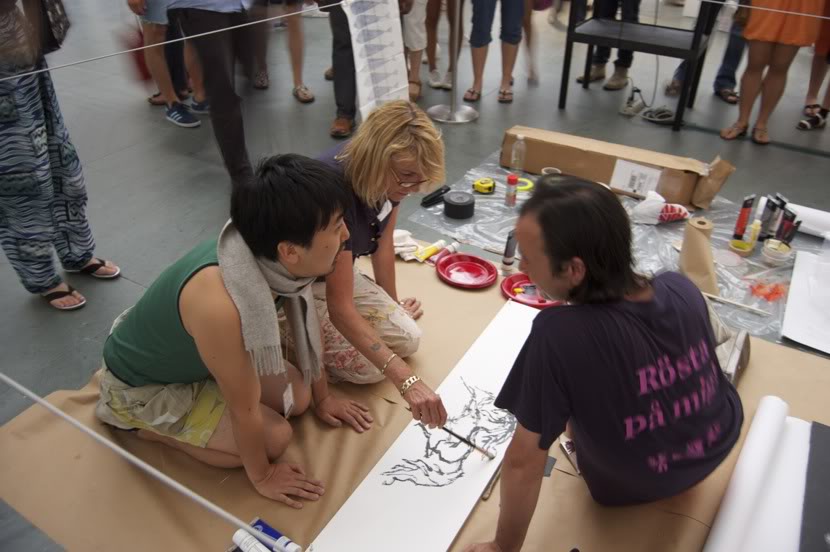
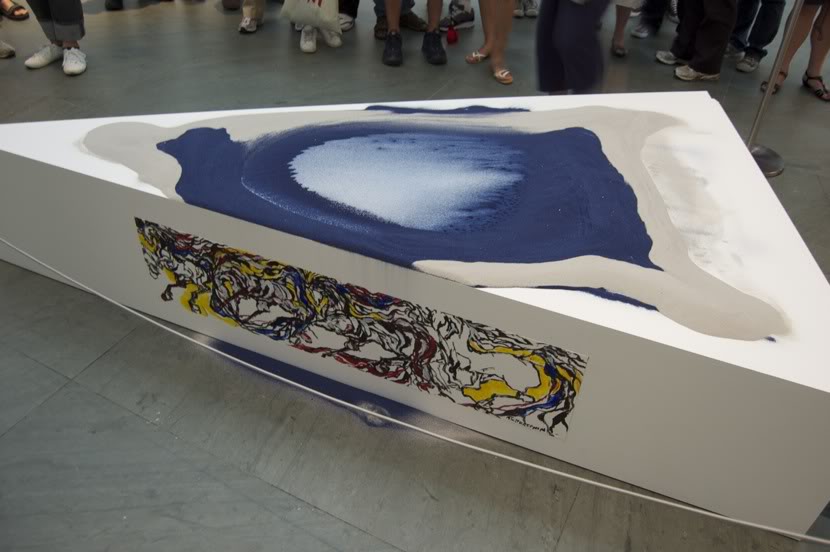
July 21, 2011: a drawing by Ms. Tcherepnin and a sand piece by her son, Stefan Tcherepnin


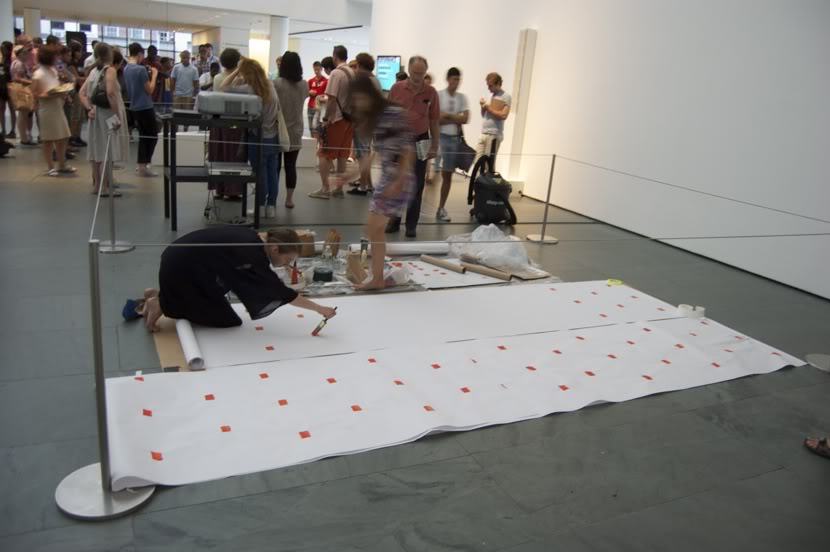
Sundblad and an accomplice at work on replica Niele Toroni paintings


July 22, 2011: Arakawa and Koether demonstrate how to dance with the aid of a wooden plank


July 24, 2011: Masaaki Yoshino

The exhibition (or the residency or the show: it's hard to know what to call it) is called Grand Openings Return of the Blogs, the latter part of that title referring to the typed "blog" entries that the group members have been posting in the atrium — their base of operations — throughout their time at the museum. In addition, they have been updating the schedule of events for the show on a webpage available through MoMA's site, in something of a blog-like fashion.

Stretched over thirteen days, it is has been impossible to see everything that has taken place. I have only visited four of the first twelve days, but even if one watched for all thirteen days, it would be impossible to keep a complete record of activities, since multiple events often happened at the same time. Arakawa explained to me during an interview that only members of Grand Openings will effectively see the whole show.

A scene from the rehearsal for the opera The Marriage of Stefan Tcherepnin

Blogs have become the primary means of documenting the myriad events. Reading the myriad writers that have stopped by the atrium to see the show (Danielle Dobies, Michael Bilsborough, and Ashton Cooper, for instance), it is possible to put together a partial record of activities. The resulting picture is inevitably incomplete, but seems perfectly in keeping with Grand Openings' approach, which continually elides performance and rest, art and inactivity.

Friday, July 29, 2011

Colin Snapp and Daniel Turner at Martos Gallery


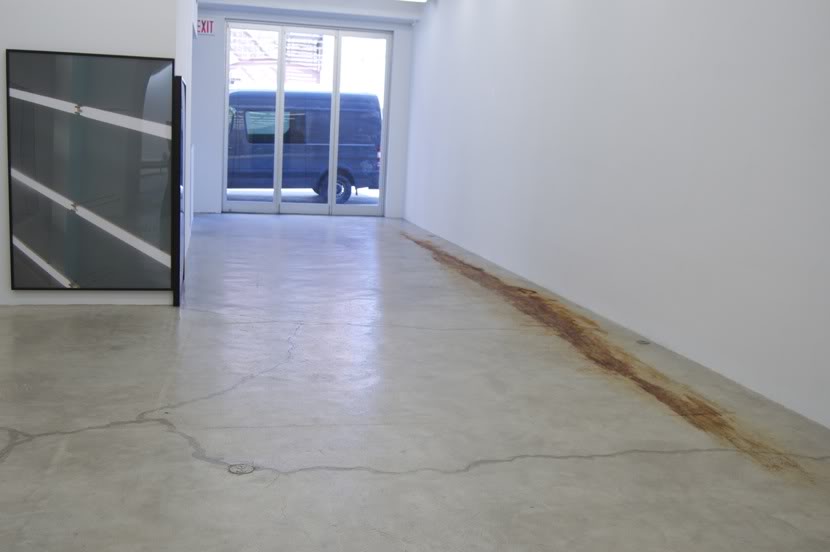
Installation view of Colin Snapp and Daniel Turner at Martos Gallery, New York, through July 29, 2011.


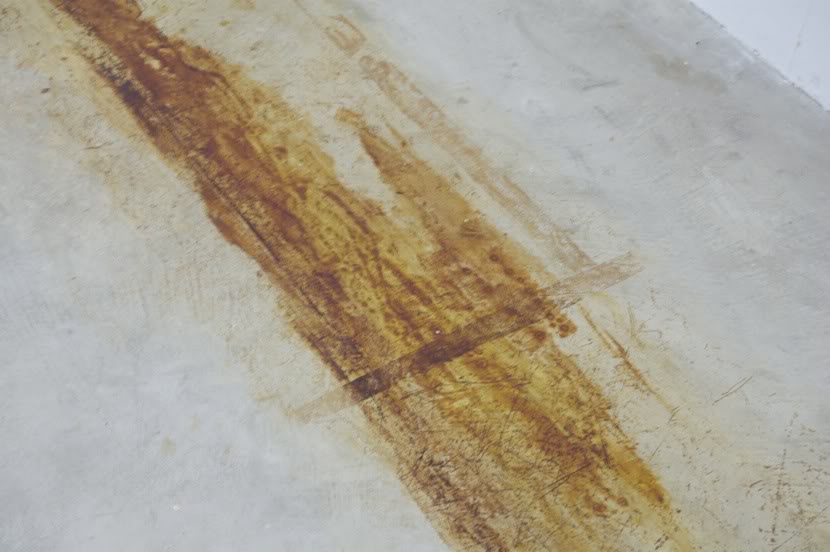
Detail view of Daniel Turner, untitled iron oxide stain, 2011

Daniel Turner's works often evince a just-barely-controlled aggression. He has scuffed crisp-white walls with rough, grey abrasions and packaged tar under folds of plastic and vinyl, keeping toxicity just out reach, rendering it almost sexy. In his best pieces, abuse and pleasure are uncomfortably bound up together.

At Martos Gallery, Turner has laid a long, thin blanket of rust across a stretch of the floor. My photographs fail to convey this, but the work bubbles with earthy, ocher, primal colors, and it wouldn't look out of place in Washington's Hoh rain forest, where Colin Snapp, the other artist here, shot some of his large-scale photographs.

Like Turner's piece, Snapp's photos are immediately cold and forbidding: dark or washed-out, blurry and almost illegible. But then, assuming you're not up too close, you notice leaves or a hint of a flower, some warmth creeping up through the severity.

Tuesday, June 14, 2011

Liz Luisada and Shaun Krupa at Klaus von Nichtssagend


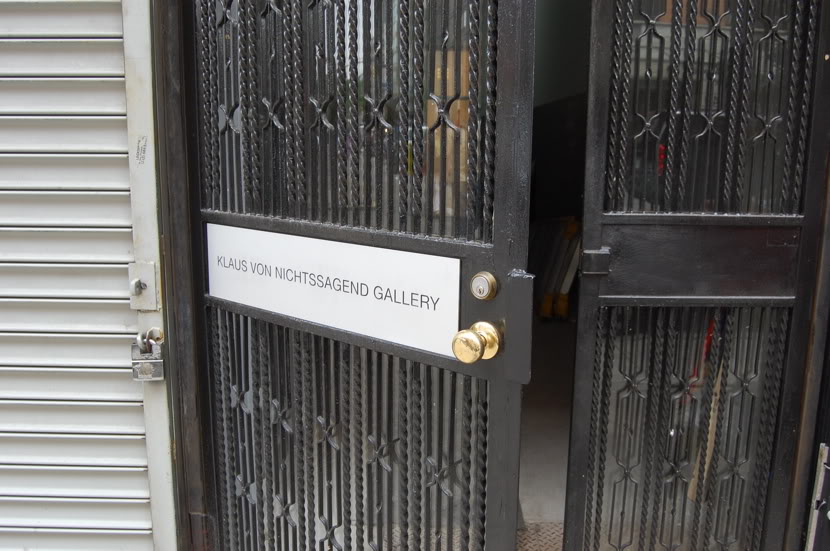
The entrance to Klaus von Nichtssagend Gallery, New York. On view: Liz Luisada | Shaun Krupa, through July 3, 2011.


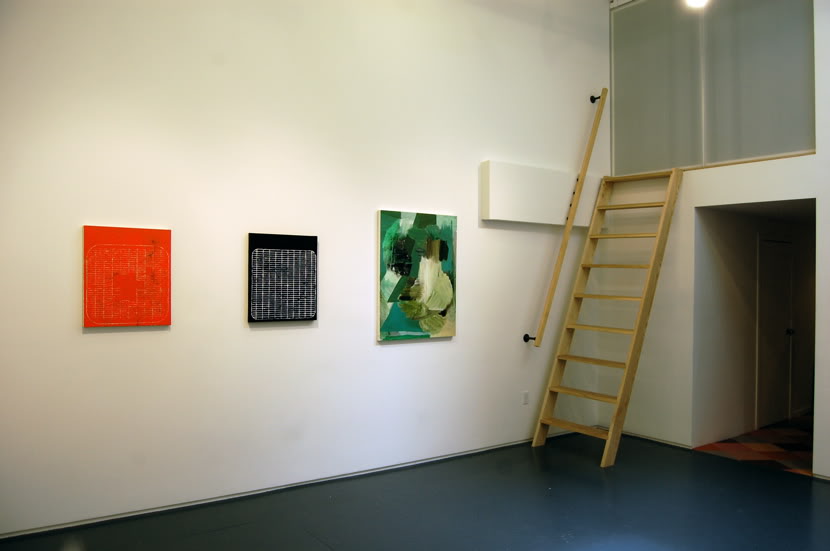
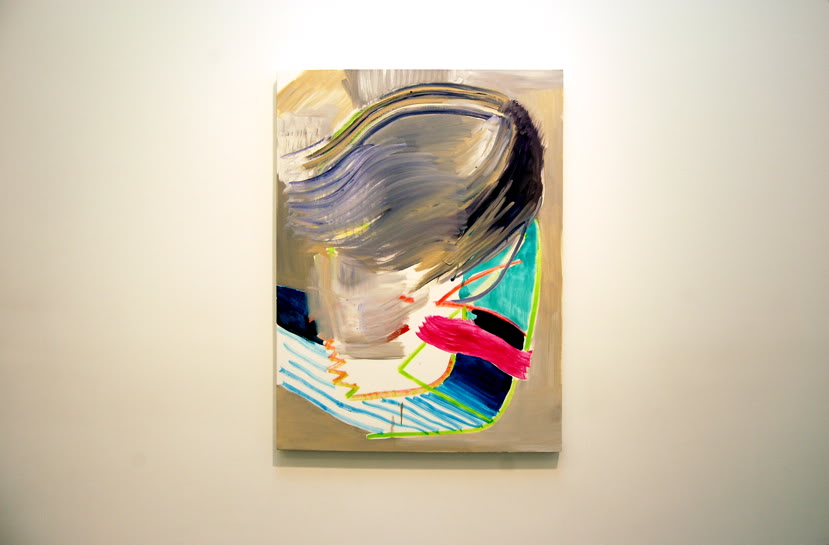
Shaun Krupa, Abandoned Mansion, 2009. Acrylic, house paint, and hair on canvas, 24.25 x 20.25 in.; Shaun Krupa, Coral Reef, 2011. 24.25 x 20 in. Oil on canvas.; Liz Luisada, Dang Dog, 2011. Oil and acrylic on canvas, 40 x 30 in.

Liz Luisada and Shaun Krupa, both members of RISD's class of 2001, cover a fair amount of painting's charted territory in their modest two-person show at Klaus von Nichtssagend. Krup appears to be the more rigorous, hard-edged abstractionist of the pair, at least until you read his titles. Two small paintings — one black, one orange, both lined with white grids (pictured above) — are named Coral Reef and Abandoned Mansion. They're nearly identical, though the latter is stuck with a few patches of hair and its grid vanishes at its center, as if to ask how much difference can be wrought from only minute change.

Compared to Krup and even her own past work, Luisada offers a looser touch. Sourcing "imagery from dreams and mysticism," according to the press release, she builds almost-abstract canvases (there's always a hint of a face or a figure) that once would have been labeled lyrical. This may be a transitional moment in her work, her crowd-pleasing-Techicolor, Sonia Delaunay-in-a-blender style morphing into something breezier.

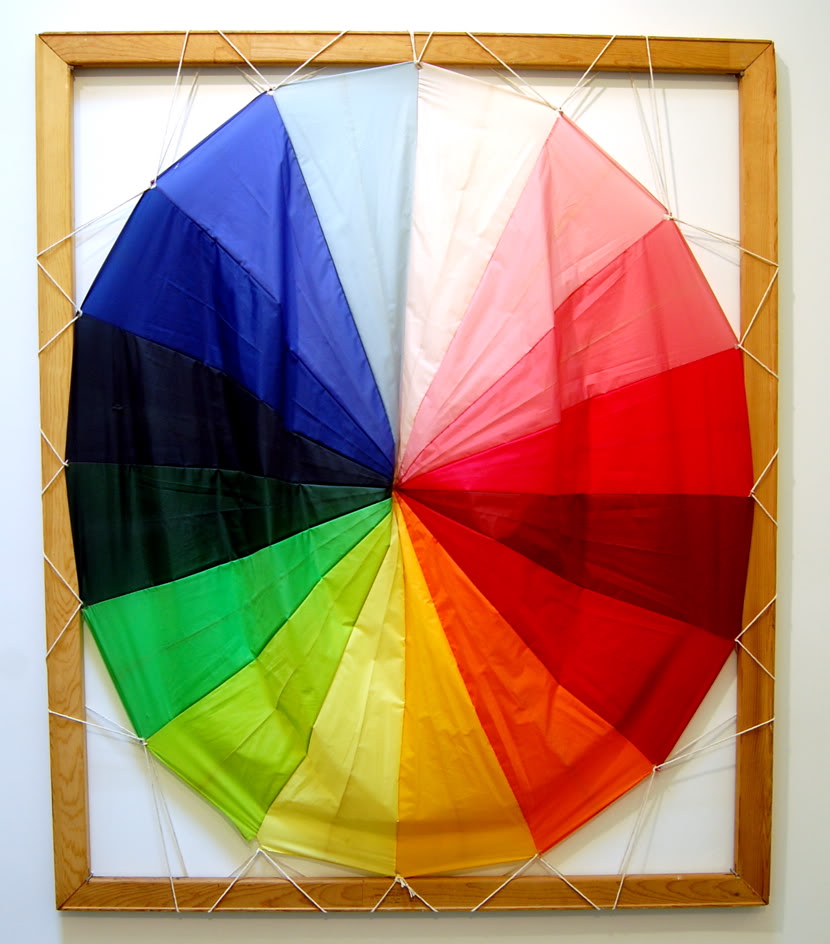
The most interesting painting in the show belongs to Krup and includes not a single drop of paint. It's a vivid rainbow of an umbrella that he has gamely stretched to a frame and titled Don't Open That Umbrella in the House! It's too late for that, but its bravado is a welcome exclamation point in an otherwise determinedly quiet display.


Liz Luisada, Star Chasm, 2011. Oil and acrylic on canvas, 40 x 30 in.


Shaun Krupa, Don't Open That Umbrella in the House!, 2010. Umbrella, string, and wood, 60 x 50 in.

Friday, June 10, 2011

After 38 Years, Trisha Brown's "Roof Piece" Ventures from SoHo to the Meatpacking District


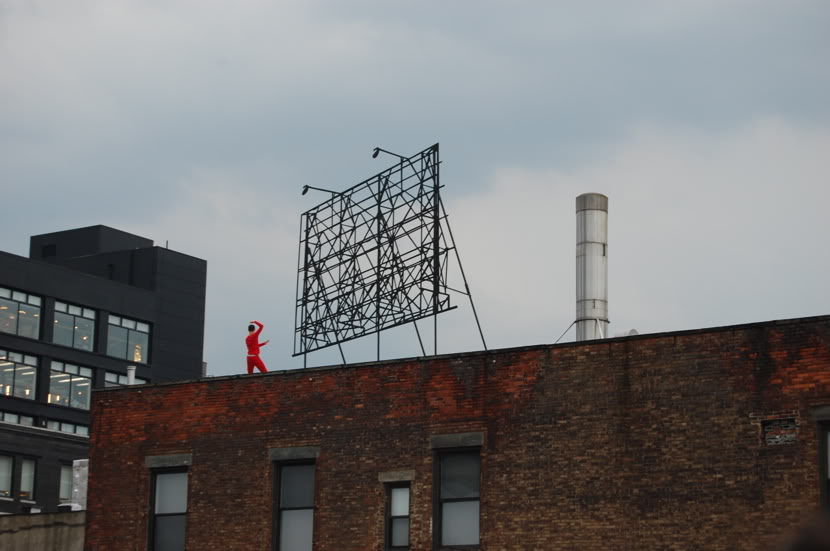
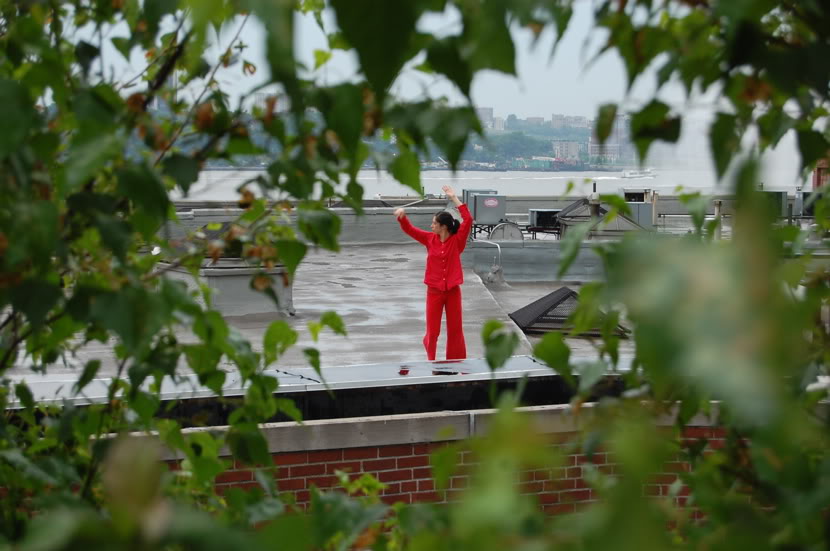
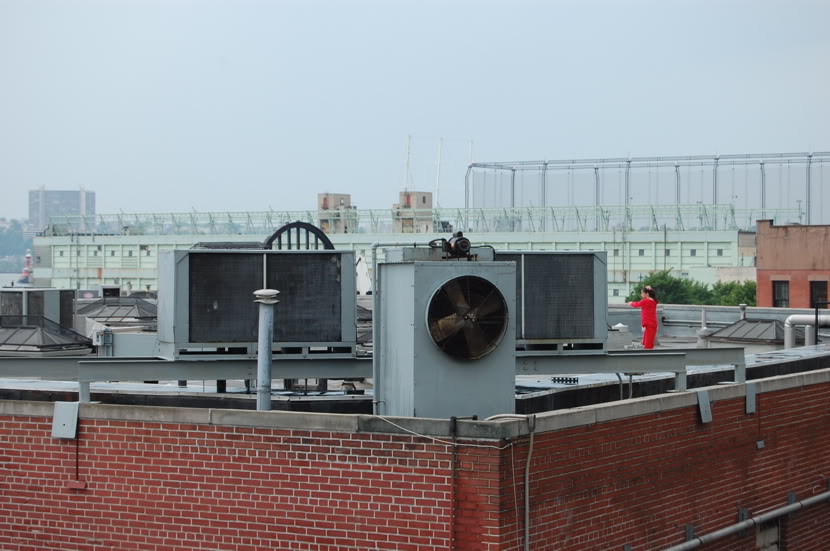
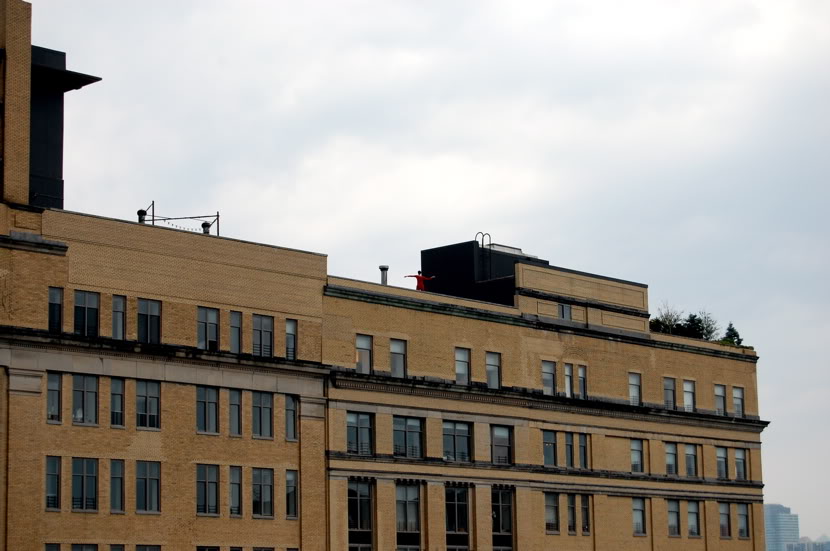
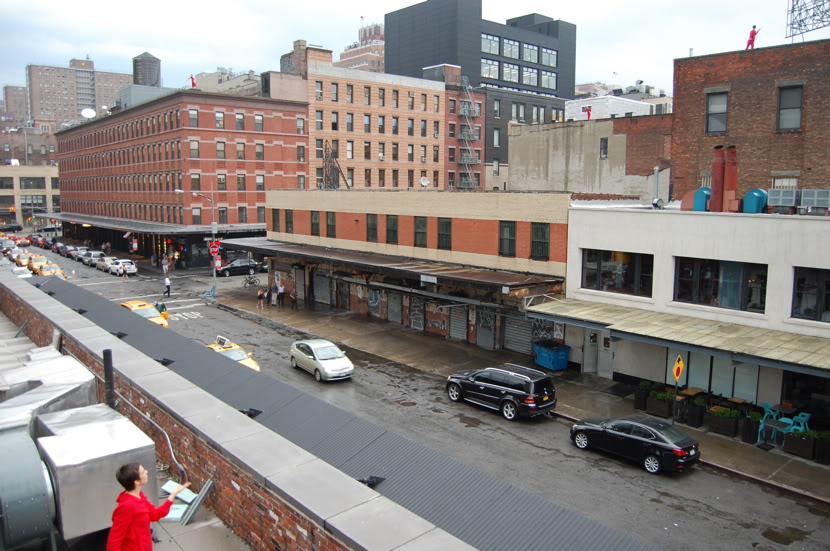
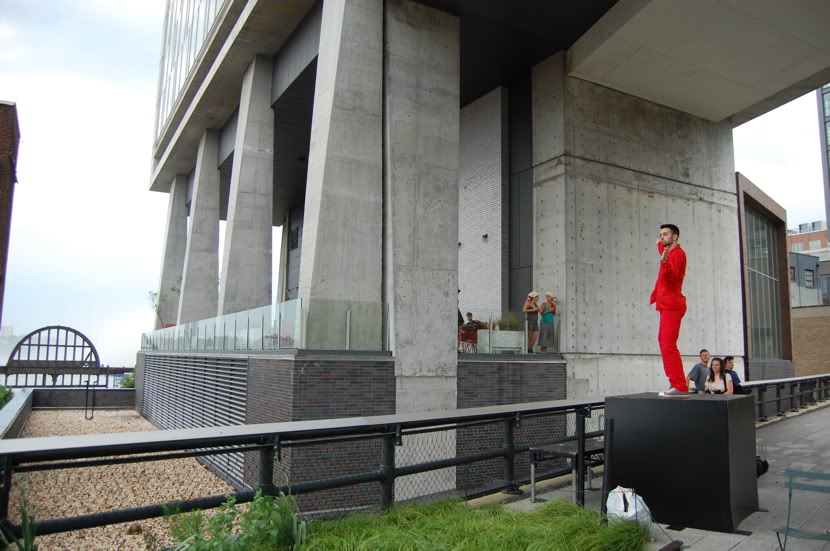
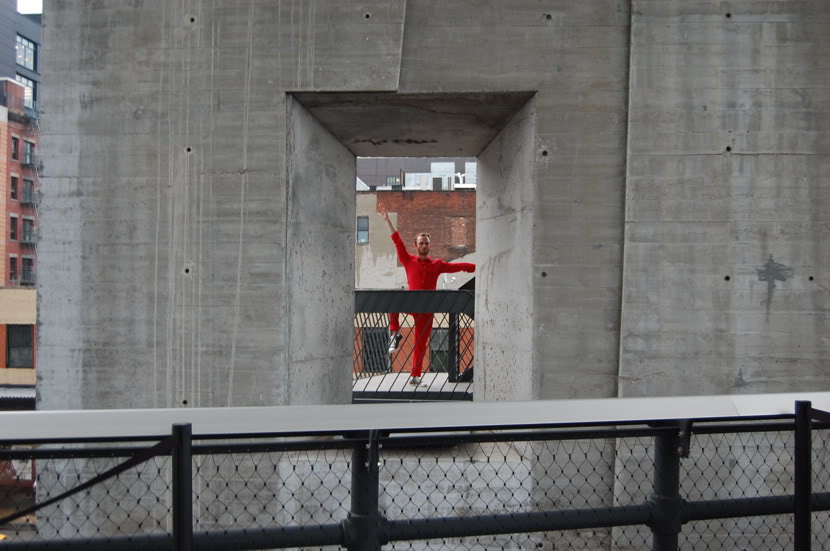
Performance views of Trisha Brown Dance Company performing Trisha Brown, Roof Piece, 1971/2011, on and around The High Line, New York, June 9, 2011.


Excerpts from Trisha Brown, Roof Piece, 1971/2011, on and around The High Line, New York, June 9, 2011. Video: 16 Miles.

The gods favor Trisha Brown and her dance company. That's the only conclusion I can draw after watching a devastating torrential thunderstorm suddenly clear just moments before 7 pm last night, right before the scheduled start of a performance of Brown's seminal 1971 Roof Piece along the southern stretch of The High Line. The piece was performed without a hitch, and the storms resumed within hours of its conclusion. Unbelievable.


It's hard to believe, but this is the first time that Roof Piece has been performed on outdoor rooftops since 1973, when it was staged in — or above — SoHo. Earlier this year, some New Yorkers saw a modified version of the piece, titled Roof Piece Re-Layed, at the Museum of Modern Art, with Brown's dancers sending choreographic signals around Yoshio Taniguchi's airy atrium. Each performer watches another in Roof Piece, miming the movements they see, creating a chain of slowly evolving dance over the course of about 30 minutes. Even in the austere environment of MoMA, it was a thrill to see. But a thought lingered: What would this look like outside, with a dancers transmitting the piece along an expanse of roofs?

We now know that it looks gloriously fresh — and wonderfully strange.


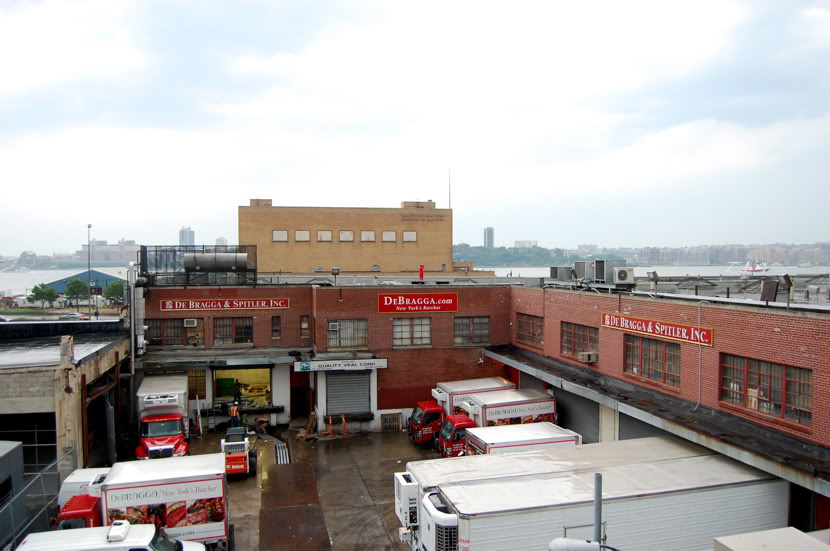
Brown's dancers, all sporting bright red outfits were positioned throughout the area. There was one high atop a building just south of Gansevoort Street, and two standing on the long, low roofs of the DeBragga warehouse (one of the last remaining meat companies in the Meatpacking District). They were secreted in semi-hidden positions along the elevated park and the base of the Standard Hotel — did passersby think the large crowd had gathered to watch one of its notorious displays of flashers? — and arrayed across the buildings to the east of the walkway, where Sperone Westwater once resided.

When Roof Piece was performed in 1973, viewers watched the string of dancers from the top of a building on Wooster Street. The High Ligh, though, allows for a more participatory spectacle. You can spot dancers through the leaves of the thick shrubbery along the bottom of the path — enjoying a personal show — and then wander up to the Standard, where the largest crowds gathered last night. If you go, walk back and forth between the sides of the park and follow the passage of the dance's movements. Seeing every dancer requires some work, but as you suddenly spot each one — shimmying, popping, and swaying away — you may feel a refreshing shock of recognition, a humane sense of alarm.


Another 7 pm show is scheduled for tonight, and 5 pm and 7 pm performances are to follow tomorrow. There are reports of incoming thunderstorms. Keep your fingers crossed.

Saturday, March 5, 2011

Art on the 33rd Floor of 1500 Broadway in Times Square


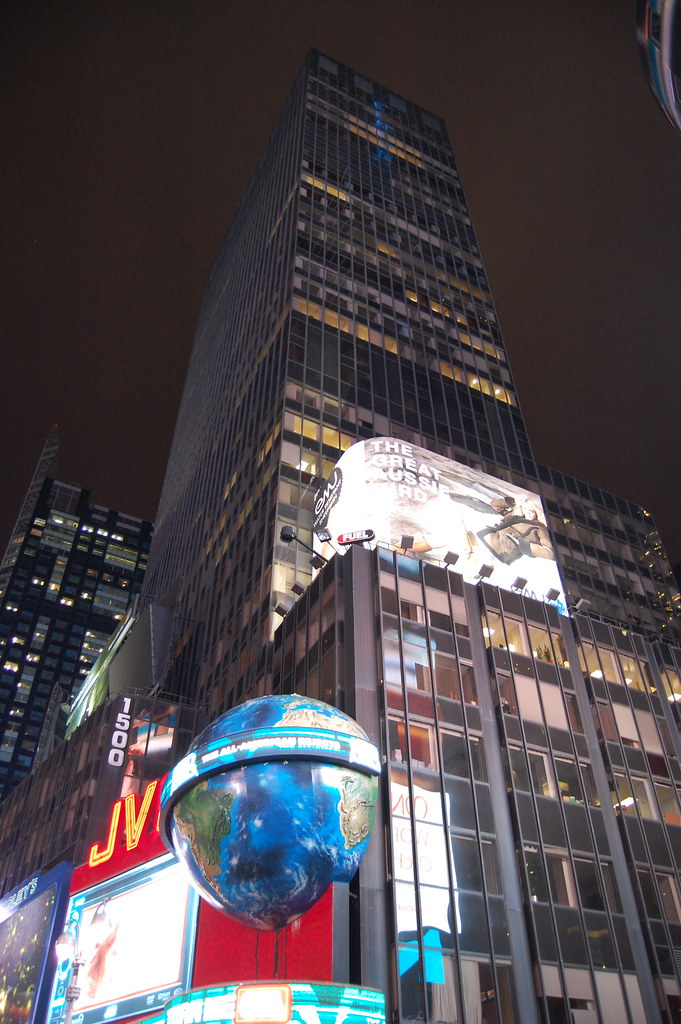
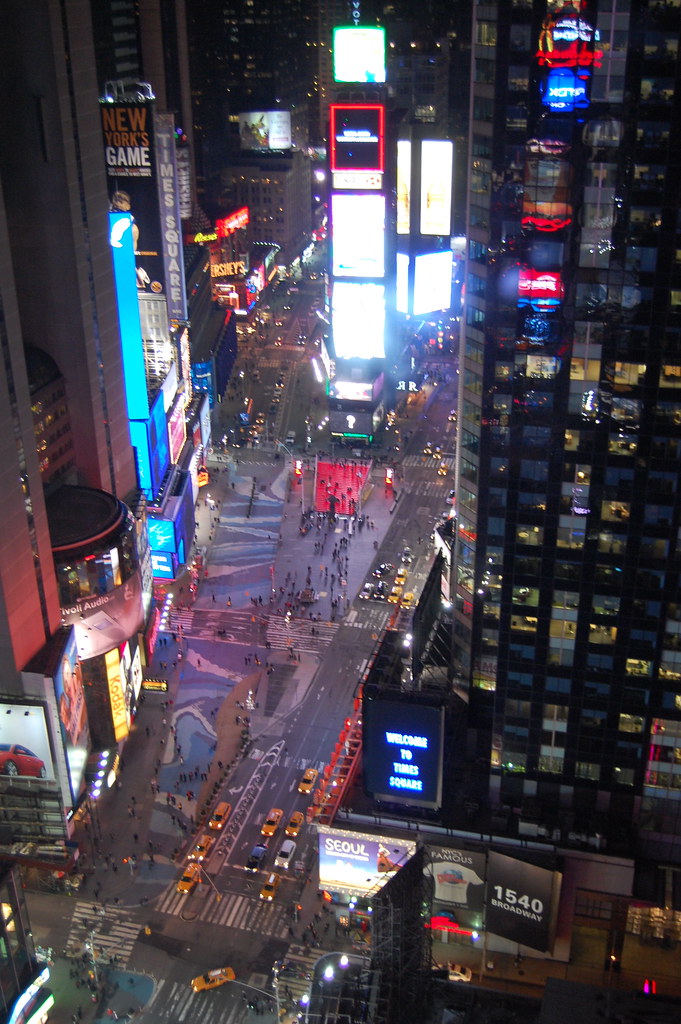
1500 Broadway, New York, February 28, 2011. Photos: 16 Miles [more]


Nick van Woert, Lady Lady, 2011. Fiberglass statue, polyurethane, 44 x 72 x 24 in.

Art has been heading heavenward in recent months. Summer Guthery's Chrysler Series has been bringing an array of events and ephemeral exhibitions to the 31st floor of the Chrysler Building, and the Dependent Art Fair (more on it later) staged a one-night blowout on the 12th and 14th floors of the Four Points by Sheraton hotel in Chelsea on Friday. On Monday night, the 33rd floor of 1500 Broadway was the site of another above-ground exhibition, arranged by billionaire London–based collectors Anita and Poju Zabludowicz, whose Tamares investment group owns the building.

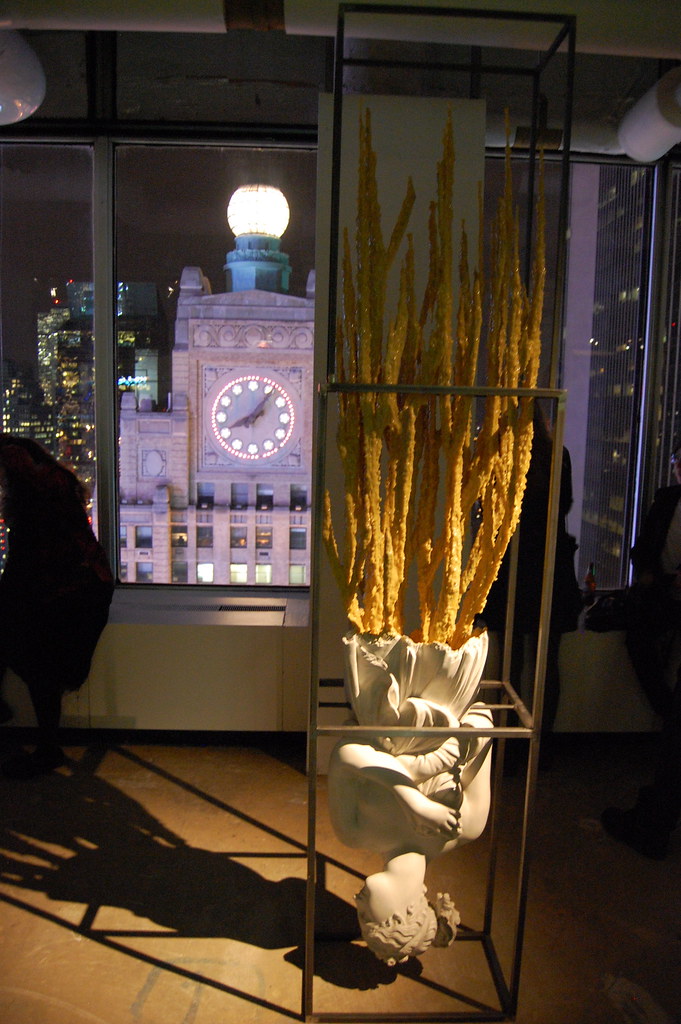
The space is almost completely unfinished, sporting raw cement floors and ceilings lined with unconcealed pipes. Block out the breathtaking views of New York City (though that is pretty much impossible given the enormous windows), and you might think you're in a new space far out in Brooklyn, at least until you spot the four very shiny Nick van Woert sculptures, two of them dated 2011, which are included in "The Shape We're In (New York)," an exhibition of work culled from the Zabludowicz's collection. They're joined by seven flashy Ethan Breckenridge pieces — or eight, if you count the coffee-vending-machine-and-sound piece that he made with Sean Dack, titled My Thoughts on Your Thoughts (Fifteen, Fifteen, and Thirty for Lunch) (2010). The three Sarah Braman sculptures — sets of cubes in various materials combined into three-dimensional Tetris blocks — work best here, their empty boxes balancing precariously in a temporary gallery that is, it may be worth remembering, vacant, unused real estate.


Front: Sarah Braman, Ghost Sculpture (Coffin), 2010. Plywood, lumber and paint, 79 x 66 x 58 in. Back: Sarah Braman, October Animal, 2010. Metal, Plexiglas, paint, 48 x 66 x 58 in.


Ethan Breckenridge, Plants Have No Back, 2008. Mixed media, 39 x 51 x 105.75 in.

Independent curator Alex Gartenfeld has also staged a show in the space. Titled "Proposal for a Floor," it is as quiet as a whisper, contrasting radically with the other show. Anselm Reyle delivers the most aggressive touch, an untitled 2009 neon sculpture that is a tidier, dissembled version of a Keith Sonnier. Dominic Nurre's contribution is subtler, two leather chairs bearing large salt licks that look perfectly surreal in this cubicle- and desk-less office. Rounding out the bunch are Josh Tonsfeldt, Kon Trubkovich, Jim Richards, Sam Anderson, and a personal favorite, Michael E. Smith, who presents two of his reworked milk jugs.

The space is open only by appointment after today. After April 15, its shows will close. Max Neuhaus's Times Square (1977) sound piece, however, will remain in the area, humming away on the island between 45th and 46th Streets on Broadway, just as it has since it was reinstalled by Dia in 2002. It provides a stolid, permanent counterpoint to the fast action of the past week. If you have a spare moment, visit it after you descend the elevator of 1500 Broadway.


The view from the 33rd floor of 1500 Broadway, looking north.