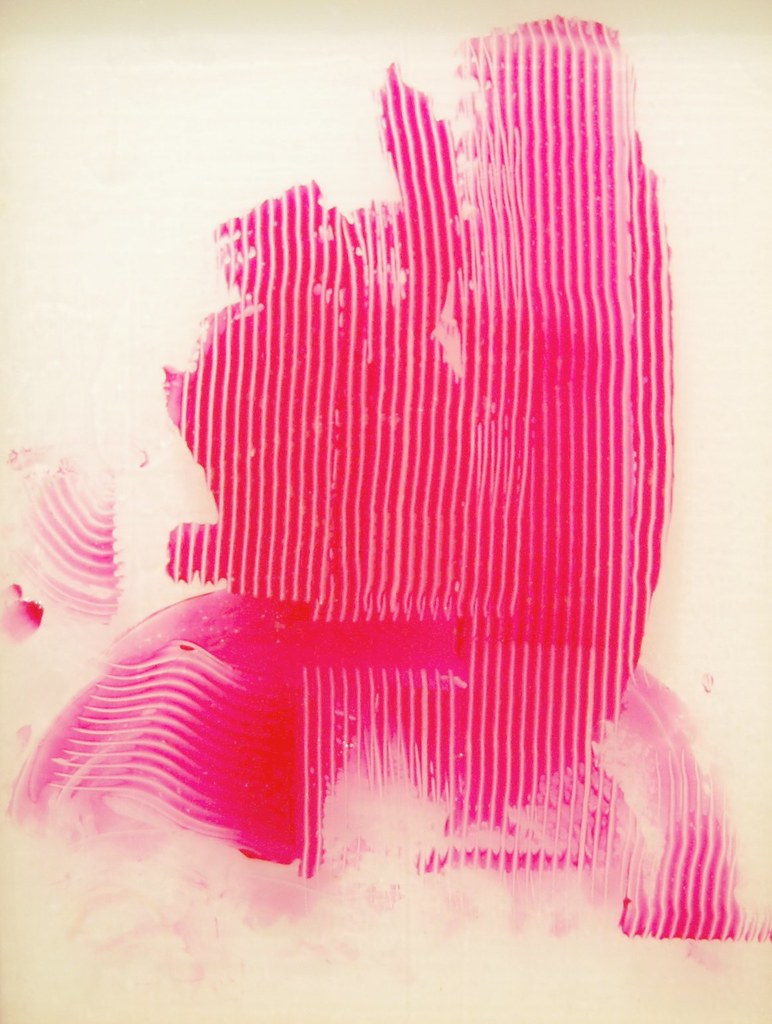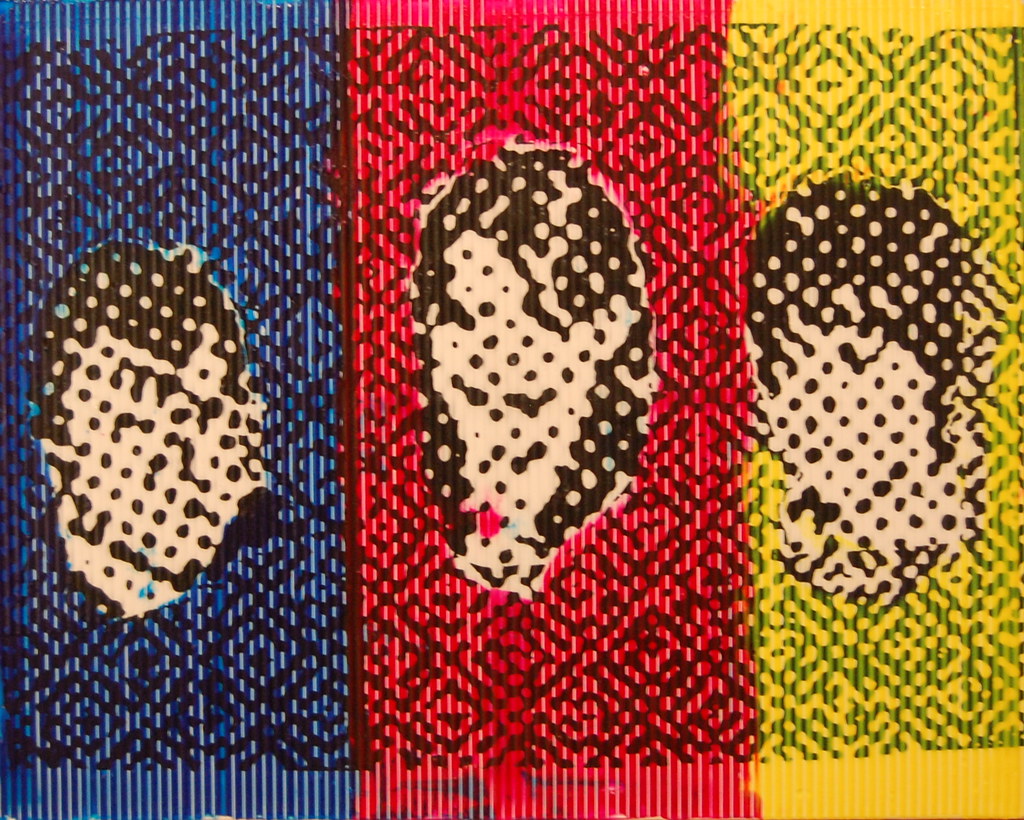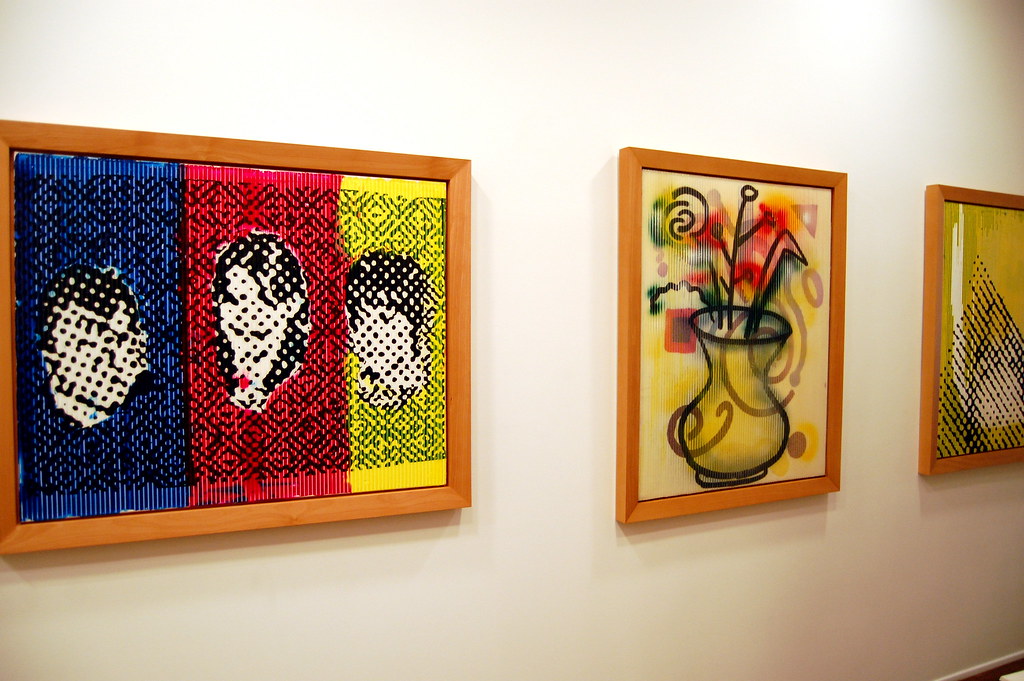
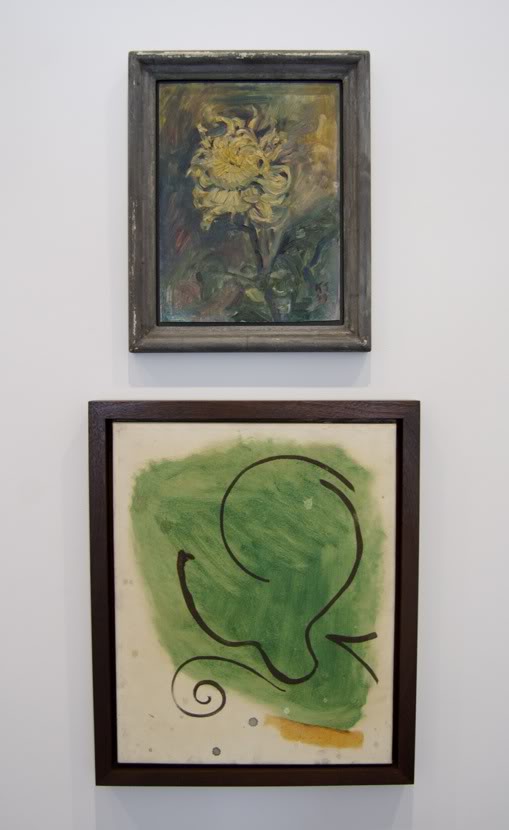
Top to bottom: Kurt Schwitters, Chrysanthemum, 1946. Oil on board, 13 x 10 in.; Sigmar Polke, Farbprobe (Color Study), 1986. Mixed media, malachite, silver oxide on canvas, 19 3/4 x 15 3/4 in., in "Flowers for Summer," at Michael Werner Gallery, New York, through September 10, 2011.
In 1946, two years before his death, Kurt Schwitters painted a bright, burning yellow chrysanthemum on a board just a bit larger than a slice of paper. It suggests a manic, almost terrifying, intensity and, as it happens, is hanging at the Michael Werner Gallery right now, alone worth a trip to East 77th Street.
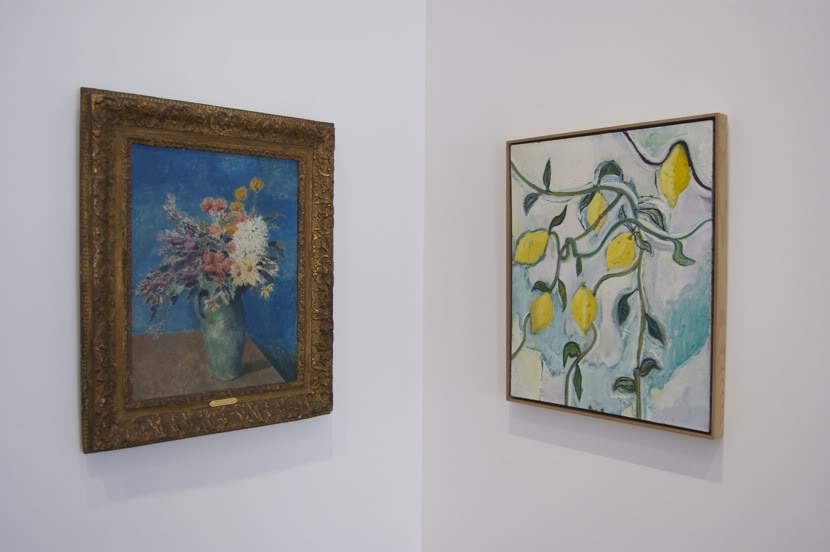
Pablo Picasso, Vase de fleurs, 1904. Oil on canvas, 25 1/2 x 19 3/4 in.; Peter Doig, Lemons, 1989. Oil on board, 30 x 25 in.
The current show one will find there is called "Flowers for Summer," a simple title and self-explanatory premise that belies the high quality of work on view. That Schwitters, for instance, hangs above a spare and elegant Sigmar Polke, just a few black lines curving over a green cloud. It's a minor work — Farbprobe (Color Study), it's called — but it's also a prototype for a good percentage of the abstract paintings being made today.
Mere inches from this German doubleheader is another thrilling pairing: a brushy 1904 vase with flowers by Picasso next to a 1989 scene of lemons (flowers gone mature) hanging on the branches of a tree, by Peter Doig. The latter is vaguely surreal, the branches wiggling in from every side of the painting like green snakes, and it holds its own against the Spanish master's work.
Mere inches from this German doubleheader is another thrilling pairing: a brushy 1904 vase with flowers by Picasso next to a 1989 scene of lemons (flowers gone mature) hanging on the branches of a tree, by Peter Doig. The latter is vaguely surreal, the branches wiggling in from every side of the painting like green snakes, and it holds its own against the Spanish master's work.
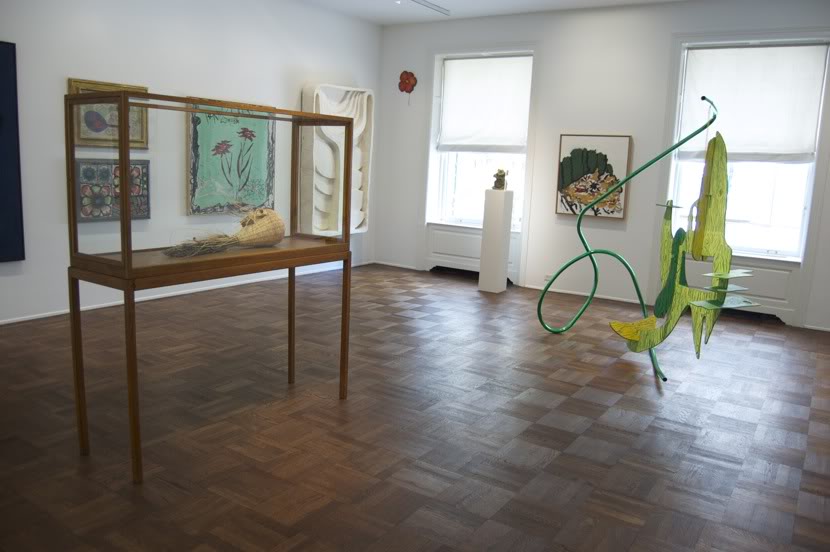
Installation view
Lucio Fontana offers a flower vase, as well, though his is a ceramic sculpture and sharply angled, violently brushed with washes of light color. It is from 1938, when Fontana was not yet quite 40. His iconic slashed and punctured canvases were still years away, but here one can see all of the strange energy he would hone and then channel into them.
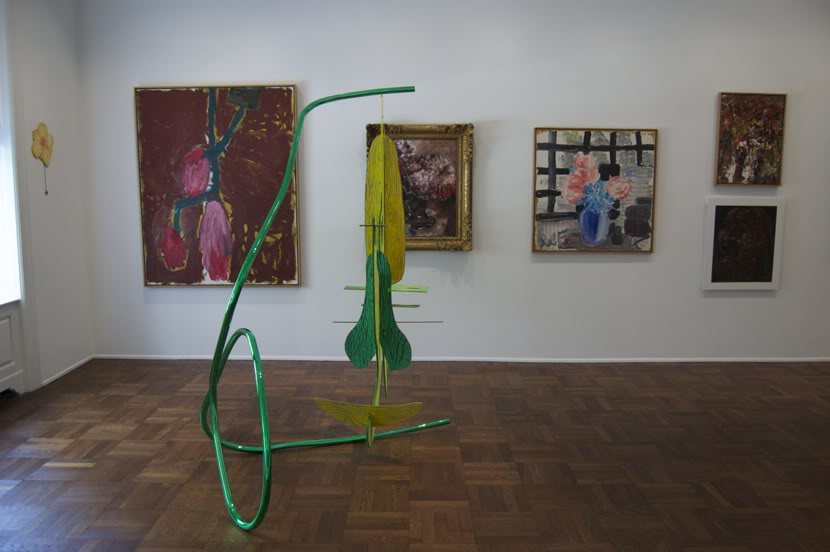
Installation view; foreground: Aaron Curry, Greenegalbwrry, 2011. Steel, wood, wood stain, cardboard, ink, gouache, rope, 81 x 54 x 71 in.
The gallery has taken a charmingly lax approach to its theme, meaning that a tall 1941 canvas with bulbous undulating shapes — all black, white, and dark blue — by Léger can qualify as a flower for summer, as can a still life by Kirchner, in which a wine glass sprouts into something resembling a flower in its shadow, which falls on a table covered with floral motifs. In a piece from 1911 by the Swiss painter Félix Vallotton (which appeared in Werner's revelatory 2010 exhibition of the artist's work), the flowers appear on a woman's white shawl. She looks out of the picture and holds a fan in her hand, teasing an offer of a cool, refreshing breeze.
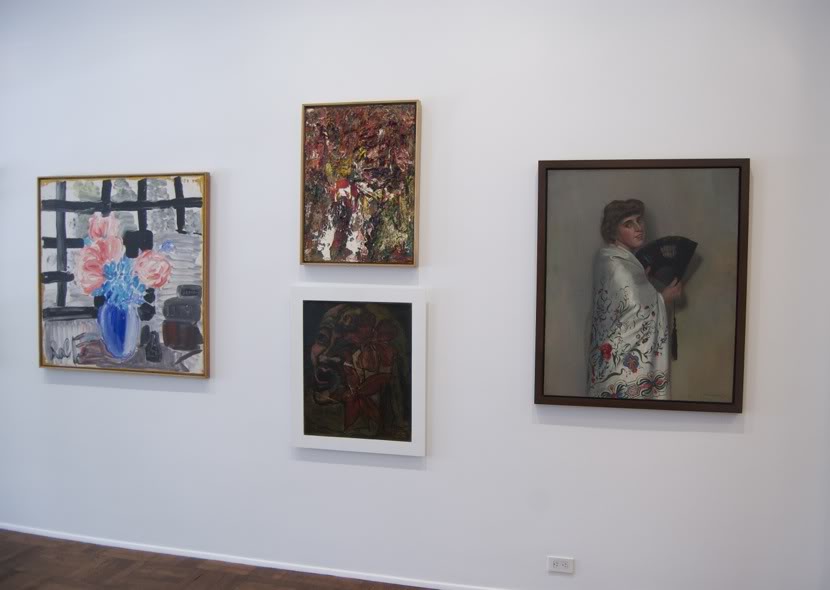
Clockwise from left: A.R. Penck, Pfingstrosen, 1974. Acrylic on canvas, 39 1/4 x 39 1/4 in.; Eugène Leroy, Ides de mars-iris, 1992. Oil on canvas, 28 3/4 x 21 1/4 in.; Félix Vallotton, "Le châle blanc," 1911. Oil on canvas, 39 1/2 x 32 in.; Francis Picabia, Papion, ca. 1936-38. Oil on canvas, 25 1/2 x 21 1/4 in.
Nearby, in a Picabia from the latter half of the 1930s, flowers connote darker, more mysterious urges. Two orange-red flowers hover in the center of the canvas, sharing the frame with a nude woman, a large head, and other subjects that are harder to discern: Picabia, ever an arch provocateur, makes it difficult to focus on a single image. Here, summer — reality, really — is coming undone.
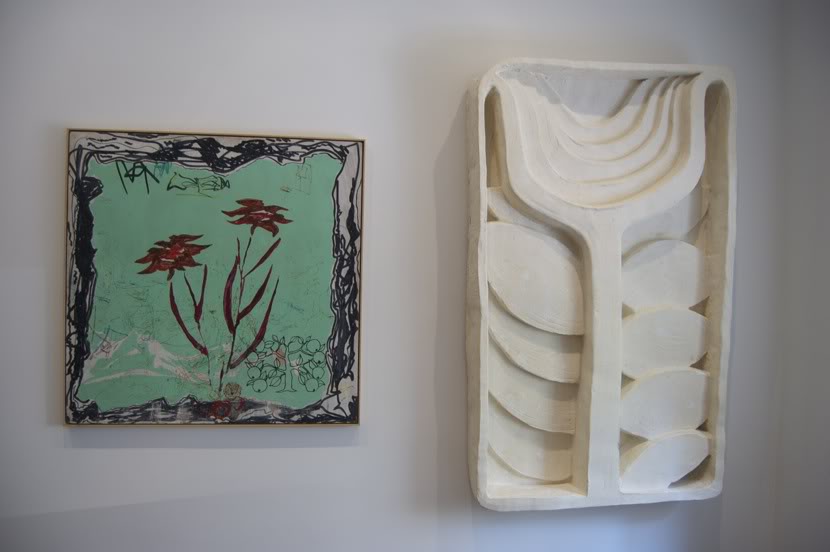
Per Kirkeby, Energy, 1969. Mixed media on Masonite, 48 x 48 in.; Thomas Houseago, Flower/Plant Panel I, 2011. Tuf-Cal, hemp, iron rebar, 75 x 46.5 x 8.5 in.