Showing posts with label Picasso. Show all posts

Wednesday, August 3, 2011

"Flowers for Summer" at Michael Werner Gallery


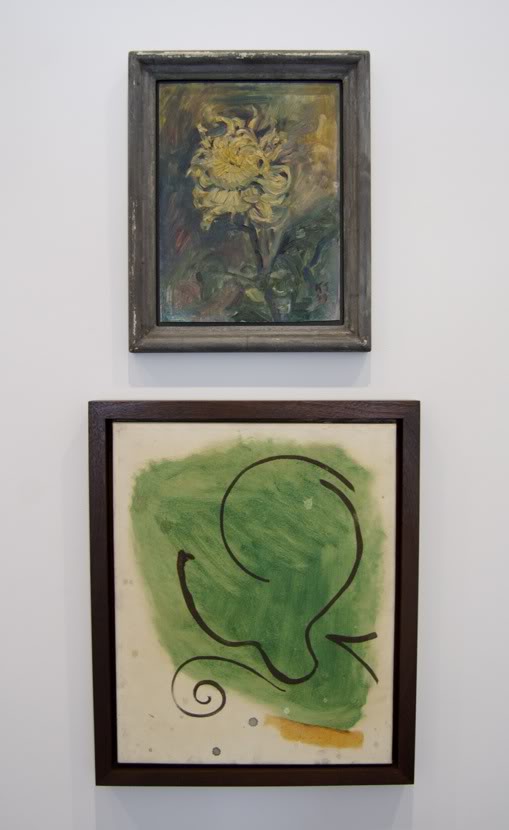
Top to bottom: Kurt Schwitters, Chrysanthemum, 1946. Oil on board, 13 x 10 in.; Sigmar Polke, Farbprobe (Color Study), 1986. Mixed media, malachite, silver oxide on canvas, 19 3/4 x 15 3/4 in., in "Flowers for Summer," at Michael Werner Gallery, New York, through September 10, 2011.

In 1946, two years before his death, Kurt Schwitters painted a bright, burning yellow chrysanthemum on a board just a bit larger than a slice of paper. It suggests a manic, almost terrifying, intensity and, as it happens, is hanging at the Michael Werner Gallery right now, alone worth a trip to East 77th Street.
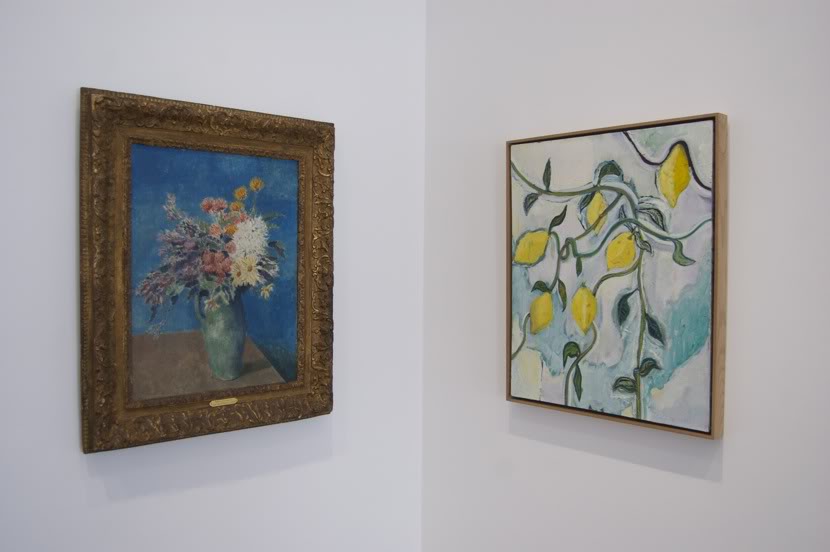

Pablo Picasso, Vase de fleurs, 1904. Oil on canvas, 25 1/2 x 19 3/4 in.; Peter Doig, Lemons, 1989. Oil on board, 30 x 25 in.

The current show one will find there is called "Flowers for Summer," a simple title and self-explanatory premise that belies the high quality of work on view. That Schwitters, for instance, hangs above a spare and elegant Sigmar Polke, just a few black lines curving over a green cloud. It's a minor work — Farbprobe (Color Study), it's called — but it's also a prototype for a good percentage of the abstract paintings being made today.

Mere inches from this German doubleheader is another thrilling pairing: a brushy 1904 vase with flowers by Picasso next to a 1989 scene of lemons (flowers gone mature) hanging on the branches of a tree, by Peter Doig. The latter is vaguely surreal, the branches wiggling in from every side of the painting like green snakes, and it holds its own against the Spanish master's work.
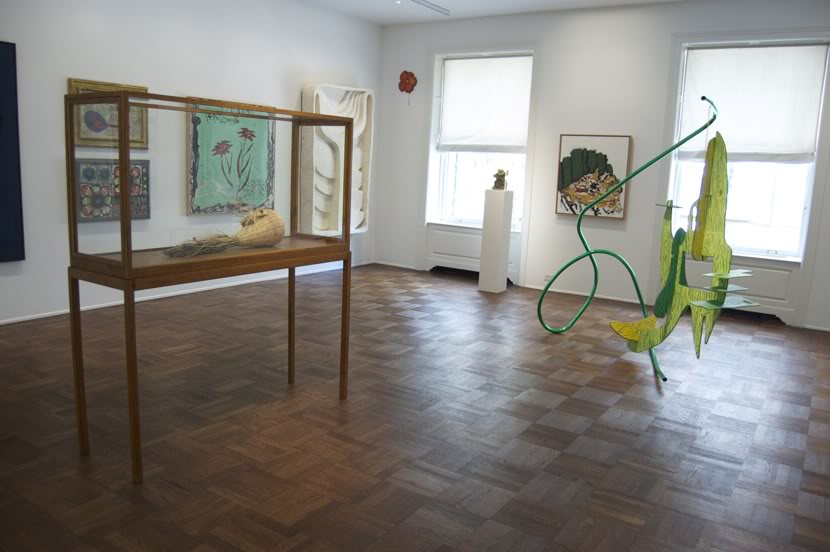

Installation view

Lucio Fontana offers a flower vase, as well, though his is a ceramic sculpture and sharply angled, violently brushed with washes of light color. It is from 1938, when Fontana was not yet quite 40. His iconic slashed and punctured canvases were still years away, but here one can see all of the strange energy he would hone and then channel into them.
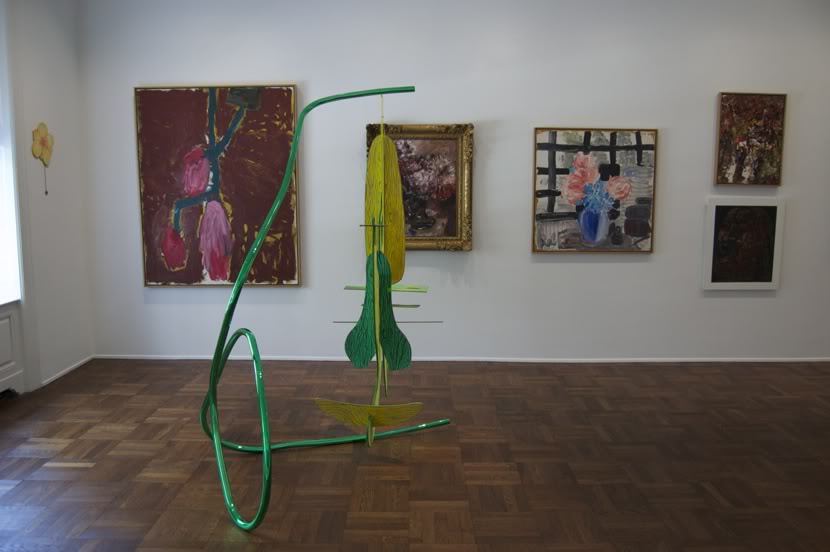

Installation view; foreground: Aaron Curry, Greenegalbwrry, 2011. Steel, wood, wood stain, cardboard, ink, gouache, rope, 81 x 54 x 71 in.

The gallery has taken a charmingly lax approach to its theme, meaning that a tall 1941 canvas with bulbous undulating shapes — all black, white, and dark blue — by Léger can qualify as a flower for summer, as can a still life by Kirchner, in which a wine glass sprouts into something resembling a flower in its shadow, which falls on a table covered with floral motifs. In a piece from 1911 by the Swiss painter Félix Vallotton (which appeared in Werner's revelatory 2010 exhibition of the artist's work), the flowers appear on a woman's white shawl. She looks out of the picture and holds a fan in her hand, teasing an offer of a cool, refreshing breeze.
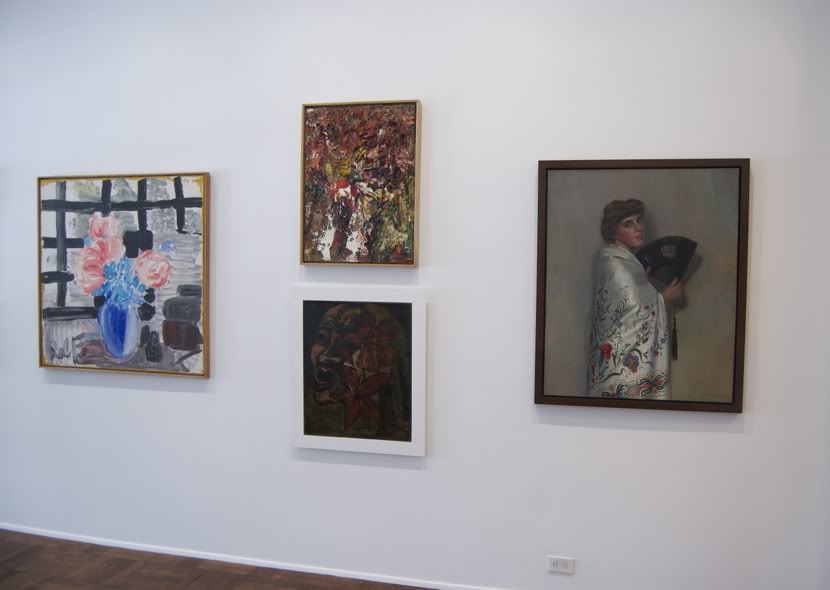

Clockwise from left: A.R. Penck, Pfingstrosen, 1974. Acrylic on canvas, 39 1/4 x 39 1/4 in.; Eugène Leroy, Ides de mars-iris, 1992. Oil on canvas, 28 3/4 x 21 1/4 in.; Félix Vallotton, "Le châle blanc," 1911. Oil on canvas, 39 1/2 x 32 in.; Francis Picabia, Papion, ca. 1936-38. Oil on canvas, 25 1/2 x 21 1/4 in.

Nearby, in a Picabia from the latter half of the 1930s, flowers connote darker, more mysterious urges. Two orange-red flowers hover in the center of the canvas, sharing the frame with a nude woman, a large head, and other subjects that are harder to discern: Picabia, ever an arch provocateur, makes it difficult to focus on a single image. Here, summer — reality, really — is coming undone.
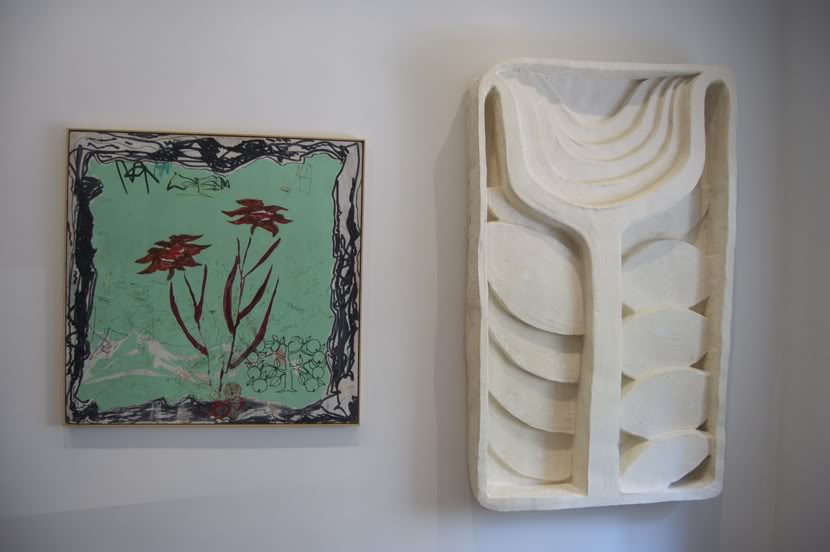

Per Kirkeby, Energy, 1969. Mixed media on Masonite, 48 x 48 in.; Thomas Houseago, Flower/Plant Panel I, 2011. Tuf-Cal, hemp, iron rebar, 75 x 46.5 x 8.5 in.

Saturday, June 4, 2011

Picasso and Arianna, Kröner and Bernstein, Sifton and Art, etc. [Collected]


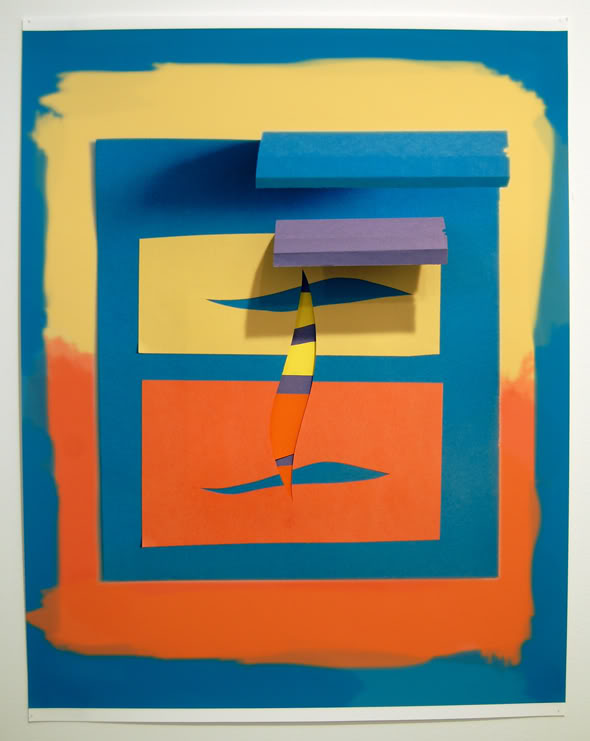
Sam Falls, Untitled, 2011. Digital C-print and collage, 31 x 24 in., in "Out of Practice," curated by Nudashank, at Art Blog Art Blog, New York, through June 18, 2011.
  • "The Picasso Wars": Arianna Huffington and her "portrait of the artist as a bad man." A "dog of a book," says Robert Hughes, in 1988. [New York on Google Books]
  • Sharon Butler on career advice for artists and "Reverie," a group show curated by artist Stephen Westfall at Galerie Zürcher that includes Shirley Jaffe, Stanley Whitney, Patricia Treib, Westfall, and others. "Yeah — it's OK to include your own work if you're curating the show," Butler writes. [Two Coats of Paint]
  • Magdalena Kröner interviews Judith Bernstein: Kröner: "Why does the subject matter of your work continue to be controversial?" Bernstein: "The connection between screw and phallus, present in much of my work, touches upon many sensitive aspects that exist in the subconscious. Men especially can feel intimidated by the scale of a work... [ART BLOG ART BLOG]
  • "Invitations are style statements in a minor key, ancillary artworks of a collective sort. Designed by artists, by graphic designers, by art dealers and museum curators — usually a combination of the above — they are the advance guard for the real thing. Their merit is judged in the very act of reading one's mail." — Roberta Smith, "Art Invitations as Small Scraps of History," the New York Times, May 16, 1993
  • The Class of 2011: Curator and writer Jamillah James posts highlights from recent New York MFA exhibitions. [Frontiers]
  • "Tom Harris ... cooks lamb sweetbreads with butter beans and wild garlic that can set off an episode of synesthesia if you are so inclined: a Constable landscape of flavors and textures, of menacing clouds and plump trees and soft grass for the lamb, Britain on a plate." New York Times restaurant critic Sam Sifton's art references are growing deeper and richer and continuing to flow. [16 Miles]
  • June 4: "Leverage," with Sonja Engelhardt, Luke Stettner, Gustabo Velazquez, and Claudia Weber, opens at Jo-ey Tang's Notary Public space on the Upper East Side. [TNP via ROLU]
  • June 4: In SoHo, Los Angeles–based artist Wu Tsang unveils his New York solo debut, which includes a video about a 15-year-old Salvadorian refugee who arrives in L.A. in 1985 and is befriended by trans women at a local bar. [Clifton Benevento]
  • June 5: "A+" — a three-day group show at Bushwick's ARCH Production & Design NYC Studio with work by Ivin Ballen, Evan Collier, Meghan Petras, Adriana Santiago, and more — closes. Curated by Claudia Eve Beauchesne, the exhibition includes "allusions to dome culture, inflatable architecture, minimalism, kitsch, the surf and skate subcultures, abstract expressionism, mid-century modern design and obsolete technology." [Bushwick Open Studios]
  • June 6: The Museum of Modern Art's "Picasso: Guitars 1912–1914," the most entrancing museum show of the New York season, closes. It feels like it only just arrived. [MoMA]

Tuesday, March 8, 2011

MoMA, MoAA, Museum Sleepovers, etc. [Collected]


Pablo Picasso, Guitar and Sheet Music, 1912. Cut-and-pasted wallpaper and sheet music, pastel, and charcoal on paperboard, 22 13/16 x 24 in., in "Picasso Guitars: 1912-1914," at the Museum of Modern Art, New York. MoMA has it in greater detail. Photo: 16 Miles
  • The ten most-viewed artworks on the web site of the Museum of Modern Art. [Modern Art Notes]

  • Images from Berlin's Museum of American Art, which is creating copies of artworks and replicas of exhibitions that appeared at MoMA from the 1920s to the 1960s. [MoAA]

  • An interview with Walter Benjamin, the official spokesperson of MoAA, on such topics as the 1955-56 MoMA show that traveled from Paris to Belgrade and the future of art museums ("time capsules"), among other issues. [Metropolis M]

  • Images from the Museum of American Art's current show at London's xero, kline & coma, which also includes work on Seth Sieglaub's 1960s catalogue–based exhibitions. [This Is Tomorrow]

  • "Oh, That's Right, Philip Johnson Was a Nazi": On the political interests of the architect who founded MoMA's architecture and design department. [Greg.org]

  • Kurtis Blow performs in the legendary Bronx nightclub Disco Fever, in scenes from Krush Groove (1985), which I saw on Sunday evening as part of MoMA's astounding film program for its "Looking at Music 3.0" exhibition. Other highlights include Tom Rubnitz's Wigstock: The Movie (1987), Charles Atlas's Put Blood into the Music (1989), and Robert Beck's The Feeling of Power (1990). [YouTube]

  • "It's about time women artists got something other than their legs (un) covered in the media (viz. Newsweek)": from a 1972 letter from writer Lucy R. Lippard, of 138 Prince Street (whose ground floor currently houses a French Connection) to activist and Ms. co-founder Gloria Steinem. [Archive of American Art via @ArchivesAmerArt]

  • Writer and curator Bob Nickas explores SoHo, where he has lived since 1985. [Vice]

  • Carolina Miranda spends a night sleeping over at the Rubin Museum of Art. Cookies are nibbled, tea is sipped, sitar music is savored, art is enjoyed, and dreams are dreamed. [WNYC via C-Monster]

Wednesday, June 16, 2010

A Sol LeWitt Video, Twinkie Photos, etc. [Collected]


Left to right: Pablo Picasso, She-Goat, 1950. Bronze, 46 3/8 x 56 3/8 x 28 1/8 in. Ellsworth Kelly, Green Blue, 1968. Painted aluminum, 8 ft. 7 1/2 in. x 9 ft. 4 1/2 in. x 68 1/2 in. Museum of Modern Art. Photo: 16 Miles

Sunday, April 26, 2009

Picasso Videos, Donald Judd's Love for Whiskey (and Clogs), and Other Links [Compendium]


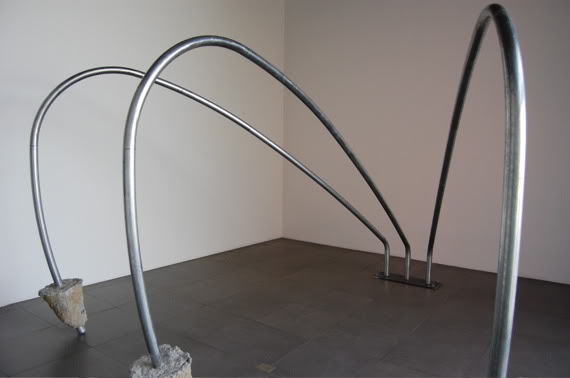
Ruben Ochoa, three the hard way, 2009. Photo: 16 Miles [more]

Massive Picasso coverage, new Warhol album covers, an epic Ernesto Neto installation, the news that Donald Judd collected fine whiskey, and the nicest day so far this year in New York.  There's a lot to get excited about this week: