Showing posts with label Roberta Smith. Show all posts

Saturday, June 4, 2011

Picasso and Arianna, Kröner and Bernstein, Sifton and Art, etc. [Collected]


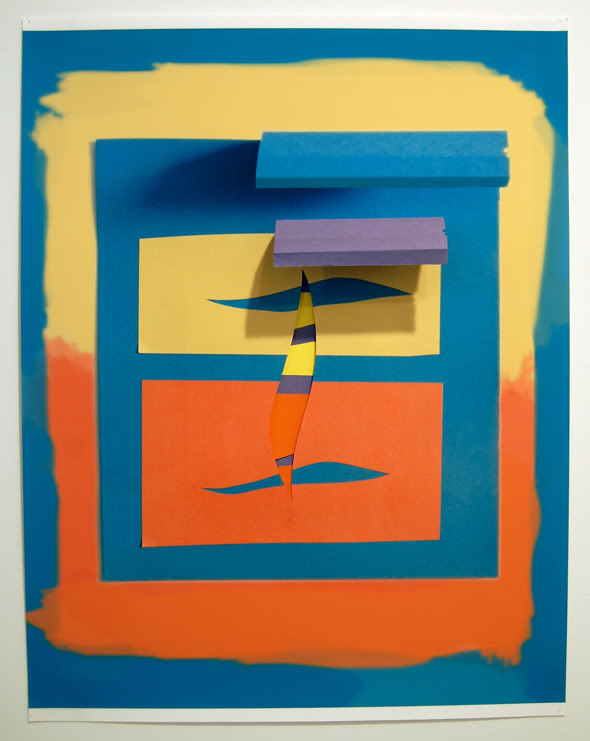
Sam Falls, Untitled, 2011. Digital C-print and collage, 31 x 24 in., in "Out of Practice," curated by Nudashank, at Art Blog Art Blog, New York, through June 18, 2011.
  • "The Picasso Wars": Arianna Huffington and her "portrait of the artist as a bad man." A "dog of a book," says Robert Hughes, in 1988. [New York on Google Books]
  • Sharon Butler on career advice for artists and "Reverie," a group show curated by artist Stephen Westfall at Galerie Zürcher that includes Shirley Jaffe, Stanley Whitney, Patricia Treib, Westfall, and others. "Yeah — it's OK to include your own work if you're curating the show," Butler writes. [Two Coats of Paint]
  • Magdalena Kröner interviews Judith Bernstein: Kröner: "Why does the subject matter of your work continue to be controversial?" Bernstein: "The connection between screw and phallus, present in much of my work, touches upon many sensitive aspects that exist in the subconscious. Men especially can feel intimidated by the scale of a work... [ART BLOG ART BLOG]
  • "Invitations are style statements in a minor key, ancillary artworks of a collective sort. Designed by artists, by graphic designers, by art dealers and museum curators — usually a combination of the above — they are the advance guard for the real thing. Their merit is judged in the very act of reading one's mail." — Roberta Smith, "Art Invitations as Small Scraps of History," the New York Times, May 16, 1993
  • The Class of 2011: Curator and writer Jamillah James posts highlights from recent New York MFA exhibitions. [Frontiers]
  • "Tom Harris ... cooks lamb sweetbreads with butter beans and wild garlic that can set off an episode of synesthesia if you are so inclined: a Constable landscape of flavors and textures, of menacing clouds and plump trees and soft grass for the lamb, Britain on a plate." New York Times restaurant critic Sam Sifton's art references are growing deeper and richer and continuing to flow. [16 Miles]
  • June 4: "Leverage," with Sonja Engelhardt, Luke Stettner, Gustabo Velazquez, and Claudia Weber, opens at Jo-ey Tang's Notary Public space on the Upper East Side. [TNP via ROLU]
  • June 4: In SoHo, Los Angeles–based artist Wu Tsang unveils his New York solo debut, which includes a video about a 15-year-old Salvadorian refugee who arrives in L.A. in 1985 and is befriended by trans women at a local bar. [Clifton Benevento]
  • June 5: "A+" — a three-day group show at Bushwick's ARCH Production & Design NYC Studio with work by Ivin Ballen, Evan Collier, Meghan Petras, Adriana Santiago, and more — closes. Curated by Claudia Eve Beauchesne, the exhibition includes "allusions to dome culture, inflatable architecture, minimalism, kitsch, the surf and skate subcultures, abstract expressionism, mid-century modern design and obsolete technology." [Bushwick Open Studios]
  • June 6: The Museum of Modern Art's "Picasso: Guitars 1912–1914," the most entrancing museum show of the New York season, closes. It feels like it only just arrived. [MoMA]

Wednesday, March 9, 2011

"With a Broom in Hand, We Can Even Fly": Jo Baer at Hunter College


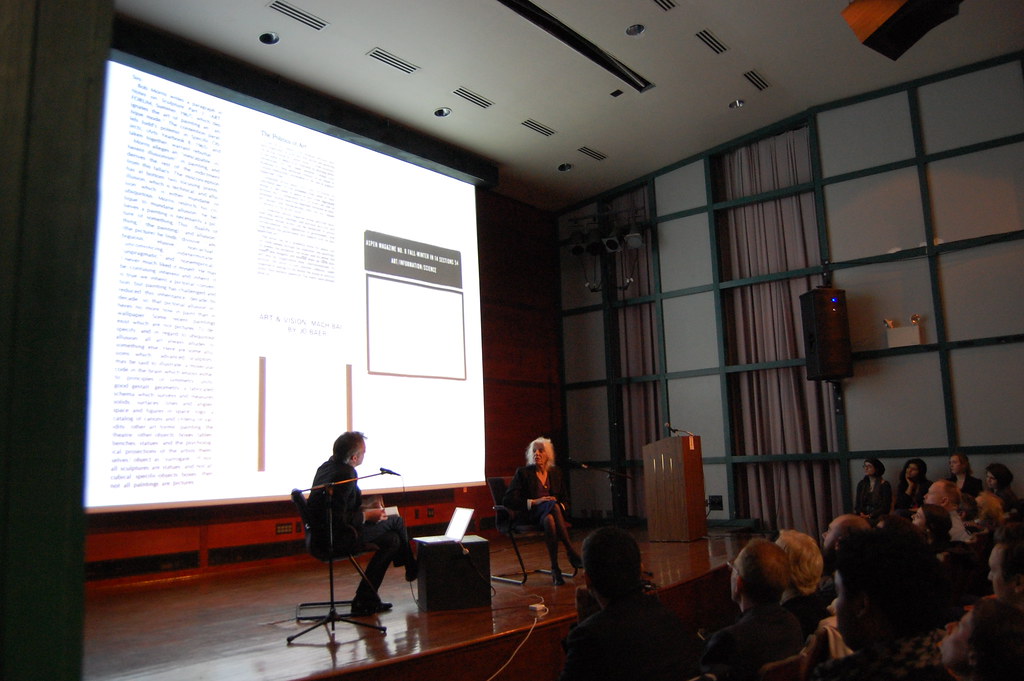
Anthony Huberman, director of The Artist's Institute, and artist Jo Baer in conversation at Hunter College, March 7, 2011. Photo: 16 Miles [more]

When painter Jo Baer shows people her 1991 painting Of a Fearful Symmetry (Bound Hand and Foot), European viewers immediately identify the tall, taut leather boots that hover near the center of the canvas as those of a Gestapo member. On the other hand, Baer explains in a short film about her work that was screened at Hunter College on Monday evening, "Americans say, 'Cool riding boots.'" Baer, for the record, has been among Europeans for most of the past 35 years, having left New York at the height of her success, in 1975, for a castle in Ireland and then a home in Amsterdam.

She was a rare phenomenon when she lived in the United State: a young female artist selling paintings and earning a mid-career retrospective at the Whitney at a time when the art world was something less than friendly to female artists. Now in her early eighties, she is still painting, though her European work, which has occupied nearly half of her life — and more than half of her career — is almost never shown on these shores. (A 2007 Alexander Gray Associates show is a notable exception.) We know the optimal magic and quiet warmth of her minimal work, but the rest of her practice remains something of a mystery. It was no surprise, then, that the crowd that arrived to watch her film and listen to her in conversation with curator and director of The Artist's Institute Anthony Huberman filled every seat in a large auditorium at the school's Upper East Side campus.

The crowd may also have been encouraged by the fact that, when Baer participates in interviews (an infrequent occurrence), her comments are frequently brutal, hilarious, brilliant, honest, and even touching. ("My mother was very talented, but stupid," she told Bomb in 1995.) She has a tendency to defenestrate tidy visions of 1960s New York and simple-minded theories about the history of contemporary art in these interviews. She does both in her film, and she continued to do so throughout the night as she answered questions from the audience, establishing a freewheeling dialogue that earned both laughs and gasps. In her film, for instance, further explaining Of a Fearful Symmetry..., she argues that it is a “meditation on the extremes of masculinity” and notes that, historically, only men have clothed themselves in animal pelts to convey power. (“War — the first male sport,” she quips at one point.) Women have “no need” for such costumes, she says. “With a broom in hand, we can even fly.”

When questioned by an audience member about her experiences as a woman in the art world, though, Baer demurred from the role of activist. “I'm not the one to ask,” she said. “The feminists called me a female man.” She is from a line of independent woman, she explained, dating back at least as far as one of her grandmothers, who supported the family by selling life insurance, in 1901. However, she said that, despite her success selling paintings, male collectors sometimes returned them when they learned that "Jo" was a woman.

Baer's film details the development of her work from 1975 almost to the present (as well as the twice-weekly 30-minute jogs she takes in Amsterdam's Bildordijk Park, complete with photographic documentation), but Huberman and the audience (myself included) were most interested in the drastic career move she had made, leaving the then-center of the art world for its periphery. “The pressure of the New York art world, especially if you're successful, is to keep doing it,” Baer said. (Plus ça change.) By the start of the 1970s, though, with the near-complete failure of the 1968 protest movements in Paris and elsewhere and with the Vietnam War uninterrupted, her spare canvases no longer looked right to her. Minimalism was not only “a repeat of the Russians,” she said, and, even worse, it was utopian. (“That is when you talk about something that would have been nice instead,” she replied, when Hubermann asked her to define that final term.) Moreover, “The artists were starting to dumb down, quite deliberately.”

In Europe, she shifted steadily from meticulous geometry to a rich variety of imagery, painting mythical figures, humans, symbols, and artifacts as she relearned how to paint. New York Times art critic Roberta Smith, speaking from the audience, pointed out that Baer's transition in the mid-1970s occurred just as Frank Stella, Elizabeth Murray, Francesco Clemente, and others were making radical changes in their own painting practices. Baer agreed, expressing admiration for Clemente and early Schnabel and adding that a similar process was occurring in parts of Europe, where, for example, "the Germans really wanted to be expressionists again."

Just as painting was enduring the first of what would be many pronouncements of its death from a certain segment of the art world, artists in another segment were working to revive it, finding fecund new possibilities. "The sculptors got into gear and got the propaganda machine going," Baer said, describing the atmosphere of the moment. She paused, and what looked to me like a faint smile flickered across her face. "They were really bad painters," she said.

Previously: The Artist's Institute: Jo Baer, Robert Filliou, and Bread Making

Tuesday, May 25, 2010

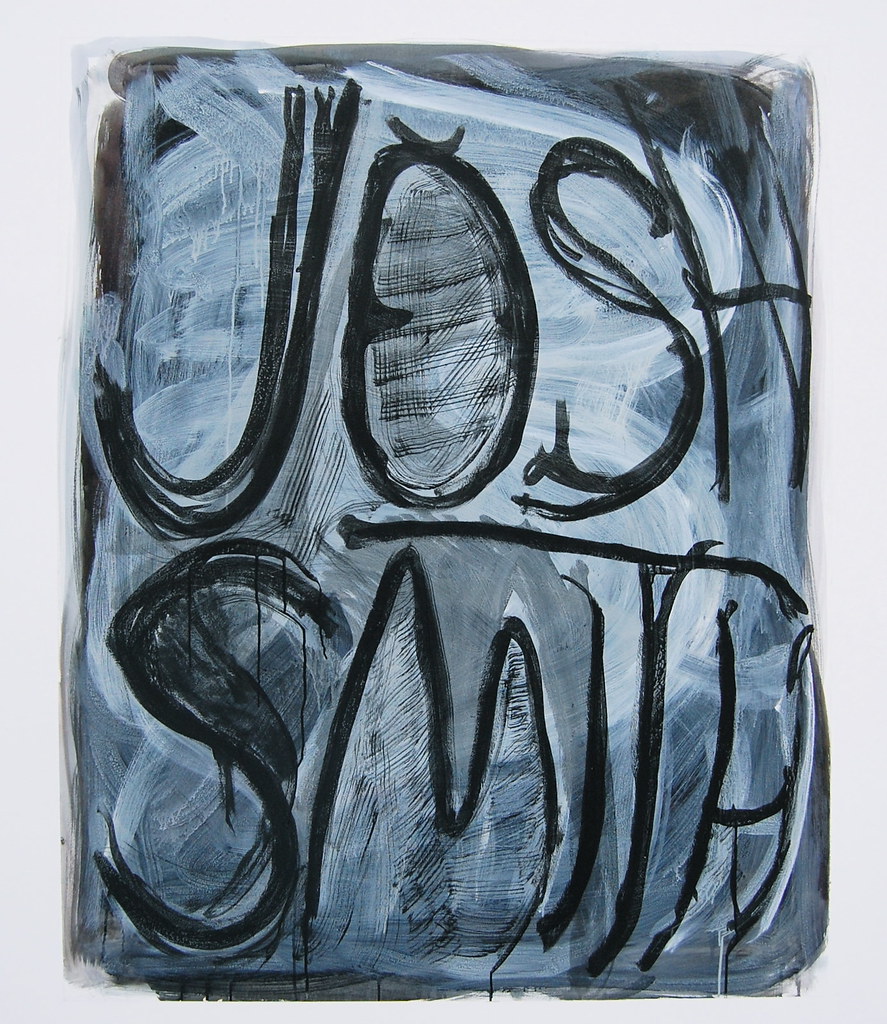
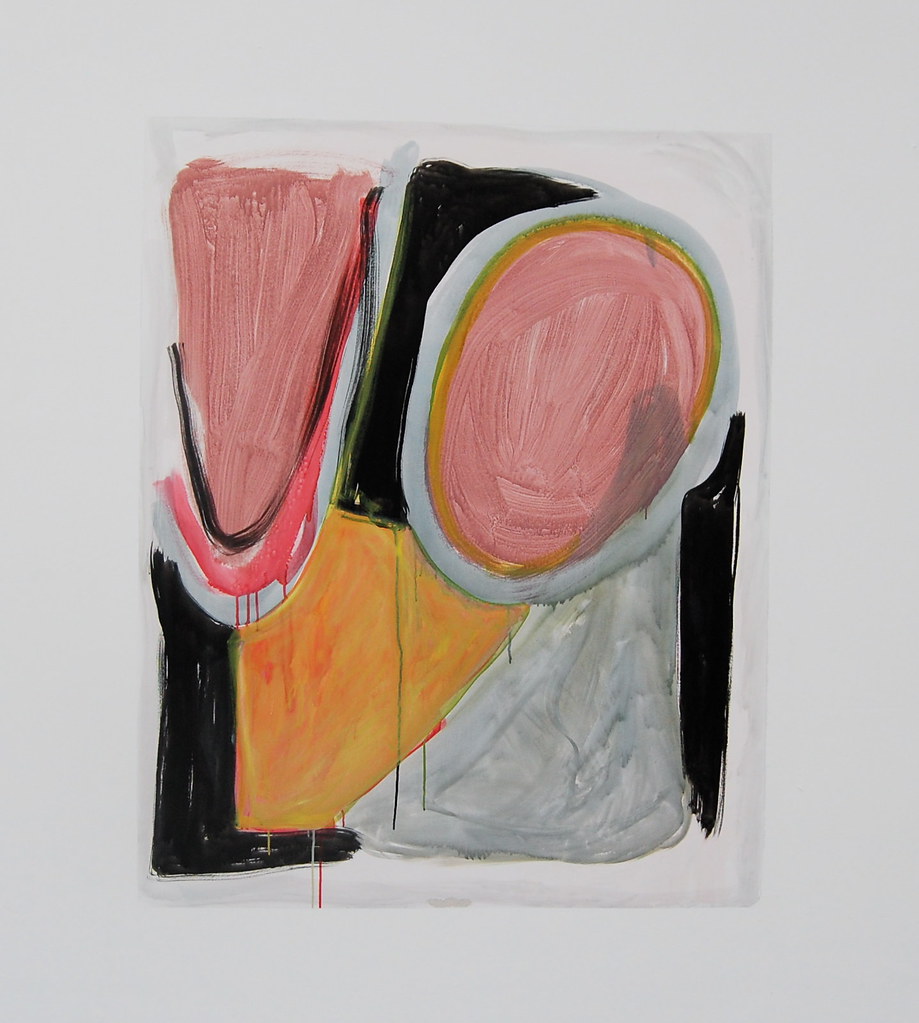
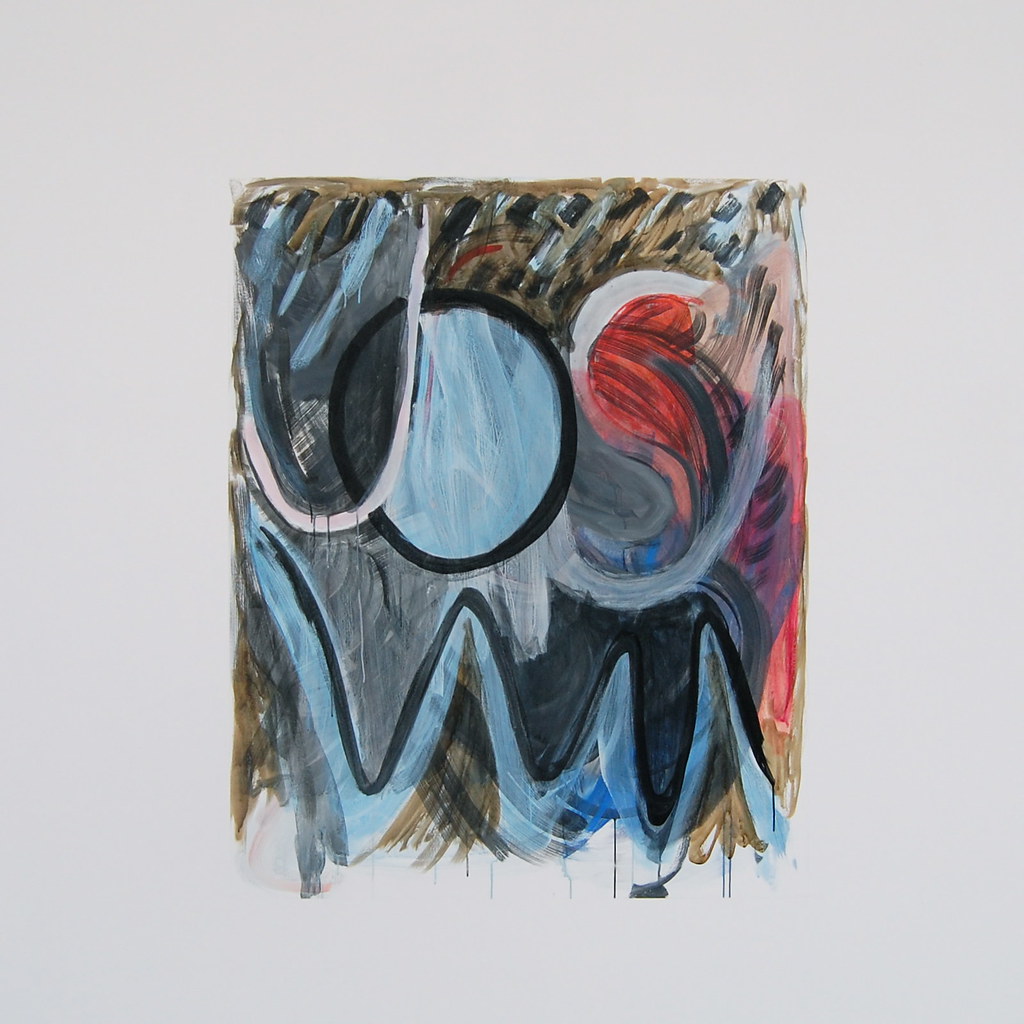
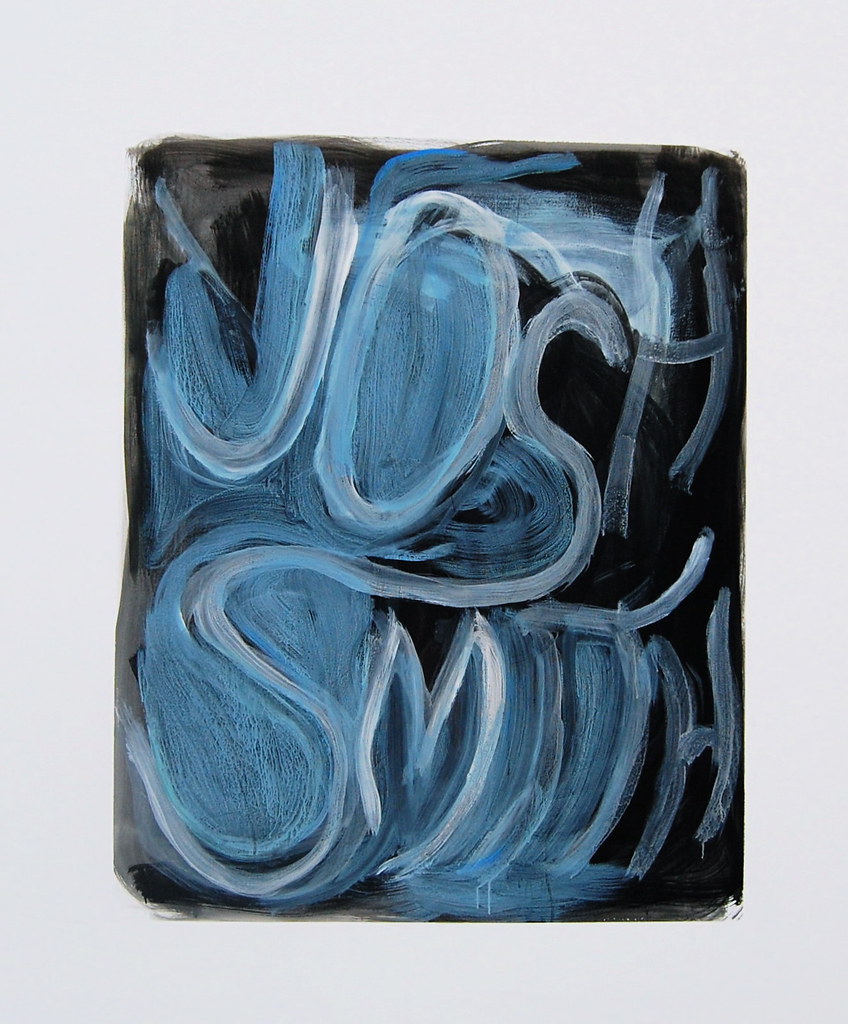
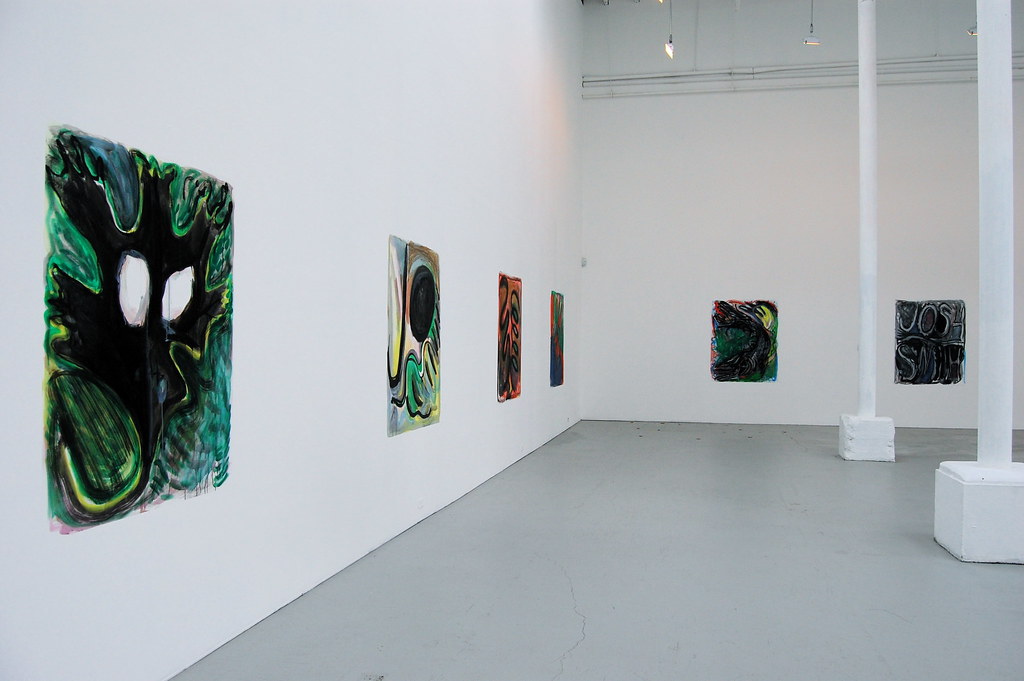
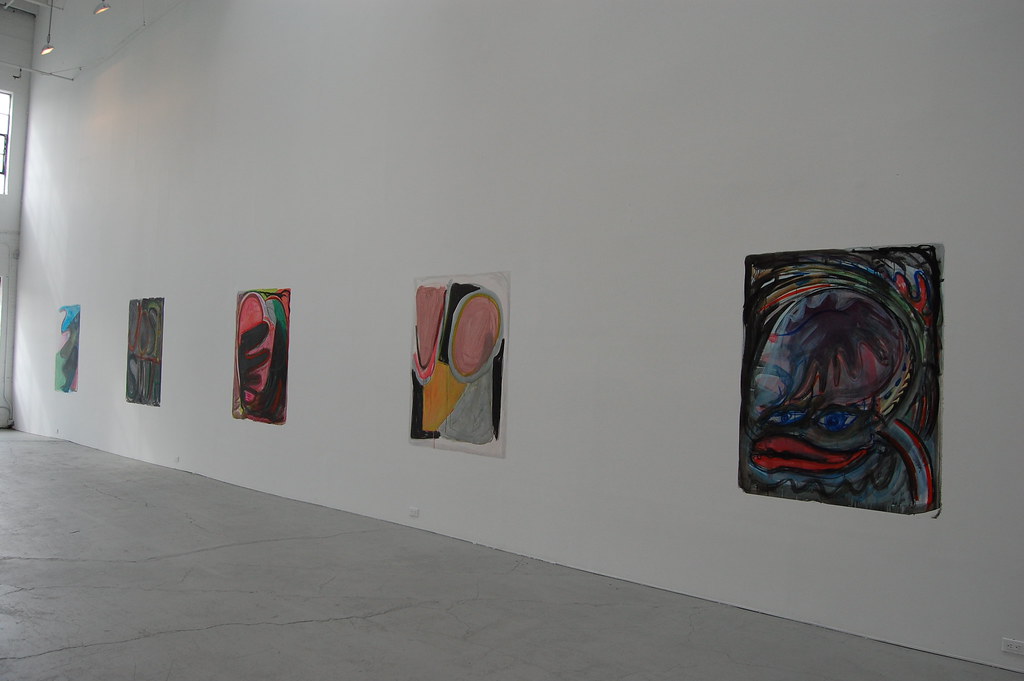
Josh Smith, "On the Water," at Deitch Studios, Long Island City


Works from Josh Smith's On the Water, at Deitch Studios, New York. Photos: 16 Miles [more]
After this show, Deitch Projects will close and Jeffrey Deitch, its owner and guiding light, will become director of the Museum of Contemporary Art in Los Angeles. I wish he had found a more assuring way to say goodbye.
– Roberta Smith, "Art in Review: Shepard Fairey," The New York Times, May 21, 2010

Roberta Smith's assessment of Jeffrey Deitch's farewell show seems to match the general consensus among those that care about these things. His decision to end his nearly fifteen-year run as a consistently interesting New York dealer with a Shepard Fairey show is a bizarre move, but one hopes (and suspects) that he is rolling in cash from the adventure. (There are a lot of paintings to sell from the show and, one imagines, lots of prints available as well.) Still, for a master of theater who has hosted some remarkable shows over the years, it feels like a sad, tepid way to end.


I'd prefer to remember the Josh Smith show that Deitch hosted at his cavernous Long Island City space as his final official exhibition, (even though the show closed on May 2, 2010). It was, in a sense, as unusual as the Fairey show: a series of forty-seven paintings completed on the warehouse walls, partially funded by Luhring Augustine, Smith's gallery. It ran against many of Deitch's tendencies: it was subdued instead of spectacular, handmade instead of slickly produced.

Smith's quiet installation suited that strange LIC space, which almost always felt deserted except for a friendly gallery assistant and Dzine's 1993 "Pimp Juice" Cadillac Fleetwood, which sat for what seemed like years in the large garage that one first entered from the street, one half of the warehouse that often felt a little bit too big for even as ambitious a curator as Deitch. (The stunning 2008-09 Keith Haring show in the space was a clear exception to that statement.) Nevertheless, one could always count on some combination of entertainment, annoyance, and pleasure out there. ("The Pig" show — with its moving, stuffed-animal-covered Gelitin cars, its Paul Chan drawings, and its old Koons sculpture — comes to mind.)

Barbara Gladstone has apparently procured the space to use for private viewing rooms, and one of her most prized artists, Matthew Barney, uses the warehouse next door as a studio, so there will probably be some fine events out there, along the East River, in future years. Regardless of what happens, memories of the shows that Deitch presented out in Long Island City should provide plenty of material for those who want to make sense of his legacy and just may cause a few people to overlook the embarrassing Fairey show.


Sunday, April 26, 2009

Picasso Videos, Donald Judd's Love for Whiskey (and Clogs), and Other Links [Compendium]


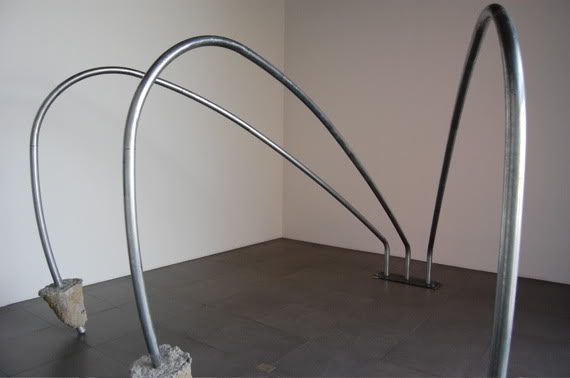
Ruben Ochoa, three the hard way, 2009. Photo: 16 Miles [more]

Massive Picasso coverage, new Warhol album covers, an epic Ernesto Neto installation, the news that Donald Judd collected fine whiskey, and the nicest day so far this year in New York.  There's a lot to get excited about this week: