Thursday, January 29, 2009

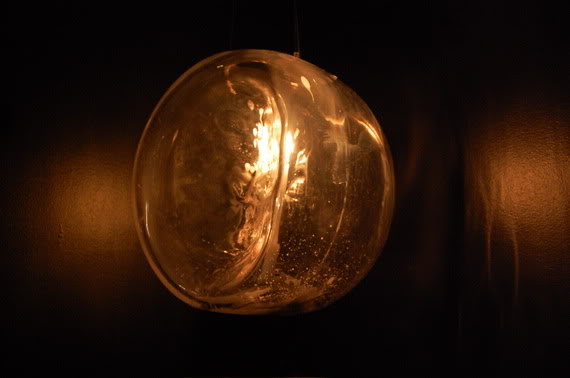
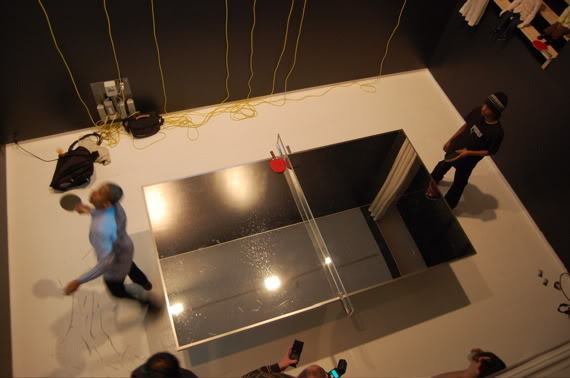
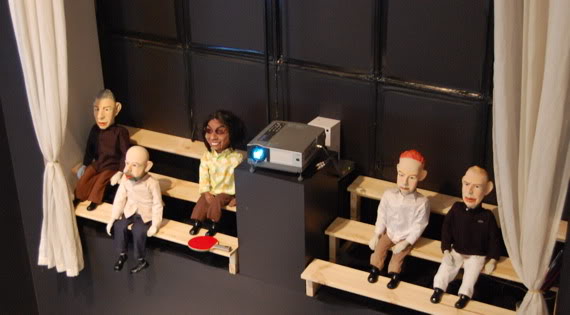
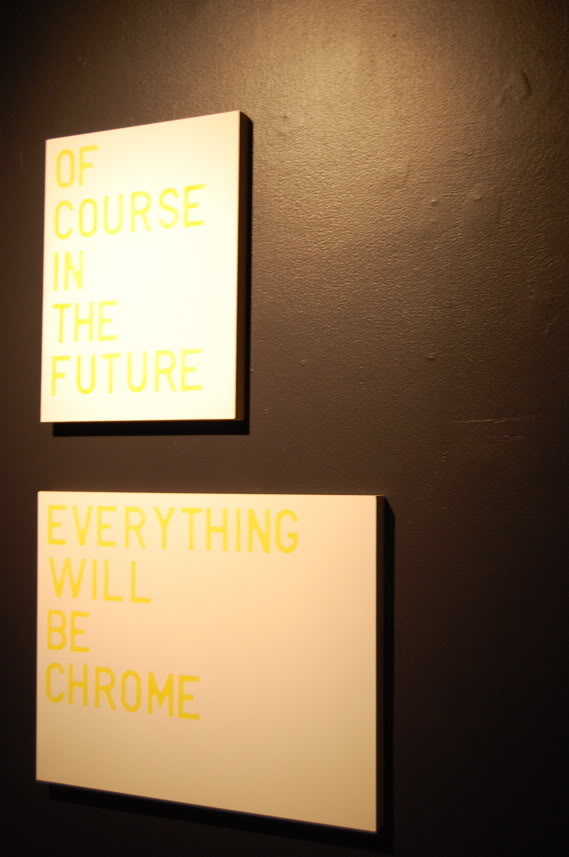
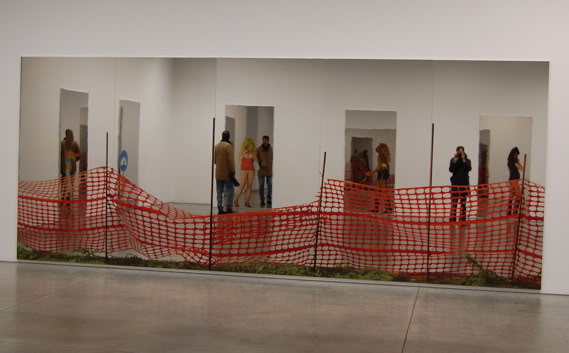
Rirkrit Tiravanija, Reflection, at NYEHAUS: Steel Ping Pong Tables and Burning Candles


Rirkrit Tiravanija, Untitled, 2005.  


Rirkrit Tiravanija, Untitled (The Future will be Chrome) (Ping Pong Ball Table), 2008.


Rirkrit Tiravanija and Philippe Parreno, Untitled, 2005.


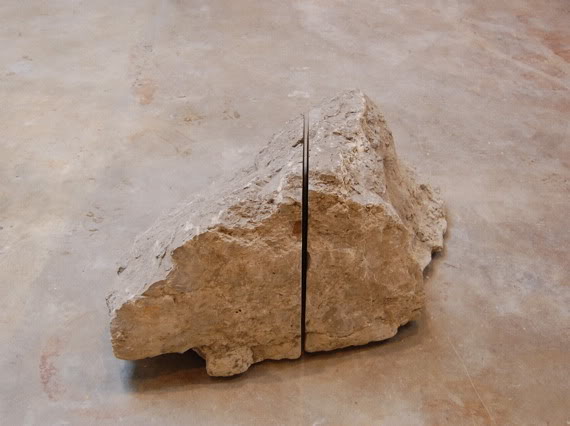
Rirkrit Tiravanija, Untitled (Of Course in the Future Everything will be Chrome), 2003.

Wednesday, January 28, 2009

Erik Lindman, House Wine, House Music, at V&A [Review]


Erik Lindman, 17 days, 17 long nights... but slow, 2008, at V&A New York.

It would be easy to dismiss Erik Lindman's latest paintings at V&A based simply on their titles. Obliquely referencing the early 1980's of Joe Yellow, Martin Rev, Alan Vega, and Prince, they imply a trendy pop culture nostalgia that belies work that is actually confident, sophisticated, and alluring.  

Shadazz (2008) and 17 days... (2008) define the two extremes of his practice, the former (Suicide reference) washed in blues that suggest the hazy passages of Nozkowski's recent paintings, the latter (Prince title) building diverse layers: fine splatters - sprinkles - first, then sweeping green and yellow strokes, and finally white concentric circles, which generate a near-compendium of painting techniques.  Joe yellow just took my heart by making it to the top 100 follows a similar format but concludes with quick neon sprays of color near the top and a weathered, burgundy heptagon that covers most of the work.  It could be a disco-infused Robert Mangold.  

In each case, one gets the impression that Lindman has buried and obscured dozens of layers that are only barely legible in the finished paintings; his painting is studied and nimble enough that it's not always clear how exactly he's constructed his art.  Not all of the titles are so abstruse, it seems important to mention here: the lone print for sale in House Wine, House Music, which photographically captures his clever use of nebulous color fields, is titled Fountain.  That should be a clue to the real scale of Lindman's ambition.

Monday, January 26, 2009

Brandeis: Art Not "Core Academic Mission"


Maurizio Cattelan, Daddy Daddy, 2008 at the Solomon R. Guggenheim Museum.

"I don't like to sell paintings to museums because then I can't get them back."  
- Larry Gagosian, quoted in The New York Times, 1991

Brandeis University's Rose Art Museum (RAM) was founded in 1961.  This summer it will cease to exist.  The university announced today that they would be closing the museum and selling off the 8,000 pieces in its permanent collection to help close what is reported to be a $10 million budget deficit.  

University President Jehuda Reinharz shared his peculiar logic with the Globe:
"This is not a happy day.... The Rose is a jewel. But for the most part it's a hidden jewel.  It does not have great foot traffic and most of the great works we have, we are just not able to exhibit."
Public attention is a questionable measure of value for any cultural institution devoted to education and preservation, but it seems particularly bizarre when judging a university art museum.  Also, even accepting that line of argument, I find it hard to believe that the Rose Art Museum receives less "foot traffic" than many other departments at Brandeis.  

You might think that a university that owned works by de Kooning, Johns, Hofmann, Lichtenstein, Warhol, Goldin, Judd, Serra, and Sherman, among numerous others, would want to highlight and embrace that collection.  Instead, Reinharz and the trustees decided to do exactly the opposite, reasoning that closing the museum was actually a sound academic decision in a letter to the Brandeis community: "[O]ur response to the crisis is to focus and sustain our core academic mission."

Exchanging its art collection for cash, Brandeis should easily get the money it needs.  (As Paddy Johnson points out, the gap could probably be closed by one of a few works in the collection.)  In doing so, it will liquidate nearly half a century of public trust.  Suddenly it's hard to get too excited about the National Academy controversy.

Jon Rafman at MWNM


Jon Rafman, Ad-Vice for a Prophet, 2005, video.

Jon Rafman's Ad-Vice for a Prophet is on display as part of New Mourning at MWNM.

Saturday, January 24, 2009

Huang Xi at Asia Song Society

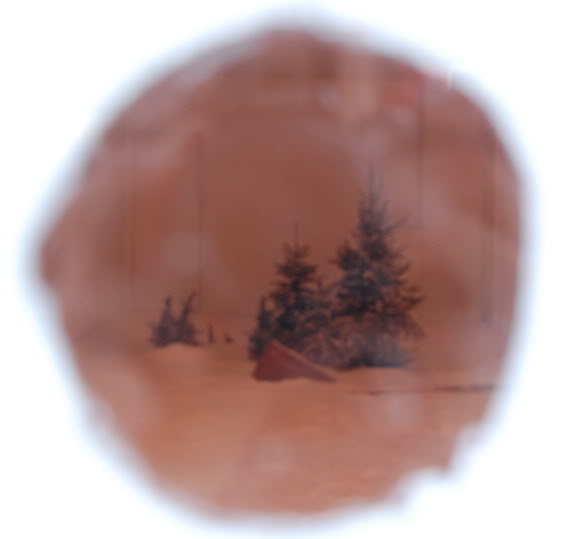
Asia Song Society

Huang Xi, Winter Landscape [installation view], 2008, at Asia Song Society.


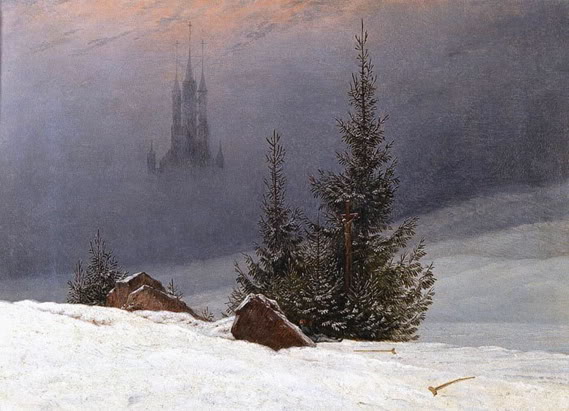
Caspar David Friedrich, Winter Landscape, 1811.

Thursday, January 15, 2009

Wednesday, January 14, 2009

Arte Povera is Everywhere (in Chelsea)


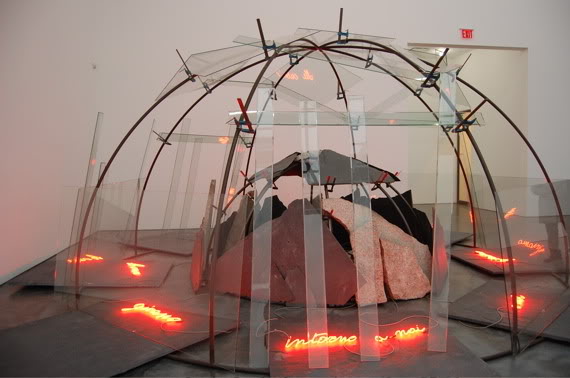
Mario Merz, Le case girano intorno a noi o noi giriamo intorno alle case?, 1992, at Gladstone Gallery.

Mario Merz has some huge works up at Gladstone Gallery. Michelangelo Pistoletto just finished his first show at Luhring Augustine. The recent, wonderful ZERO in New York show at Sperone Westwater had pieces by Piero Manzoni and Lucio Fontana, among others. All of the sudden, Arte Povera is everywhere. 

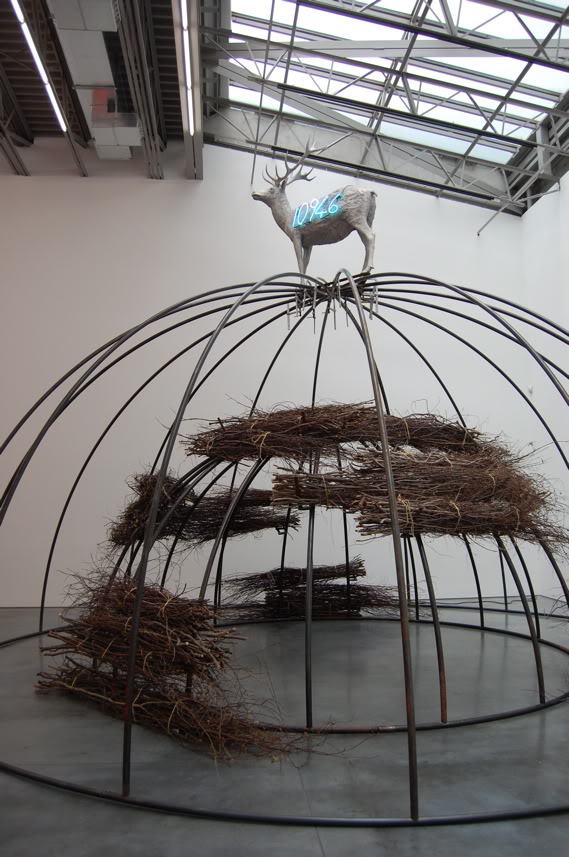
In less than two weeks, Gagosian will open a Manzoni retrospective on 24th Street.  It's tempting to draw the obvious analogies between the movement's original ethos and the current state of the economy, but these shows were, of course, planned well before the dip in the art market.  More to the point, most of the artists' recent work has also simply embraced the market's desire for massive, repetitious work.  Merz's igloos, for one, have become enormous.  For better or worse, there's not an impoverished thing in sight.

That said, even if Pistoletto is just repeating the painted mirrors he's been producing for years, I still think they're wonderful.  I can never resist the opportunity to stare at myself.

Side note: I didn't realize that Manzoni died at twenty-nine (thank you, Gagosian press release)!  A reminder that the art market has been championing the super-young for quite a while. 


Mario Merz, Untitled, 1998


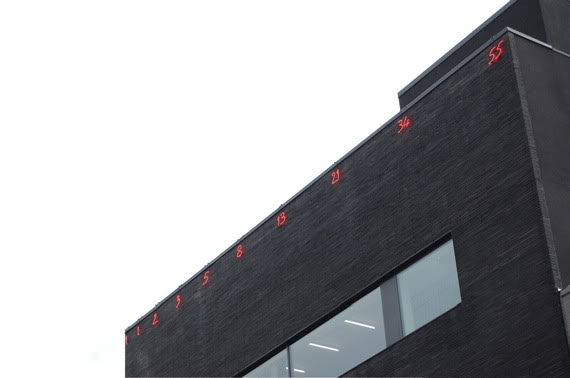
Mario Merz, Fibonacci sequence, 2002, at Gladstone Gallery.


Michelangelo Pistoletto, Lavori in corso (Construction site), 2008, at Luhring Augustine.

Tuesday, January 13, 2009

Leandro Erlich's Swimming Pool's Stay at P.S.1 Extended!


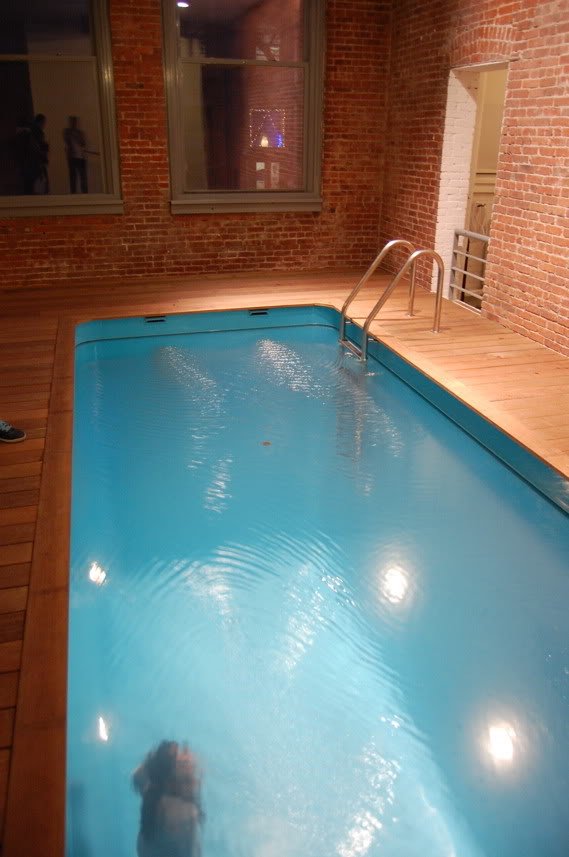
Leandro Erlich, Swimming Pool, 2004, at P.S.1 Contemporary Art Center.

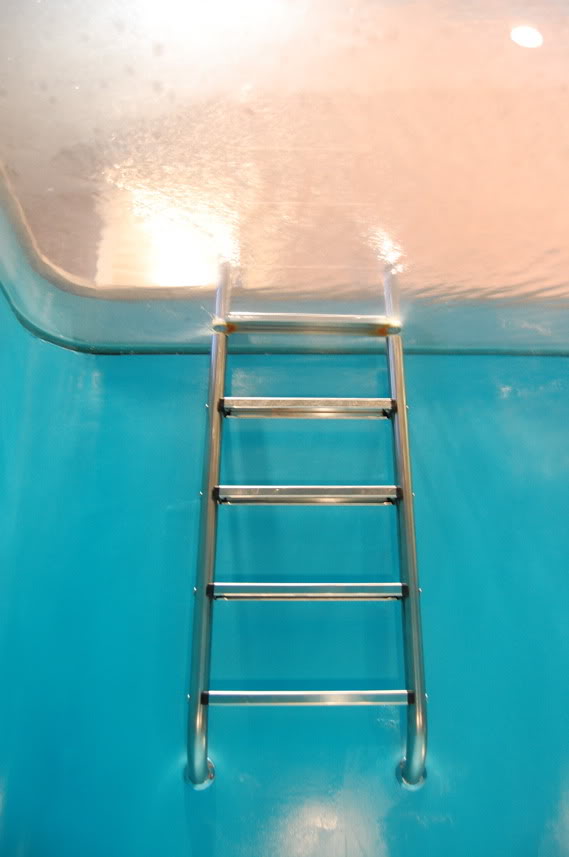
Originally scheduled to close in April, Leandro Erlich's Swimming Pool will be staying at P.S.1 until September 14, 2009, the museum is reporting on its Twitter!  Judging by conversation in the space on a visit in December, it is the ideal place to procure your next Myspace or Facebook photograph.


Leandro Erlich, Swimming Pool, 2004, at P.S.1 Contemporary Art Center.

Monday, January 12, 2009

Stop Cheering the 'Art Recession'

Waldemar Januszczak became the latest writer to cheer the apparent setback in the art market, this time in the pages of the London Times.  After arguing that the art world has become "soft, blubbery, arrogant, self-congratulatory and decadent," he declares that economic turmoil is the answer: "British art needs a recession for the same sorts of reasons that those forests in South Africa need the occasional fire: to strengthen their wood, to return to an essence, to get rid of the weeds and to regenerate."  It amounts to a peculiar, lazy analogy that suggests a lack of understanding about the art market.

It's tempting to share his enthusiasm for the weeding that could potentially occur, the dissolution of "All these Johnny-come-latelys from Zurich or Berlin or New York who have ended up here because this is where the hedge-fund money was are as crucial to the national art scene as another branch of Starbucks," as he puts it.  To whom, though, is he actually referring?  At least here in New York, many of the "Johnny-come-latelys" are showing some of the best art right now and selling it at prices within the reach of a lot of working New York professionals, precisely the people that will be hit most by the wider economic downturn.  

I buy the argument that Koons and Hirst collectors are likely to continue to have the money to continue to fuel their acquisitions for a while.  Even if a few of their colleagues lose interest as the market drops, that monied upper-echelon can and will be able to avoid a collapse in the top-valued few dozen artists.  It's the scrappy, young galleries centered around the Lower East Side and in Brooklyn that are in the most danger.  I normally try to keep this a Clement Greenberg-free blog (and not use the term avant-garde), but I find myself almost echoing his point in "Avante-Garde and Kitsch":
"No culture can develop without a social basis, without a source of stable income. And in the case of the avant-garde, this was provided by an elite among the ruling class of that society from which it assumed itself to be cut off, but to which it has always remained attached by an umbilical cord of gold."
That elite may choose not to funnel money to the newest galleries as they rein in their spending.  At the very least, potential collectors from slightly lower-income brackets may not materialize as they have in the past.  As long as the money is flowing, who cares where it comes from or what it supports at that moment?  It's feeding as much good as bad.  Some of both are likely to disappear this year. That shouldn't be a cause for celebration.

Sunday, January 11, 2009

Félix González-Torres and the Go-Go Dancing Platform at P.S.1


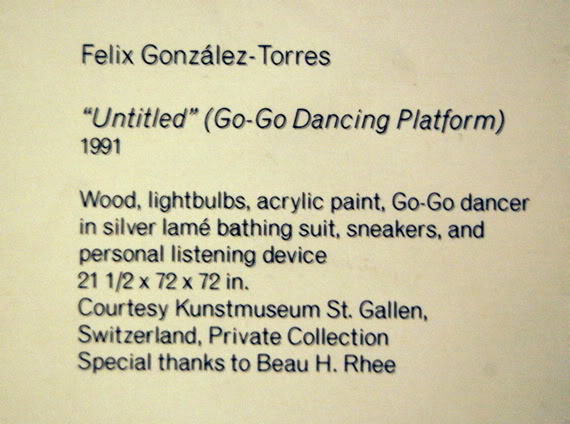
Placard for Félix González-Torres, "Untitled" (Go-Go Dancing Platform), 1991, at P.S.1 in NeoHooDoo: Art for a Forgotten Faith.

"Even without the dancer I thought it was really kinky.  Kinky minimalism."  - Robert Nickas

Yes, a go-go dancer clad in a silver lamé bathing suit regularly climbs on top of the sculpture and dances to the quiet hum of his headphones. There are videos available of the fully-assembled piece at P.S.1 and the Museum für Moderne Kunst in Frankfurt, which may be slightly unsafe for more conservative workplaces.  It's such a great, bizarre piece; I can't think of anything else that requires a performer separate from the artist and the viewer to function.  It's easily also the funniest work I've seen recently, though some of the inclusions in Funny Not Funny at Bellwether Gallery (by Wayne White and David Shrigley) come close.

Update (01/12/09): The Los Angeles Times has an extensive article about the work at the Hammer Museum [via c-monster].  How many go-go platforms did González-Torres make?

Saturday, January 10, 2009

André Avelãs and The Headphones Show at the Abrons Arts Center


André Avelãs, Earphones, 2007

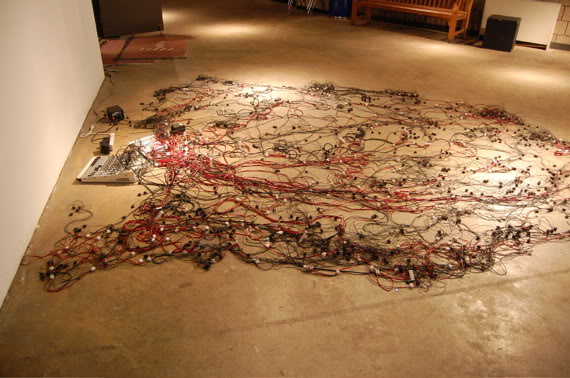
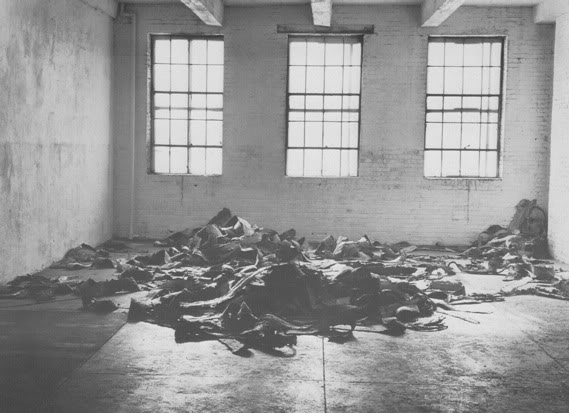
André Avelãs' piece in The Headphones Show (curated by Alan Licht) at the Abrons Arts Center consisted of 1,000 headphone earbuds. 40 were set up to work as microphones in the space, while the other 960 operated as speakers, creating a continually-crashing feedback loop within the space.  It was almost as if Richard Serra's Scatter Piece (1967) had suddenly learned to make noise.


Richard Serra, Scatter Piece, 1967.  Photo courtesy of Rufus Knight.

A show devoted to pieces that utilize headphones (sometimes as their sole material, as was the case with Seth Price's audio work) doesn't make for the most thrilling photos, but I've included a few more on flickr.

Thursday, January 8, 2009

Philippe Parreno and theanyspacewhatever at the Guggenheim


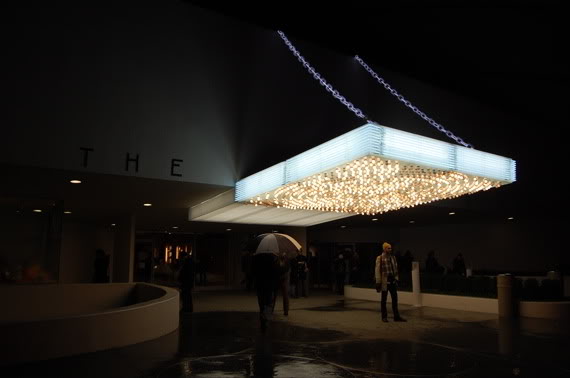
Philippe Parreno, Marquee, Guggenheim, NY, 2008.

theanyspacewhatever concluded last night with a nonstop, 24 hour symposium at the Guggenheim.  Philippe Parreno had the best moment in the show, installing one of his gigantic, alluring marquees outside the building.  In one of the rare positive reviews of the exhibition, Roberta Smith suggested a new sign for the museum: “The Guggenheim Museum, Temporarily an Alternative Space, Inclusive and User-Friendly.”  Whatever else, there was free espresso provided by Douglas Gordon and Rikrit Tiravanija at their Cinéma Liberté, and it was delicious.

Speaking of closings, The Headphones Show at the Abrons Arts Center (curated by Alan Licht), featuring work by Vito Acconci, Christina Kubisch, Abinadi Meza, Tristan Perich, and Seth Price, among others, closes tomorrow, January 9, at 6:00 pm.


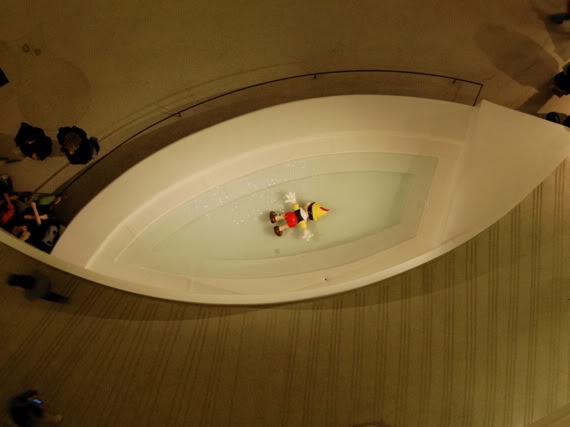
Maurizio Cattelan, Daddy Daddy, 2008.

Read 1,000,000 Years, Become 1,000 Dollar Box


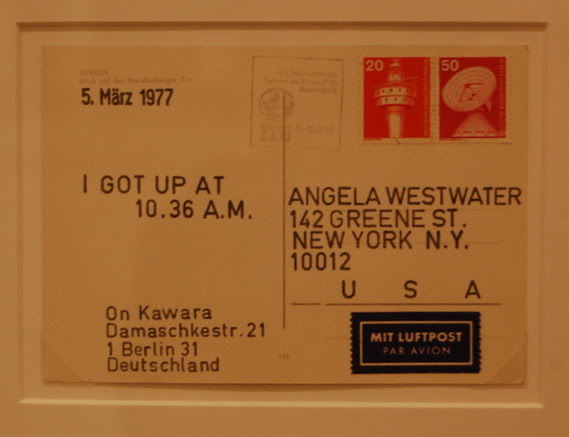
On Kawara, [detail of] Untitled, 1977. At MoMA as part of This is Every: Four Decades of Contemporary Art.

David Zwirner is looking for people to record two hour segments of On Kawara's voluminous One Million Years (1969) for a beautiful boxed set. If you want to volunteer, you can find the information on the gallery's web site.

If you're looking for a slightly more interactive art experience, Liam Gillick will be having a drawing class on January 13 (5:00 pm) at The Drawing Center.

Wednesday, January 7, 2009

The Sudden Omnipresence of Alan Saret


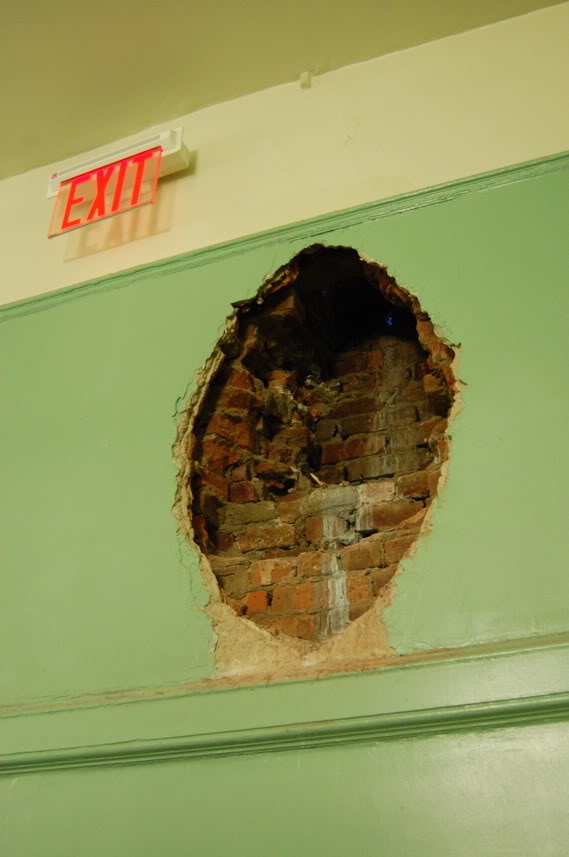
Alan Saret, Brick Wall and Sun, 1976, at P.S.1 Contemporary Art Center

Suddenly, Alan Saret is everywhere. His tangled, wiry 1988 sculpture The AF World was hanging mysteriously alongside pieces by Andre, Judd, Serra, and Sandback at the Walker Art Center in Minneapolis this winter.  In New York, The Drawing Center had a show of his Gang Drawings earlier this year, the most recent exhibition of his work since James Cohan put some of his sculptures on display in 2004. Then, as I was walking through P.S.1 in late December, I discovered that the gapping hole in the wall on the fourth floor was his work, as well.

Roberto Bolaño's General Entrescu in 2666 would have loved it, "... finally he talked about cubism and modern painting and said that any abandoned wall or bombed-out wall was more interesting than the most famous cubist painting, never mind surrealism..."

Tuesday, January 6, 2009

Everything Good in 2008

With 2008 now over, it's time to look over the Top 10 and year end lists that came out throughout December.  (I posted my list last week.)  In New York, William Eggleston: Democratic Camera at the Whitney, Abstract/Abstraction at the Jewish Museum, and Catherine Opie: American Photographer at the Guggenheim seemed to be the big winners.

Some year end pieces:
  • Jerry Saltz - # 1 - Tino Sehgal at Marian Goodman, "I was horrified, mortified, and thrilled."
  • Hrag Vartanian - #1: Abstract/Abstraction at the Jewish Museum, "a fascinating take on a topic that has been done to death."
  • Joanne Mattera - Mary Heilmann at the New Museum, "The perfect yin and yang of loose-limbed geometry and aggressive color."
  • Anaba (Bromirski) - RH Quaytman, Michael Zahn, Megan Pflug, and a bunch of other art no one else was covering.
  • Modern Art Notes (Green) - Sarah Oppenheimer at the Mattress Factory, "stole the show" from the nearby Carnegie International.  
  • Jen Graves - #1: WACK!  Art and the Feminist Revolution, "I just want to keep looking. And looking. And looking."
  • Peter Schjeldahl - Jeff Koons retrospective in Chicago and his sculptures on top of the Met, "the most perfect—and perfectly enchanting—valedictory to the era suddenly past."
  • Christopher Knight - Catherine Opie: American Photographer at the Guggenheim, "a marvelous retrospective whose only real drawback is that it won't travel west from its originating venue."
Two quirkier, wonderful lists:
Finally, Charles Finch has some predictions for the art world in 2009: "Damien Hirst's career is over. Like those of Schnabel, Cucchi, Salle and other victims of the late 1980s crash, Hirst’s values will never recover."

Monday, January 5, 2009

Corin Hewitt at the Whitney Museum of American Art [Review]


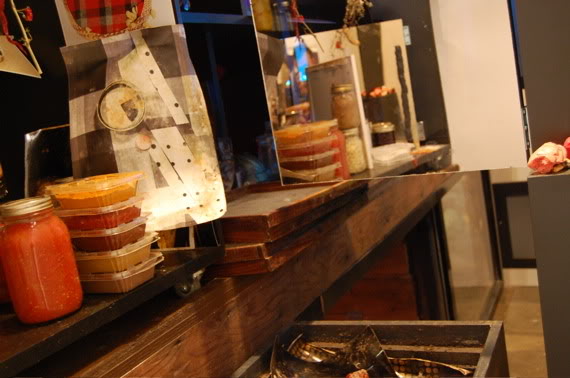
Corin Hewitt, Seed Stage [installation view], 2008-2009.

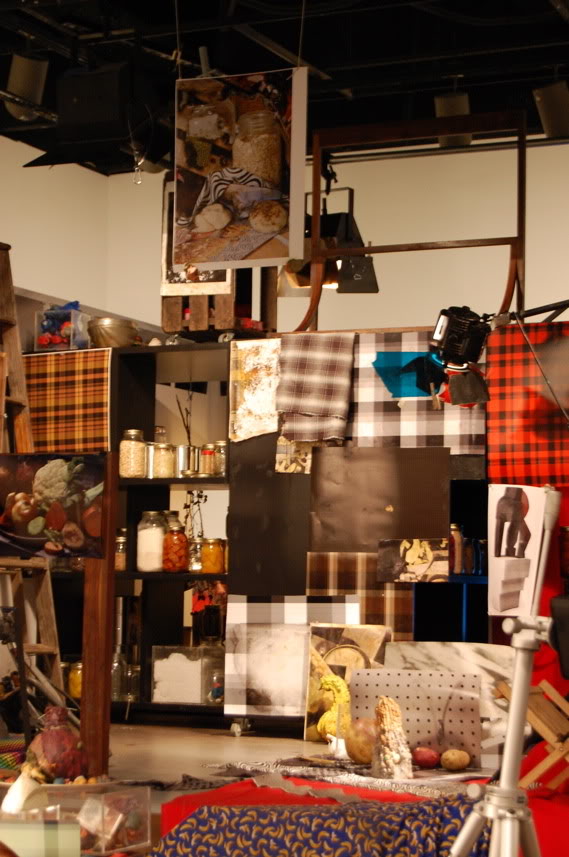
Corin Hewitt's residency inside his Seed Stage installation at the Whitney ended yesterday. Hewitt's project involved "cooking, sculpting, heating and cooling, casting, canning, eating, and photographing both organic and inorganic materials," as the press release elegantly put it.

Standing on the first floor of the museum, the space smelled even more delicious than normal. (The Whitney's restaurant, Sarabeth's, is right underneath the floor there.)  An artist and food in a gallery space immediately recalls Tiravanija and Sarabia, but there's nothing relational or service-oriented here.

Housed inside four white walls with openings at each corner (only two of which allowed you fully to see Hewitt at work), the work suggested a two-way Étant donnés. The viewer's ability to see the art production was continually frustrated by the limited viewing spaces and lines of sight.  How long was it acceptable to block the viewing area and stare at the artist?  Sustained voyeurism became slightly uncomfortable, though I may just be more uptight than most.

The Whitney should do more of these brief projects: visitors seemed to be enjoying it and the web site for the show is pure class, containing quite a few of Hewitt's still-life photographs along with other documentation.  Taxter & Spengemann wins again.
Two more installation photographs: Photo 3     Photo 4 [featuring Hewitt]


Corin Hewitt, Seed Stage [installation view], 2008-2009.

Friday, January 2, 2009

[Top 10 of 2008] #1 - Who's Afraid of Jasper Johns? at Tony Shafrazi


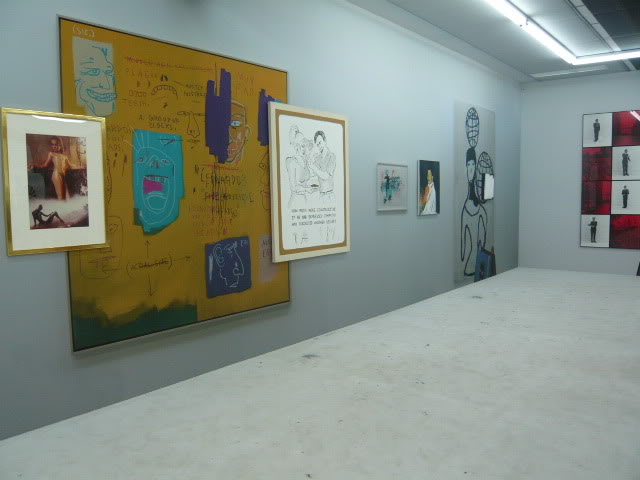
Who's Afraid of Jasper Johns, installation view, at Tony Shafrazi Gallery. Photo courtesy of Lala.

[Top 10 of 2008] #2 - Triple Candie, Thank You for Coming, 2001-2008


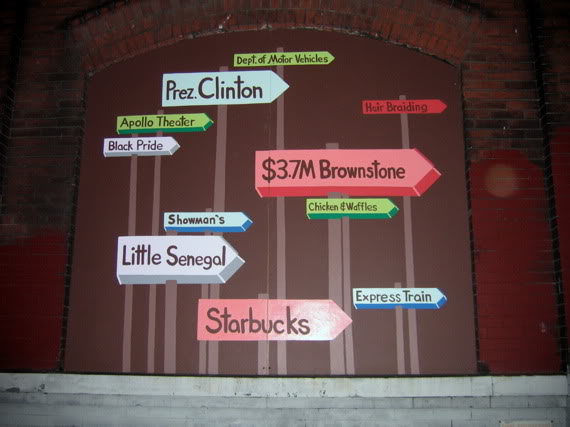
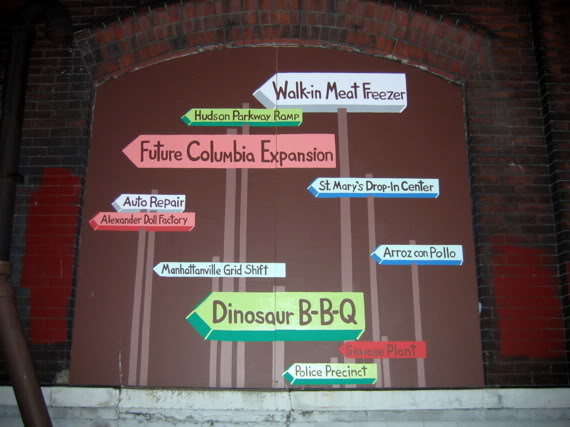
Unauthored, Tourist Information Center, 2006, mural on Triple Candie wall. Photo courtesy of Geog.

The story goes that, pressured by his partners at STT Records to sign Sonic Youth in the mid-1980’s, Joe Carducci vehemently refused, declaring that record collectors shouldn’t be in bands. While California hardcore’s anti-intellectualism certainly played a role in the rejection, his suspicion of the band’s knowing New York pretension is understandable: the most knowledgeable people in the room rarely make the best art.

Transposed into the world of contemporary art, Carducci’s polemic might read: curators shouldn’t be artists. Over the past decade, no group came closer to breaching this maxim than Shelly Bancroft and Peter Nesbett, founders and directors of Harlem alternative art space Triple Candie. Their programming began traditionally and tastefully enough in 2001, showing work by artists like Bruce Nauman, Kiki Smith, Matthew Brannon, and Taylor Davis, but then things began to get weird.

By 2006, Bancroft and Nesbett had largely abandoned standard shows of art for unusual curatorial experiments. Cady Noland Approximately featured recreations of the increasingly trendy artist’s work, David Hammons: The Unauthorized Retrospective was composed of over a hundred photocopies of the artists work (after he purportedly refused to participate in a retrospective), and Lester Hayes: Selected Work 1962-1975 devoted the gallery space to the influential (and fictional) African-Italian post-minimalist.

A few of these ideas made a few people angry, but, for the most part, Triple Candie was simply ignored. The space’s final show, Thank You for Coming, Triple Candie 2001-2008, a compendium containing bits of each show presented in the space’s eight years (a pack of Budweiser from the Noland show, some photocopies of Jacob Lawrence paintings from the retrospective they mounted of his Migration of the Negro) proved definitively that their curious, meandering programming deserved more attention than it received.

Bancroft and Nesbett may have been the two people in New York’s art world most familiar with and interested in engaging its voluminous history, but they never lapsed into the pedantry or solipsism one might have expected from such record collectors. If they were curators that slipped into the role of artists, it was only because there were things that they thought people had to see. At the moment, I can’t think of a better definition of a good artist. Nor can I think of anyone else recently who has so bravely chased that goal.


Unauthored, Tourist Information Center, 2006, mural on Triple Candie wall. Photo courtesy of Geog.


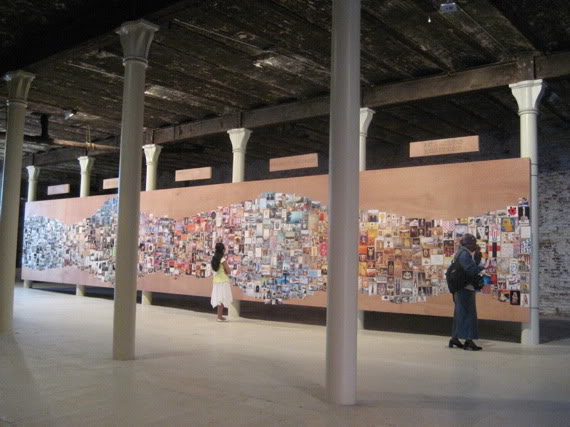
Museo de Reproducciones Fotograficas, 2007 exhibition at Triple Candie. Photo courtesy of Sofia.