Wednesday, December 31, 2008

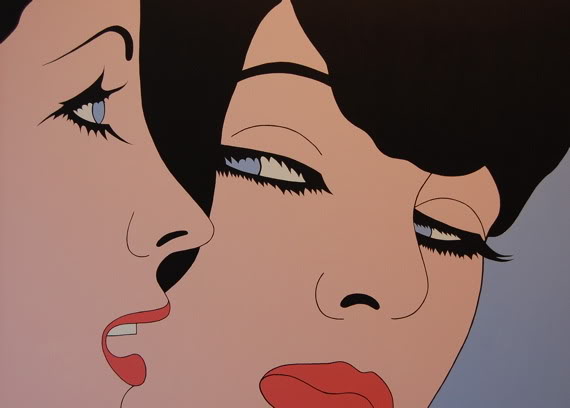
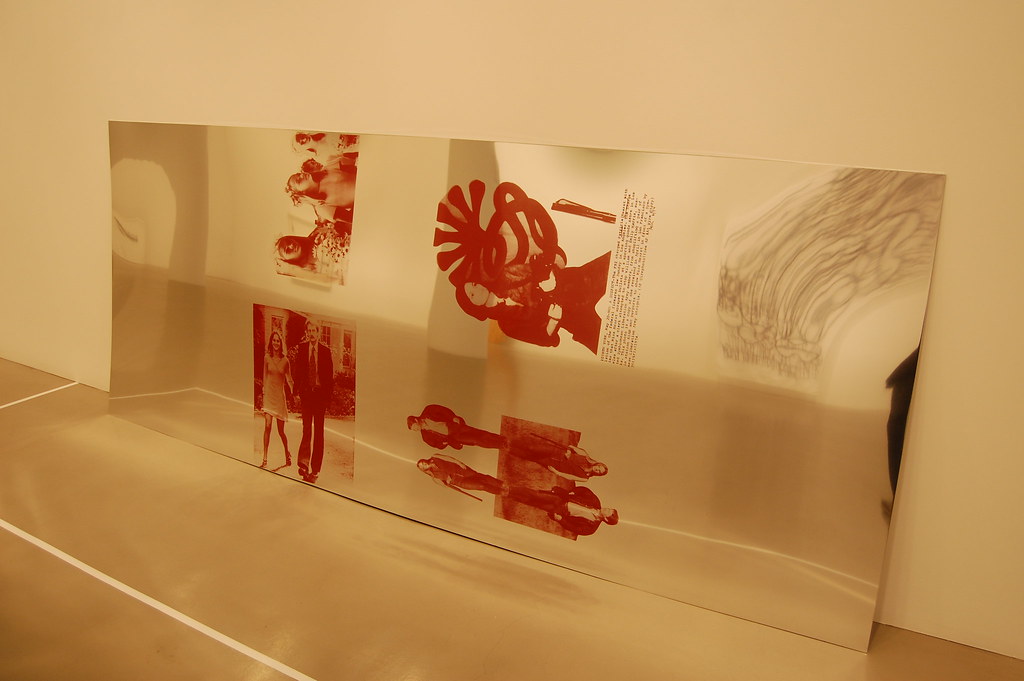
Kay Rosen, Scareful!, at Yvon Lambert - New York


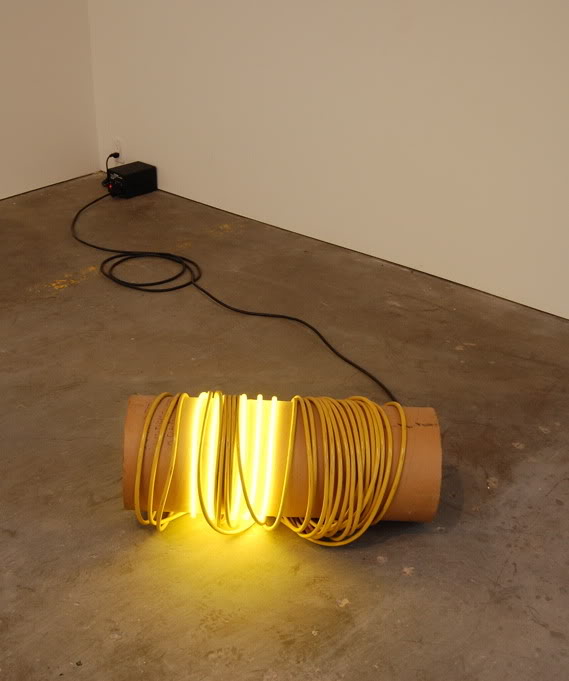
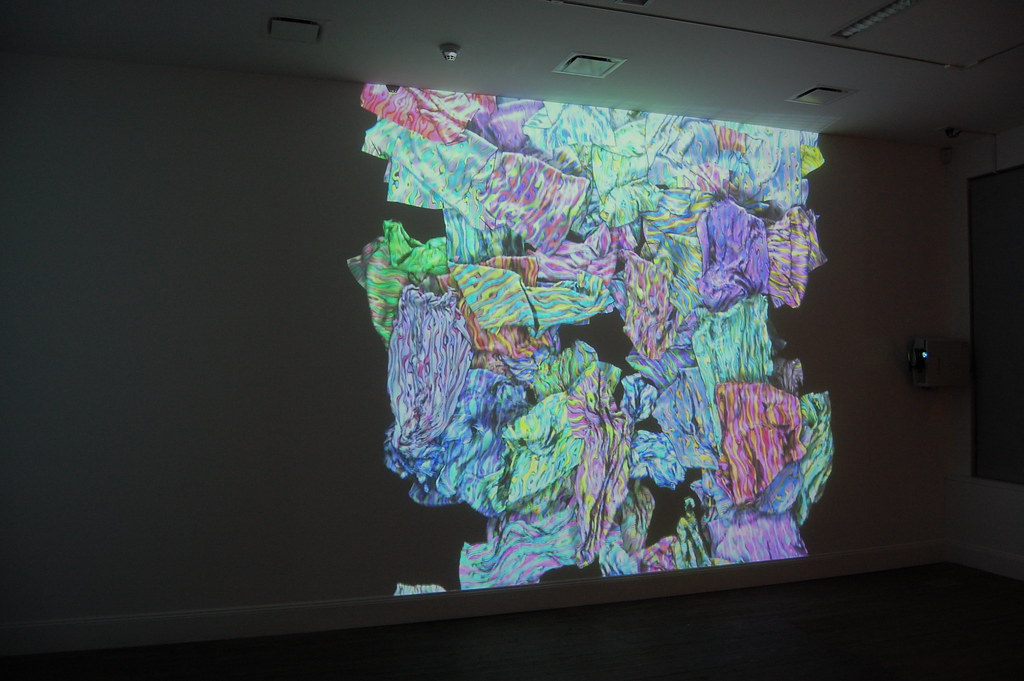
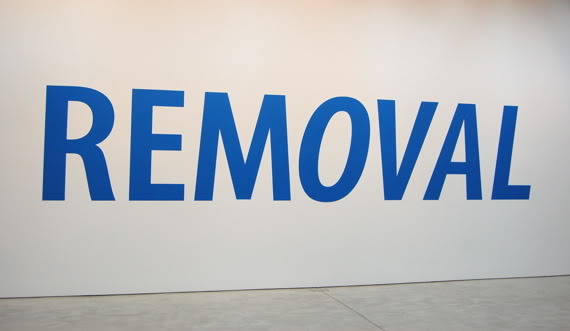
Kay Rosen, Removal from Office, 2007-8.

Last chance: Kay Rosen, Scareful!, at Yvon Lambert closes January 3, 2009.

The last two parts of my Top 10 of 2008 are coming up, along with a compendium of year-end posts from other places, and a review of Barbara Probst at the Madison Museum of Contemporary Art.

Tuesday, December 30, 2008

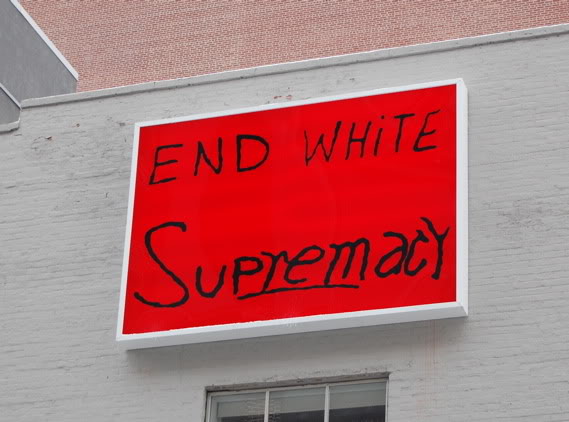
Sam Durant on top of Paula Cooper Gallery


Sam Durant, End White Supremacy, 2008.

Dzama, Bergdoll, Neuberger on 2009 Resolutions

The Wall Street Journal asked a variety of people to share their New Year's resolutions.  Marcel Dzama's: "Read more and plant a garden in my backyard."  He also shares, "I have recently made sketches for a piece in Mexico that will be permanently installed in a botanical garden in Culiacán. It will be a snowman kept alive by solar panels."

MoMA curator Barry Bergdoll, dealer Mary Boone ("To laugh more.") and legendary collector Roy R. Neuberger (going strong 105 years old!) make up the rest of the art world contingent, alongside some other interesting picks.  This will probably be the only time that Chris Brown and Danny Meyer will ever appear in the same article.

Monday, December 29, 2008

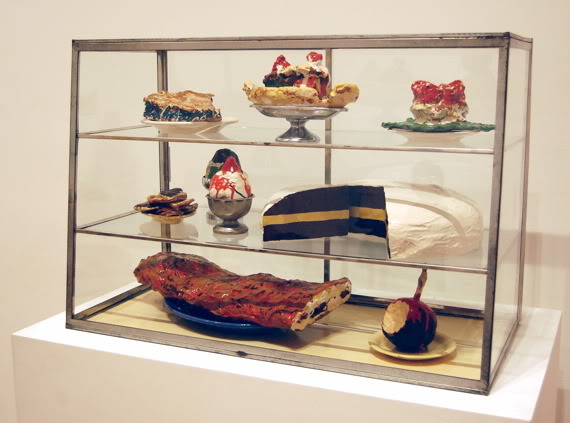
The Exclusionary Aesthetics of Claes Oldenburg's Store


Claes Oldenburg, Pastry Case, I, 1961-62, painted plaster sculptures on ceramic plates, metal platter and cups in glass-and-metal case, 52.7 x 76.5 x 37.3 cm, at the Museum of Modern Art, New York.

It was wonderful to stumble upon pieces of Claes Oldenburg's Store at MoMA recently, not only because his food sculptures are still so hilarious, delicious, and good (which they are, besides being suddenly fashionable: they also seem to have informed Nathalie Djurberg's latest work at Zach Feuer, which I wrote about earlier this week) but also, as theanyspacewhatever show closes at the Guggenheim, his work is looking increasingly prescient. 

Discussing his December 1961 - January 1962 project (in which he opened up a storefront on the Lower East Side selling his food sculptures to visitors) with Harvard professor Benjamin Buchloh in 1985, Oldenburg seems to anticipate some of the language regarding production that would surround Bourriaud's relational aesthetics in the 1990's:
Benjamin Buchloh: The Store was meant to function potentially like a store. People from the street were allowed to come in, weren't they?
Claes Oldenburg: Yes, they were. But realistically speaking, it was stacked against that because people in that neighborhood just aren't going to come in when they see something as strange as this. If people came in from the street, it was kids, or just curious people. I would see them at the window-they'd look in, but nobody would come in.
Buchloh: So it was more conceived as a private studio that could be open on certain occasions to art world people and friends.
Oldenburg: It was open-anybody could come in at any time-and I worked there more or less in view of the people who looked in. Even at night I would be visible.
Buchloh: But wasn't there an inherent assault on esoteric qualities of high art, in every aspect of The Store?
Oldenburg: Yes, but I think it was a matter of two things. One thing was to admit the commercial nature of art production by comparing it to ordinary production...
Oldenburg, in other words, was attempting to highlight the essentially "commercial nature of art production", while still taking part in it.  Relational aesthetics, the argument goes, attempts to escape the enterprise entirely, proffering participatory, ephemeral events in place of such naked commerce: cooking Thai food for visitors, most famously.  

Claire Bishop has argued, though, that the promise of relational aesthetics is largely illusory, cloaking the financial underpinnings of art with feel-good rhetoric about democracy and participation, serving it up to a self-selective, elite group.  

Even back in the 1960's, Oldenburg seems to have realized this inherent contradiction, the false, hermetic radicalism of such a project, proposing a counterpoint to the artists of the 1990's thirty years in advance.  Even in his project, which hardly attempted any of the participatory gestures undertaken by Tiravanija or Gillick, his audience was limited: "...[P]eople in that neighborhood just aren't going to come in when they see something as strange as this," he writes.  In doing so, he would presage a point that Jerry Saltz would make in 1996 on viewing Tiravanija's work, which Bishop quotes:

“... [T]heoretically anyone can come in [to an art gallery]. How come they don’t? Somehow the art world seems to secrete an invisible enzyme that repels outsiders. What would happen if the next time Tiravanija set up a kitchen in an art gallery, a bunch of homeless people turned up daily for lunch? What would the Walker Art Center do if a certain homeless man scraped up the price of admission to the museum, and chose to sleep on Tiravanija’s cot all day, every day?"
Works Cited
Claire Bishop, "Antagonism and Relational Aesthetics," October 110 (Fall 2004), p. 51-79.

Benjamin Buchloh, "Three Conversations in 1985: Claes Oldenburg, Andy Warhol, Robert Morris," October 70 (Fall 1994), p. 33-54.

Saturday, December 27, 2008

John Wesley, Question of Women, at Fredericks & Freiser


John Wesley, The Liar, 1993, acrylic on canvas, 44 x 60 inches.


John Wesley, Tattoo, 1993, acrylic on canvas, 53 x 72 inches.


John Wesley, Brown Woman Stretching, 1995, acrylic on canvas, 62 x 47 inches.

Friday, December 26, 2008

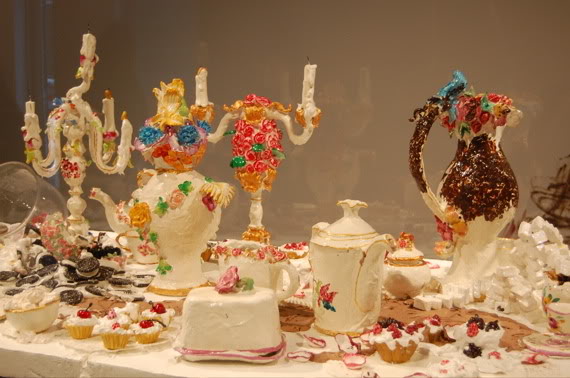
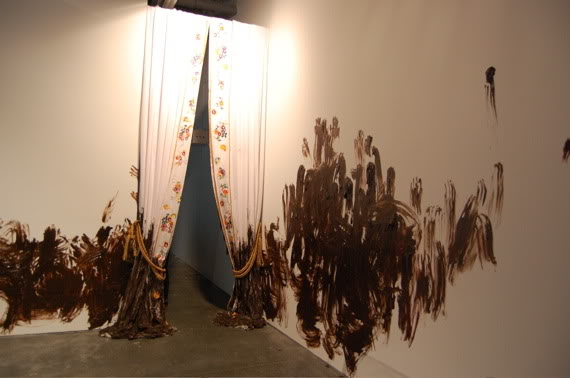
Nathalie Djurberg at Zach Feuer Gallery


Nathalie Djurberg, I found myself alone [installation view], 2008, mixed media.

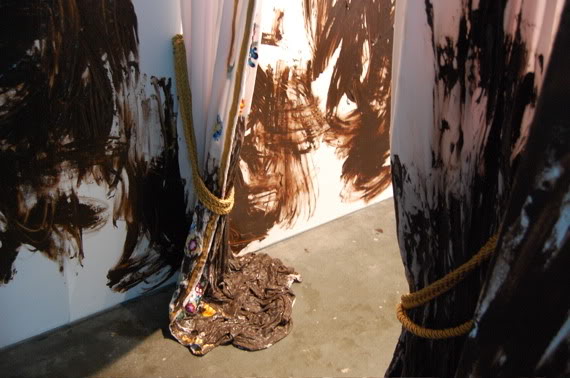
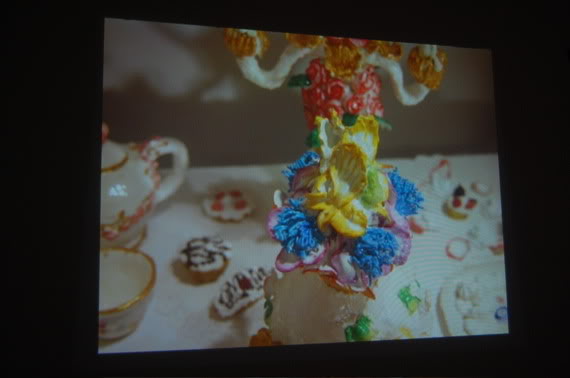
A black, clay ballerina dances around a luxurious dessert tray, smearing chocolate on the ornate, faux-china. Recorded in jerky, stop-motion animation, her dance feels fragile, on the verge of collapsing, which it does, in a horror that’s worth not spoiling here. Feuer’s gallery walls have been defaced with chocolate, while the pristine, plasticine Versailles stage set is on display, safely enclosed within Plexiglas: nearly-edible non-sites for the decadent trauma on display in I found myself alone. Any sense of meaning is opaque here; the unrepentant joy in destruction is not.  

At Zach Feuer through January 24, 2009.


Nathalie Djurberg, I found myself alone [installation view], 2008, mixed media.


Nathalie Djurberg, I found myself alone [installation view], 2008, mixed media.


Nathalie Djurberg, I found myself alone [video still], 2008, clay animation, digital video, 9:45.

Wednesday, December 24, 2008

Happy Holidays


Cady Noland, Bernard, Patty, Weed, and Tanya, 1989.  Part of Indirect Object at Mitchell-Innes & Nash.

Have a wonderful holiday. I'll be posting (finishing the Top 10 of 2008) after Christmas.

Tuesday, December 23, 2008

Broad Wins in Los Angeles

That seems to have ended pretty much the way everyone thought it would.  The great story here, though, is the way that artists, curators, and the public seemed to work together throughout December in a united front.  The group included Andrea Fraser, Katie Grinnan, Martin Kersels, Alexis Smith, Jennifer Steinkamp, and James Welling, among others. Two comments:

Eli Broad in Los Angeles on Tuesday:
“Today is a great day — it’s really the rebirth of MOCA. We’ve known for years that MOCA loves L.A., but today we know that L.A. loves MOCA as well.”
Cindy Bernard in response:
“It’s like President Bush at 5 p.m. on a Friday making major announcements,” Ms. Bernard said. “It undercuts our ability to have a real discussion, and it underscores MOCA’s lack of transparency.”

Monday, December 22, 2008

Franz Kline and the Immorality of Art Education

Wayne Thiebaud visited Franz Klein's studio back in the 1950's.
"The only insult I ever heard him utter," Thiebaud said, "was when I told him I was teaching and he said, 'How can you do that? That's an immoral act.' But he'd gone to art school, so I wanted to know how he could say that. 'Because most teachers want to be believed,' he said, 'and that's immoral.' "  [via Modert Art Notes]

Sunday, December 21, 2008

[Top 10 of 2008] #3 - Giorgio Morandi at Lucas Schoormans and The Metropolitan Museum of Art


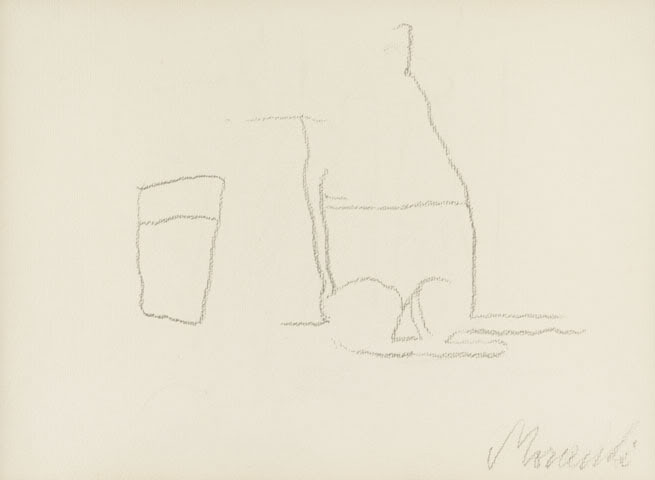
Giorgio Morandi, Natura Morta, 1960. Photograph courtesy of Lucas Schoormans

There were five shows containing a significant number of Morandi works in New York this year (at Sperone Westwater, The Italian Cultural Institute, and Pace Prints, in addition to the two that I saw and included here). Writing in the wake of November’s disastrous New York auctions, it would be tempting to read that programming as a foreshadowing of the changing concerns and tastes in the art world: a newfound conservatism. As New Yorkers filled the Met show in massive numbers, though, there was at least a reminder that strong art usually attracts an audience.

The message of each show centered on virtuosity: Morandi was a master. The texture of a single stroke defines the edges of entire objects in his paintings, while his watercolors and drawings build up entire settings with just the faintest components of their media: three fields of color, a few careful, unbroken lines. As we saw his objects reappear in paintings and drawings over his decades of work, always in different positions and perspectives, they became like old friends, comfortably familiar but by turns mysterious and unknowable.

Wednesday, December 17, 2008

[Top 10 of 2008] #5 - Schweiz über alles at La Fundación/Colección Jumex


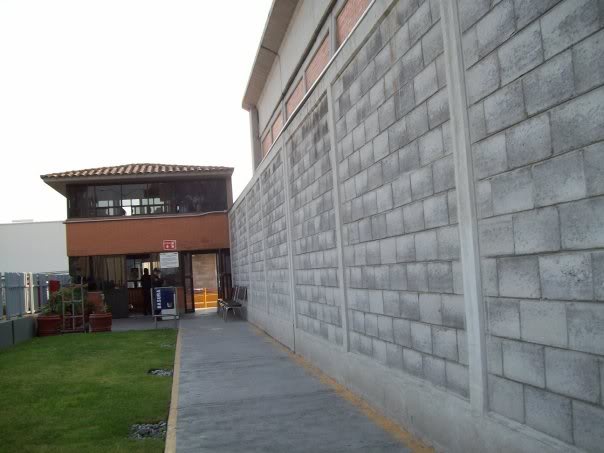
Entrance to the Colección Jumex.

Colección Jumex is located within the factory of the eponymous juice company, a bunker on the edge of Mexico City, accessible only by taxi. Before sliding open the metal walls blocking the entrance, security guards question you and check your identity.  It's open only via appointment and walled off from the congested streets of the DF.  To put it another way: it would be hard to imagine a white box purer than this.  (In our two-hour stay, we saw only two other visitors.)


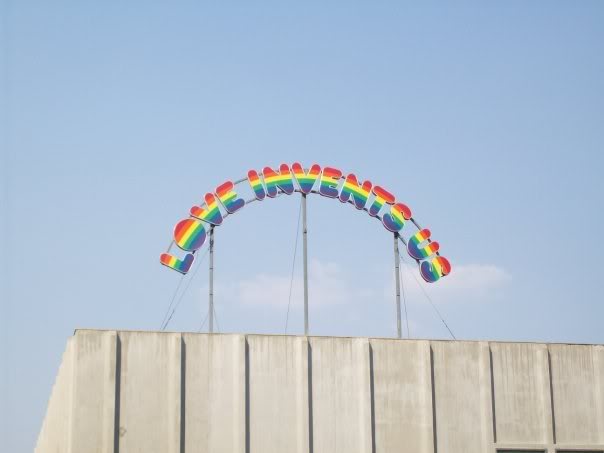
Ugo Rondinone, Love Invents Us, 1999, neon, Perspex, transluscent film, aluminum, 310 x 721 x 10 cm.

Above the concrete block walls, a Rondinone sign.  Within the walls of corporate Mexico on top of La Fundación Jumex's storage facility, its admixture of sincerity and irony had never seemed so perfect.


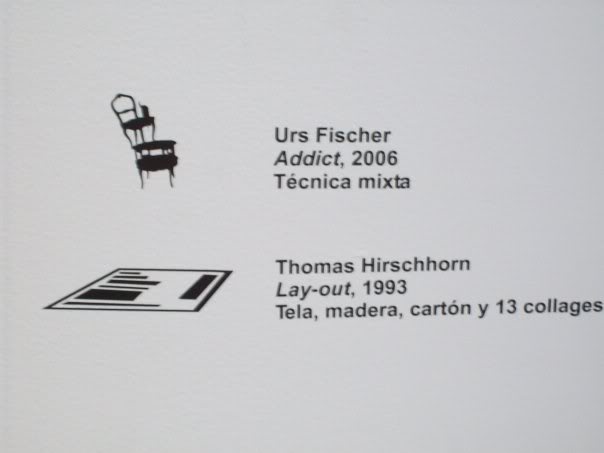
Clever, adorable labels with little icons identify each work.

It was a smart presentation of pleasurable favorites with a needlessly incendiary title. Focusing solely on the Swiss artists in the collection, it presented a simple thesis well: the days of nationalist art are long over, washed away by an entrenched globalism, at least within the art markets of Chelsea, Berlin, and London.


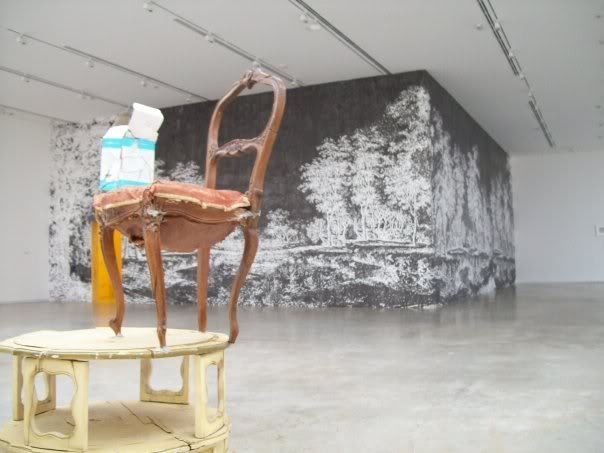
Front: Urs Fischer, Addict, 2006, mixed media.
Back: Ugo Rondinone, Where Do We Go from Here?, 1996, ink on wall, playwood, yellow neon, 4 DVDs, 4 projections, 500 x 1200 x 1000 cm.


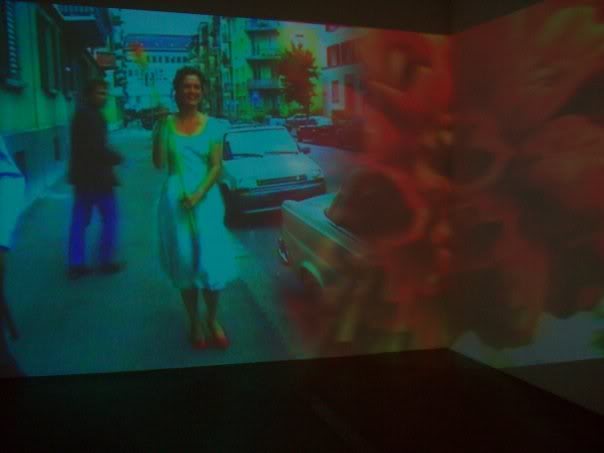
Pipilotti Rist, Ever Is Over All, 1997, video installation, dimensions variable.

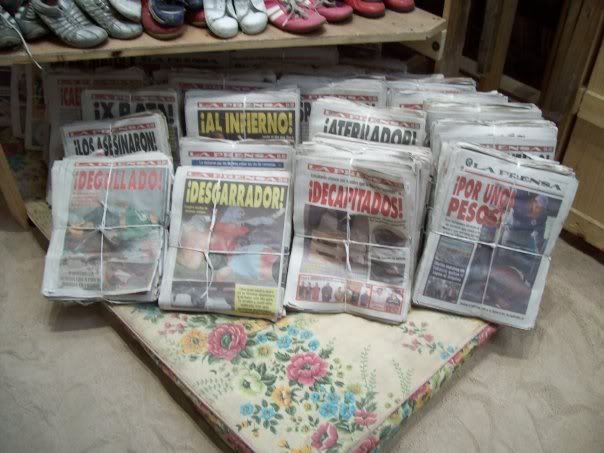
Any exhibition that features Pipilotti Rist's video of a Dorothy-figure wandering down the street, smashing car windows, and smiling to police officers will instantly earn my affection, but there were other charms as well: little icons identifying the art on display and an installation in the offices upstairs by a Mexican artist named Moris, which required you to climb a ladder and jump a wall, dodging barbed wire.  Containing tabloids filled with stories of gang violence and organized crime, it injected the reality outside the pristine walls into the center of the collection.


Moris, Hermoso paisaje No. 5 (el baldio), 2008, installation.


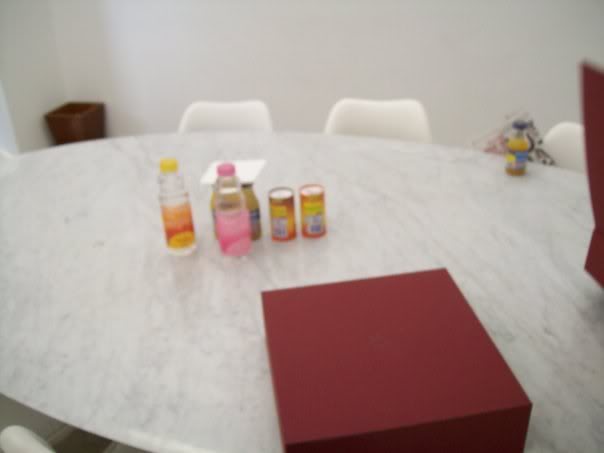
Free, delicious Jumex beverages are available for all visitors.

The real joy, admittedly, had to do with the exclusivity of the affair, viewing art that only a few are likely to see in an environment that - however ridiculous, elitist, and cloistered - would be hard to improve upon.  The young employees were tinkering happily with a recently-acquired video work; there were free drinks (Jumex-brand, clearly), a gargantuan research library (in which sat a full set of Artforums, their bindings seductively cascading along the shelves), and a seemingly limitless supply of art (attested to by the stacks of burgundy, catalogue binders filling the offices).  

[Top 10 of 2008] #6 - Jennifer Steinkamp: Daisy Bell and Left Clavicle


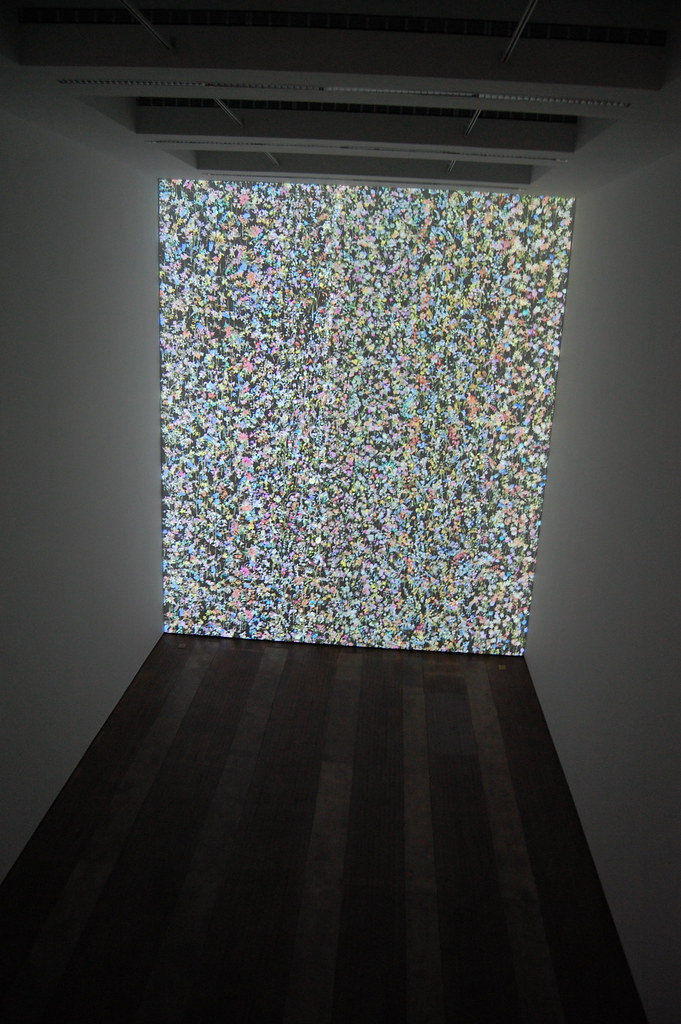
Jennifer Steinkamp, Daisy Bell, 2008, video projection, dimensions variable.

Jennifer Steinkamp, Daily Bell and Left Clavicle
Lehmann Maupin - 201 Chrystie Street
September 7 - November 2, 2008

The show’s press release offered some heavy theory and oblique references (to early computing and science fiction) to explain Steinkamp’s animated walls of sumptuous, scrolling flowers. Somehow, though, I don’t think anyone who visited Lehmann Maupin’s beautiful new warehouse space on the Lower East Side were so easily distracted from the rarity on display: beautiful video works about color, scale, and perspective, the original cornerstones of art. This was one of the only times that I’ve ever walked into a gallery and felt there was too much to take in, too much to see. It was certainly the first time a single piece had made me feel that way.


Jennifer Steinkamp, The Invisible Man, 2007, video projection, dimensions variable.

Tuesday, December 16, 2008

[Top 10 of 2008] #7 - Richard Serra: Thinking on Your Feet at K.W. Berlin


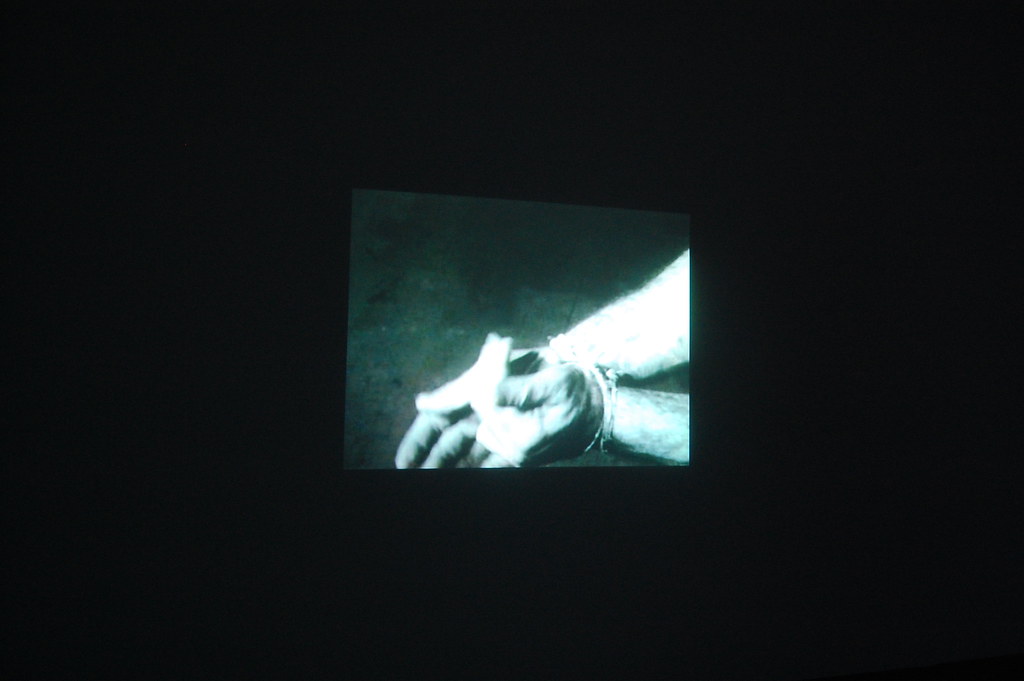
Richard Serra, Hands Tied, 1968, film projection, dimensions variable.

Richard Serra, Thinking on Your Feet
Kunste-Werke Berlin e.V. - Institute for Contemporary Art
July 6 - September 7, 2008
Berlin, Germany

While MoMA made use of its floors that were purportedly designed to accommodate large Serra's largest pieces, K.W. Berlin went in exactly the opposite direction, showing us a handful of the artist’s too rarely shown early films. The works were presented together in various corners of a single room on loop, allowing visitors to wander between and glance among the pieces. In Hands Tied we watch a single, close-up shot of Serra’s bound hands as he struggles viciously to tear them free from some heavy rope, a succinct allegory for the machismo, virulence, and fight that would define his next four decades.

Serra also gave the commencement address at art history powerhouse Williams.

Monday, December 15, 2008

[Top 10 of 2008] #8 - Martin Boyce and Ugo Rondinone: We Burn, We Shiver at SculptureCenter


Installation view of We Burn, We Shiver, at SculptureCenter

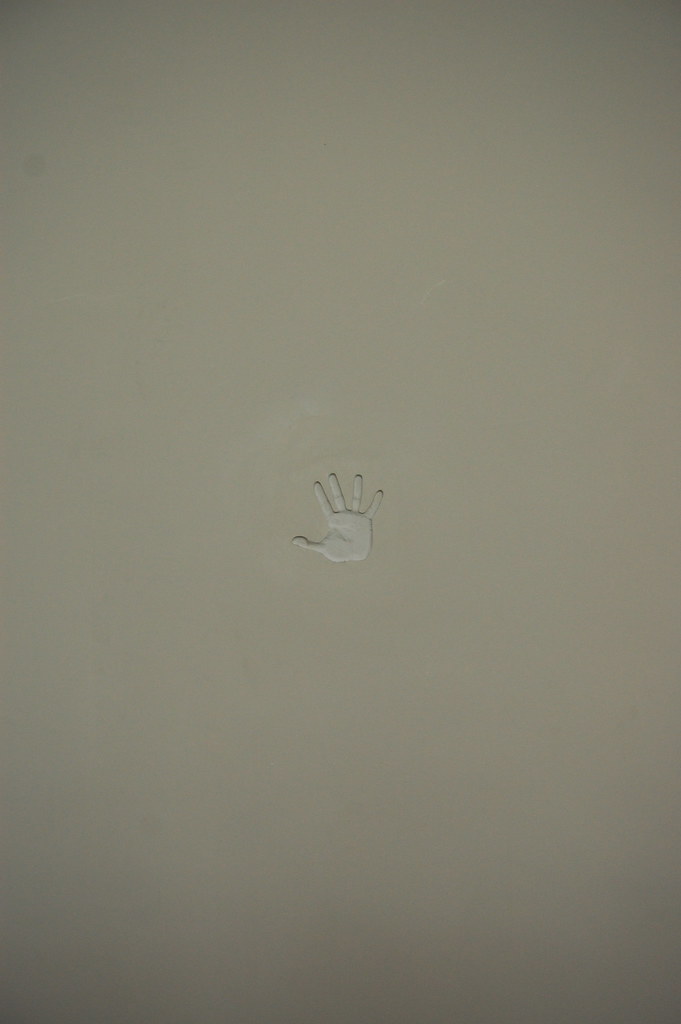
We Burn, We Shiver, we're told the show is called. There's a replica of a nineteenth century fireplace, singed with smoke from a fire. A hand print is embedded in one wall. A mobile and a web of neon lights hang above, dark homages, perhaps, to Alexander and Flavin. It felt like we'd arrive just after the end of a performance, left only with beautiful, scattered detritus.


Pagan Void (2008) by Ugo Rondinone


twelve sunsets, twenty nine dawns, all in one (2008) by Ugo Rondinone


still.life. (folded cardboard) (2008) by Ugo Rondinone

Sunday, December 14, 2008

[Top 10 of 2008] #9 - The Whitney Biennial at the Park Avenue Armory

If this was the year that relational aesthetics formally entered art’s leading institutions and their canon, it was the Biennial at the Park Avenue Armory that did it best. Lucky Dragons (Dan Fishback) won the show, bringing videos, a laptop, and electronic sensors to the floor of the massive chamber and allowing audience members to guide the music by holding hands or wielding rocks. Three other highlights: Visitors slept over (with DJ Olive), got drunk (with Eduardo Sarabia), and underwent psychoanalysis (with Bert Rodriguez).

Saturday, December 13, 2008

[Top Ten of 2008] #10 - The Panza Collection at the Hirshhorn Museum

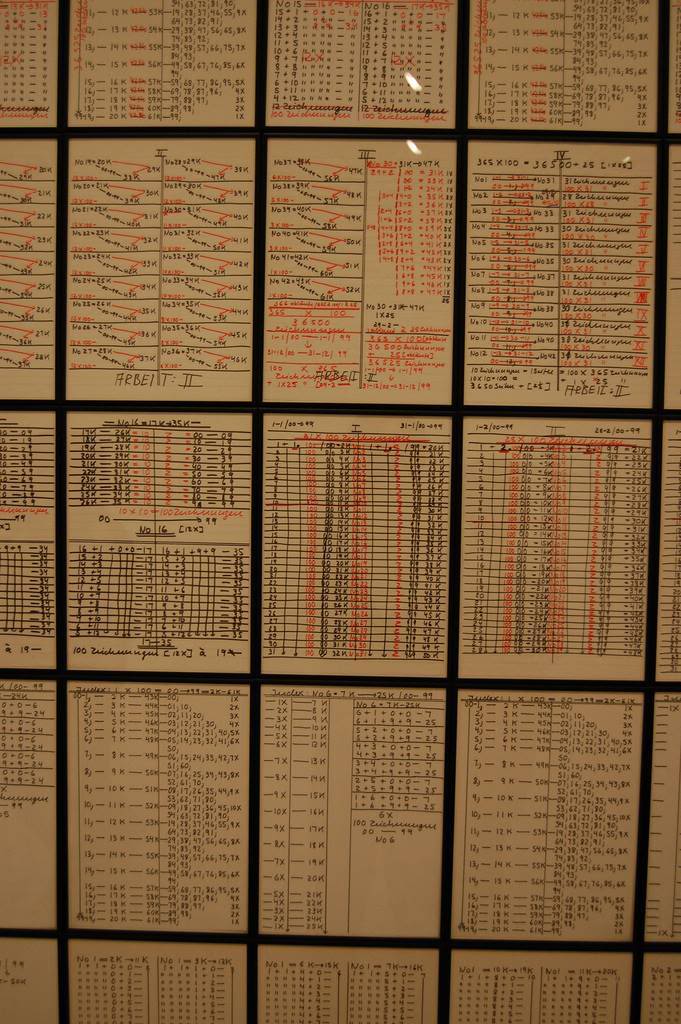
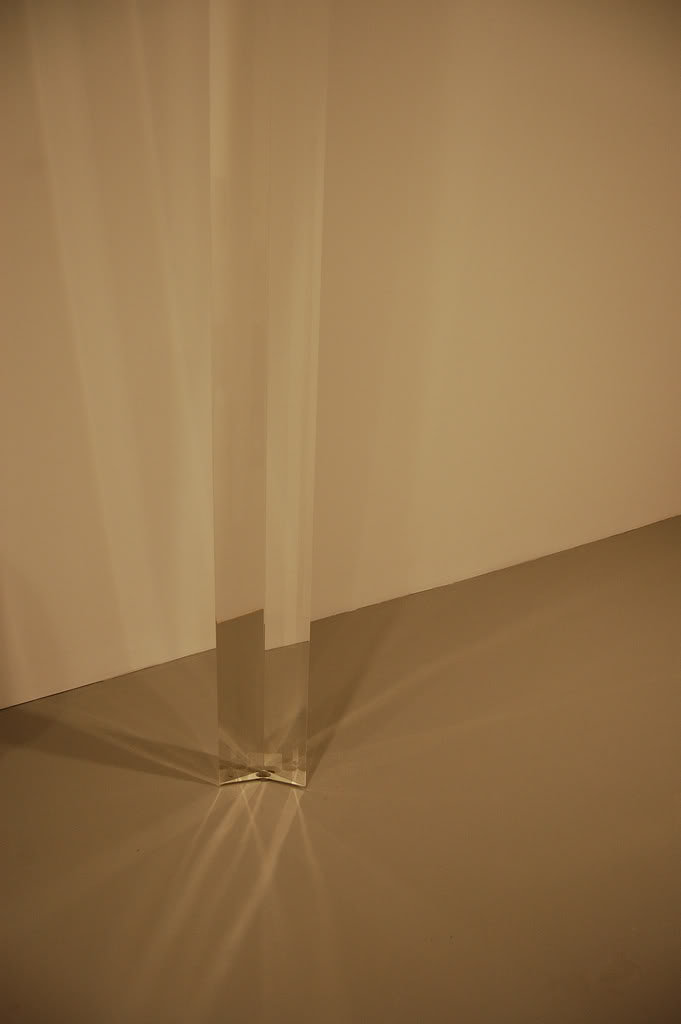
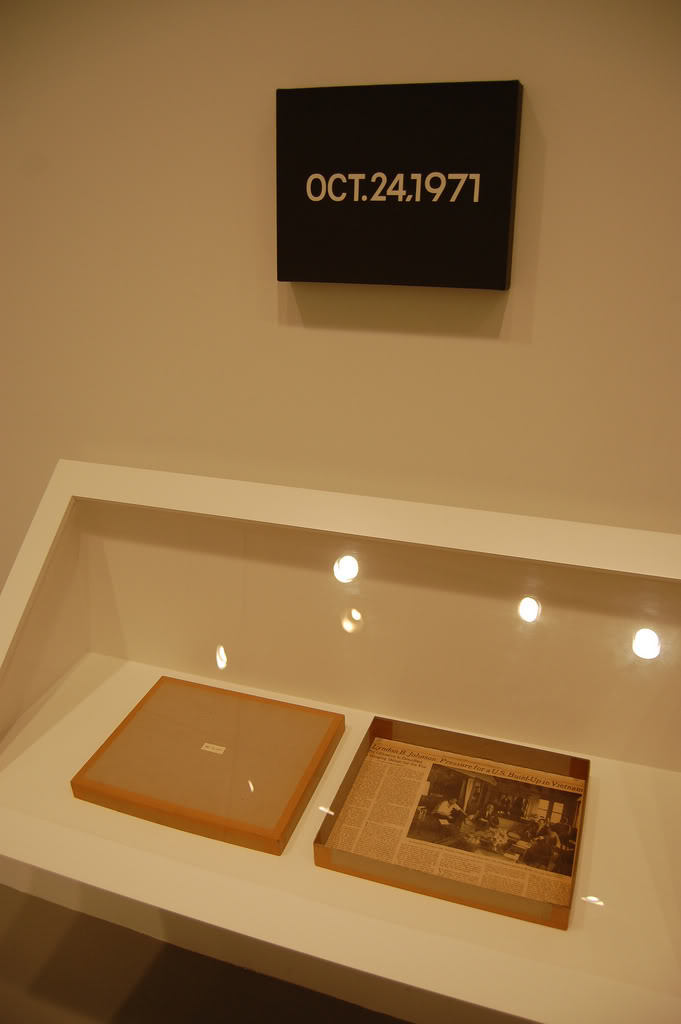
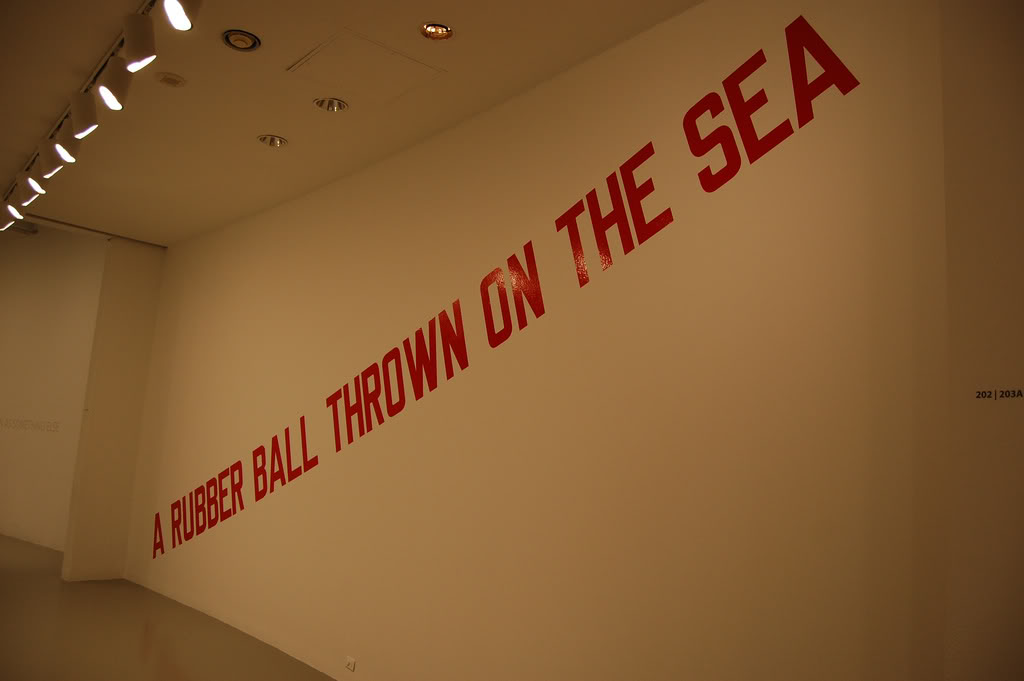
While Eli Broad celebrated the contents of his storage crates at LACMA (85% of which came from Gagosian, by Christopher Knight’s count), Count Giuseppe Panza di Biumo’s collection of clever, idiosyncratic conceptual, video and light works slipped into the Hirshhorn collection.  On Kawara Date Paintings, their boxes, and newspapers, sat down the hall from Doug Wheeler’s effervescent Eindhoven (1969), seminal Nauman videos and a handful of videos by the underrated Douglas Huebler.  The real game changer, though, was a perfect Irwin trinity: a glass column, a disc work, and a dot painting.


00-99=No1-2K-20K (1969-1970)
by Hanne Darboven


[Detail of] Untitled (1970-1971) by Robert Irwin


October 24, 1971 (1971) by On Kawara


A Rubber Ball Thrown on the Sea, Cat. No. 146 (1970) by Lawrence Weiner

Wednesday, December 10, 2008

Between Paintings and Postcards: Ad Reinhardt at the Woodward Gallery

“If you want to know about Andy Warhol,” Andy Warhol once famously advised, “just look at the surface of my paintings and films and me, and there I am. There’s nothing behind it.” While his approximate contemporary, Ad Reinhardt, never begged for such a blurring between the formal and the biographical, it’s always been difficult to avoid making such direct analogies. Indeed, the black monochromes he painted throughout the 1960’s (and the rhetoric that often accompanied them), have long-suggested a serious, scholastic figure obsessed with reduction, precision, and sterility.

In the Minds of Me, a show of Reinhardt’s drawings, papers, and letters to his mistress, Olga Sheirr, from 1946 to 1967 at Woodward Gallery thankfully undermines this image, revealing an enamored lover and playful collector underneath the studious geometry of his work. On display in Woodward’s pristine, year-old space on the Lower East Side until December 27, the show was assembled by Sheirr and John Woodward (her neighbor) from her collection of personal papers.

Reinhardt included an essay on pornography by Gore Vidal within one letter to Sheirr, postcards showing works by Matisse in another, we learn.  His words are alternately teasing, clever, and inscrutable. “Time stands still flags / wave / horns blow bands / toot and / play people parade / shout and / traffic stops Olga’s coming / home,” one postcard-koan reads in his inimitable, calligraphic script, the words arranged as if flying out of a flugelhorn embossed on the page.  Alongside these letters, his spare line drawings are curious, almost prehistoric human figures, symbols that could easily be scrawled across papers in the world of The Crying of Lot 49.  

There are postcards written in code, lists of stops on a tour of Europe. One of the most disarming is a two-sentence card: “Strike meeting. Call for instructions.” Sophie Calle and On Kawara would define their careers with material like this in later years. Here, it amounts to a handsome portrait of a man, a woman, and a love affair conducted between cities via post and in secret. If it’s an image no less constructed than that suggested by his paintings, that seems acceptable: it’s at least as alluring.

Tuesday, December 9, 2008

Adrian Searle and a Microphone

"I feel like I need a drink, but maybe I need to go to the loo first.  ...  'I feel at home,' it says on the toilet door.  'Fashion fags go home.'  ... This is all about when it's over.  It's about what happens when there's too much policing, too many regulations.  You can't smoke, you can't drink all that much, mind the neighbors, mind the noise." 

- Adrian Searle at Elmgreen & Dragset's show at Victoria Miro, Too Late.  I could listen to this entry in his (always wonderful) podcast series over and over again.