Showing posts with label Fischer. Show all posts

Monday, October 25, 2010

The Art in Battery Park City


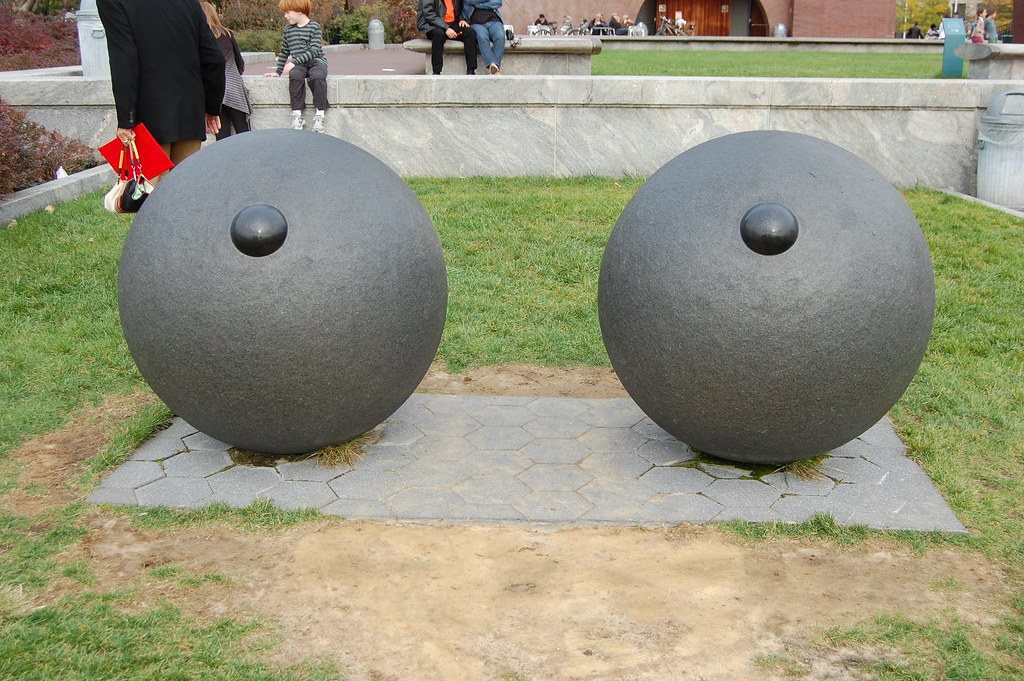
Louise Bourgeois, Eyes, 1995. Granite, each 37 x 37 x 37 in. Photos: 16 Miles

"Battery Park City, the colossal landfill development on lower Manhattan's western flank, will make a great ruin someday," Peter Schjeldahl wrote, in the short-lived New York-based weekly 7 Days, back in 1988, when the complex was still under construction. He was probably right: the massive, anonymous apartment buildings are going to look pretty wild when they are run down and deserted.


R.M. Fischer, Rector Gate, 1988. Stainless steel, bronze, granite, lighting 50 ft. x 28 ft.

When I visited yesterday, to take a look at the public-art installations that had been included in the project (which Schjeldahl juicily describes as "lavish"), the sprawling public spaces — nearly empty during the writer's visit more than two decades ago — were filled with people. They were mostly tourists, from what I could discern from passing conversations, and they strolled leisurely, apparently undeterred by the brutal ugliness of the concrete expanses.

Most of the late-1980s works are giant-sized. There is roofless temple structure by Ned Smyth, pictured below, adorned with colored glass, gravel, and blue stones, and filled with a table lined with chessboards. Supremely weird and wonderfully out of place, it reads as a direct repudiation of the corporate architecture in which it is enclosed. R.M. Fischer's 50-foot-tall Rector Gate, pictured above, is almost equally bizarre, a hybrid of a weather station and an amusement park. The upside-down cone looks ready to kill people walking underneath: quite a different vibe from the sculptures he showed last year at K.S. Art, which looked like they just wanted to cuddle.
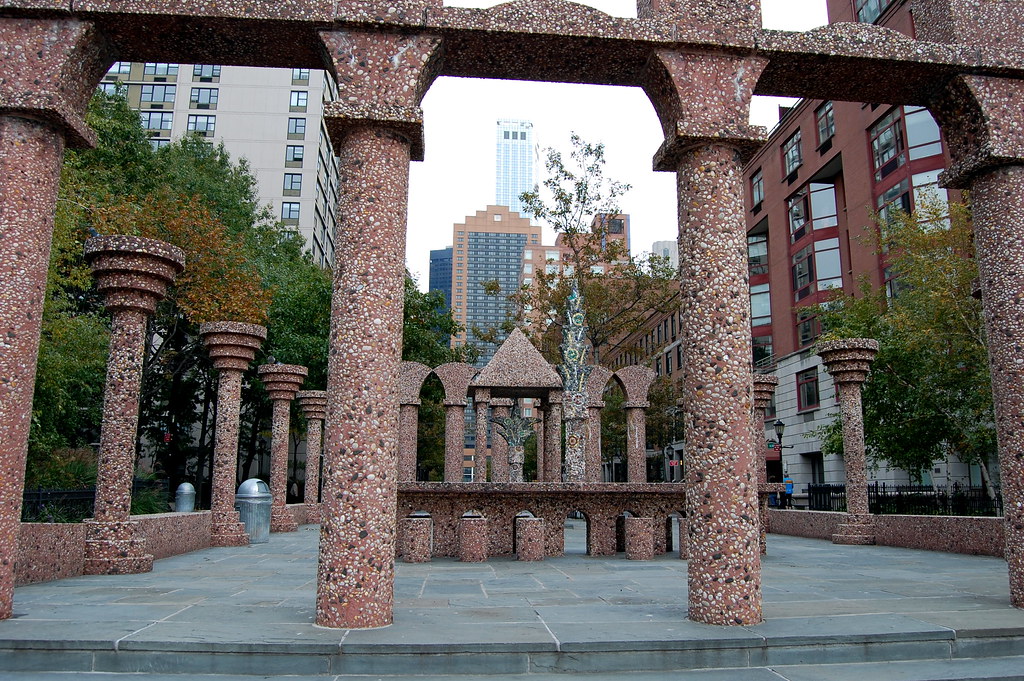

Partial installation view of Ned Smyth, The Upper Room, 1987. Concrete with blue stone aggregate, colored glass, brass, gravel, bluestone 34 ft. x 67 ft. x 14 ft. 4 in.


Partial installation view of Ned Smyth, The Upper Room, 1987
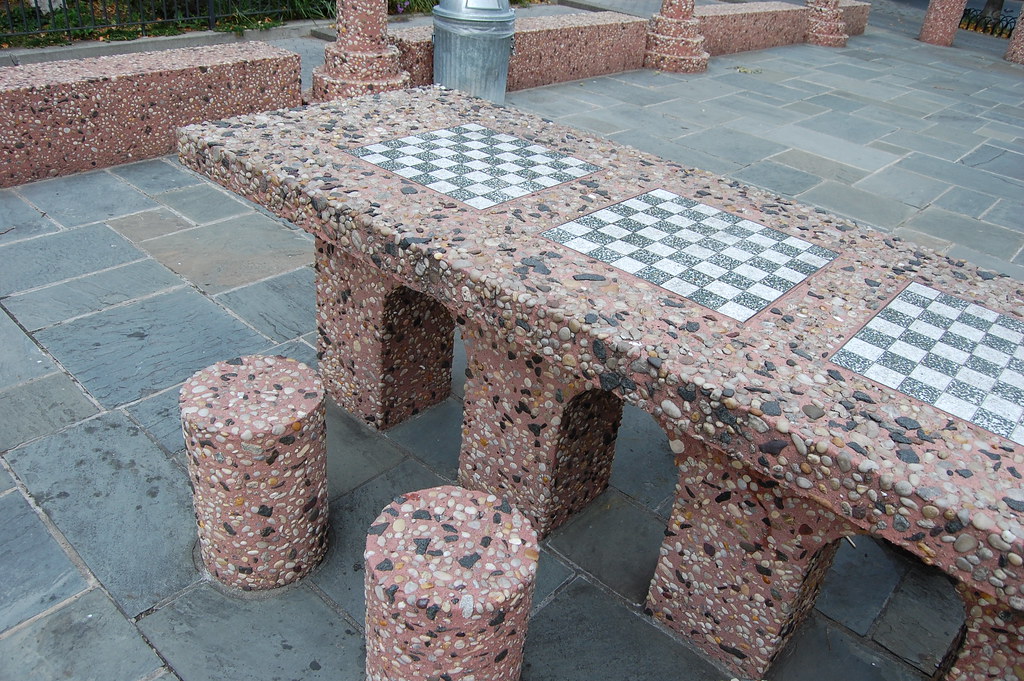

Partial installation view of Ned Smyth, The Upper Room, 1987
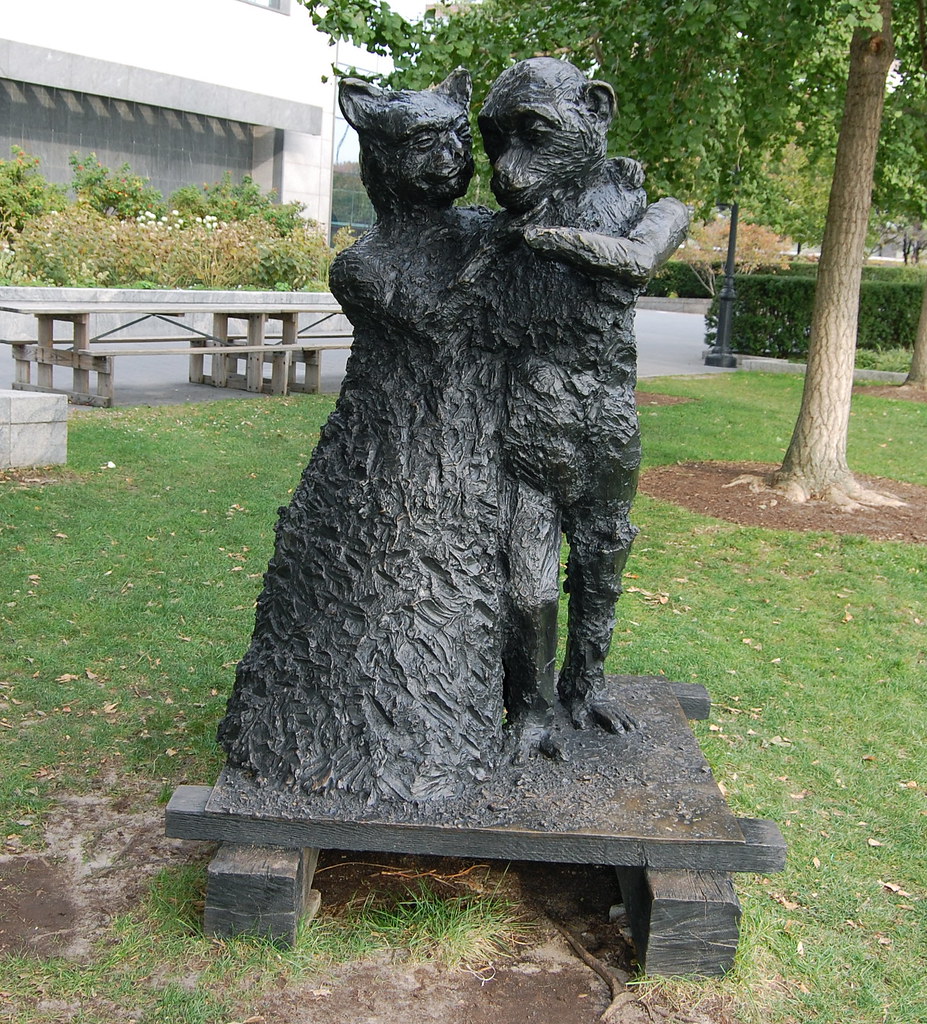

Jim Dine, Ape & Cat (at the Dance), 1993. Bronze and wood, 5 ft. 7 in. x 4 ft. 6 1/2 in. x 5 ft.
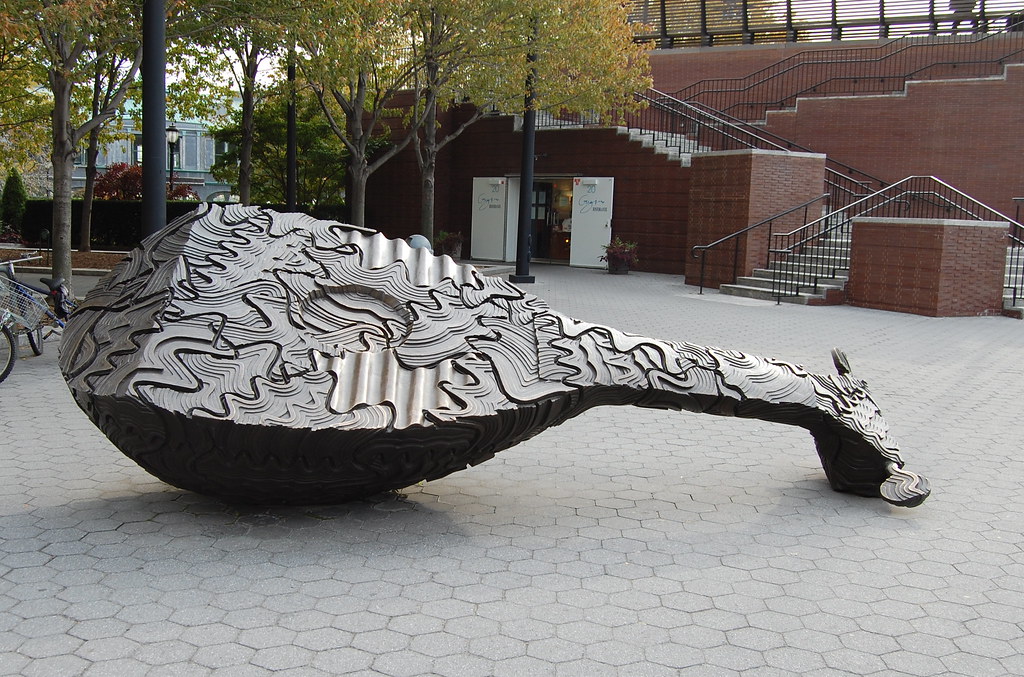

Partial installation view of Tony Cragg, Resonating Bodies, 1996. Bronze, complete sculpture: 15 ft. x 5 ft. 8 in., 5 ft. x 6 ft. x 15 ft.

The Battery Park City Authority has continued adding work in recent years, tossing in pieces by Martin Puryear, Sol LeWitt, Tony Cragg, Louise Bourgeois, and a number of others. While the towering late-1980s works were attracting little notice (a Richard Artschwager sculpture just off the esplanade looked especially forgotten), the super-minimal Bourgeois, at least, was serving as a set for a number of photo shoots. (Its title is Eyes, which does not rank in the top three or four things that came to mind when looking at it.)

As ambitious as the works are, they are not the reason to make the trip over to Hudson. Schjeldahl again, speaking the truth: "[Y]ou can't beat the view."
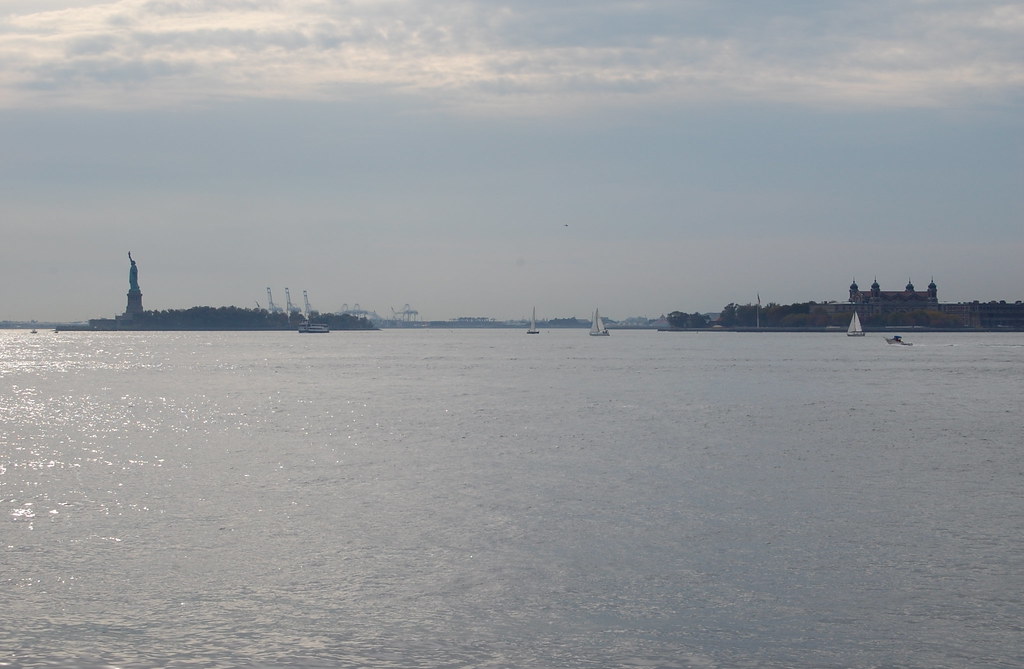

View of Upper New York Bay from the Battery Park City esplanade

Thursday, April 16, 2009

Art Trend - Fire


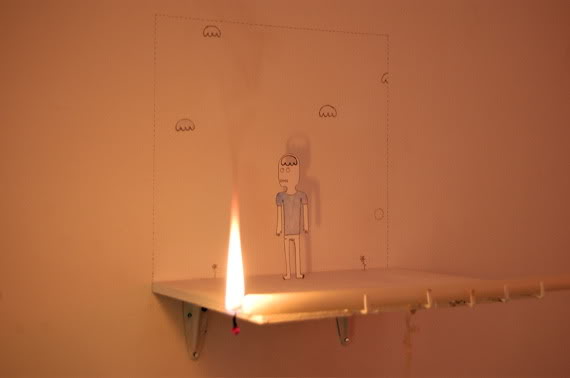
Juan Zamora, Untitled, 2009, at A Coney Island State of Mind, Galería Moriarty in Madrid. Photo: 16 Miles.

In the past three days, in three cities, we have seen open flames in three different works of art. First we entered Galería Moriarty in Madrid to find a gentleman igniting the candle on the installation / drawing by Juan Zamora [above], who just had a solo show at the gallery that was reviewed in Artforum this month. It marks time - looking at the piece, wandering the gallery, running the space (the wax has accumulated on the floor) - and becomes the source of anxiety for the little man standing precariously on his plank.


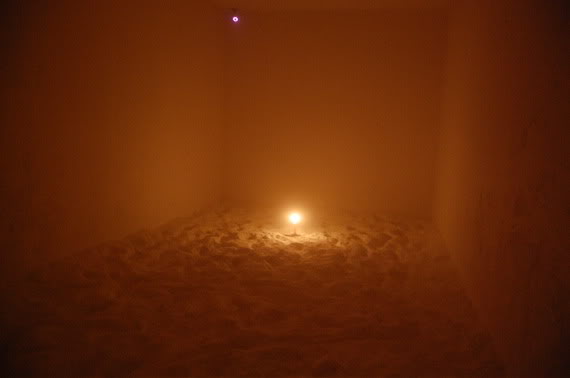
Cildo Meireles, Volatile, 1980-1994, at Cildo Meireles, Museu d’Art Contemporani de Barcelona (MACBA). Photo: 16 Miles

On to Barcelona, where Cildo Meireles's manic retrospective (which was just at the Tate Modern and also reviewed in Artforum) at MACBA featured his creepy Volatile (1980-1994) installation in a neighboring building. A dark room, anonymous powder lining the floors and floating in the air (which appeared to be flour but was later revealed to be talcum powder by a friendly guard), the faint smell of gasoline, and a single open flame. Suddenly we have become Zamora's terrified figure.


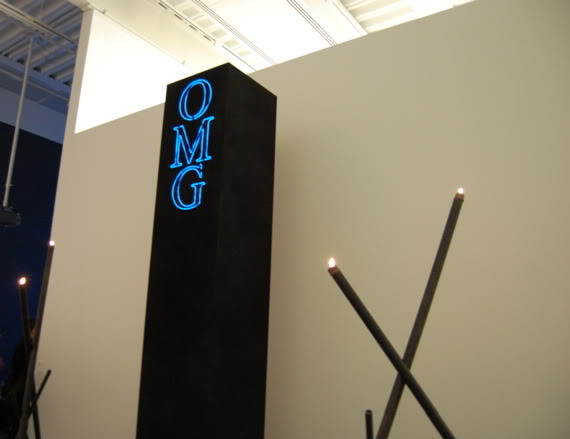
AIDS-3D, OMG Obelisk, 2007, at The Generational: Younger Than Jesus at the New Museum, New York. Photo: 16 Miles

Returning to New York and the New Museum's triennial, we saw that AIDS-3D had returned the open flame to its primordial associations, staking torches around their OMG Obelisk (2007) a site that appears destined for some sort of mysterious, prehistoric ceremony.

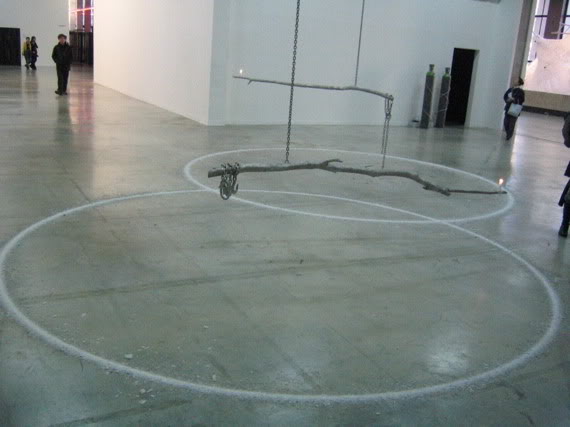
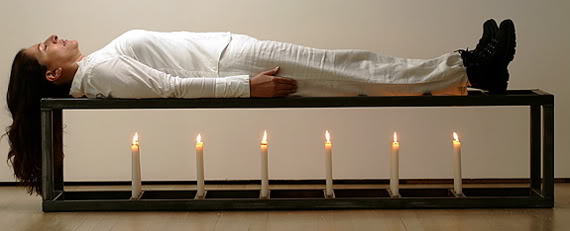
Though I am sure that I am missing dozens of examples, two precedents come to mind: Urs Fischer's Untitled (Branches) (1995) [below], which was featured prominently at the 2006 Whitney Biennial (and before that at the Palais de Tokyo) and Gina Pane's 1973 piece, in which she laid on above a bed of candles for thirty minutes (extended by Marina Abramović in 2005 to seven hours, broken into intervals, as part of her Seven Easy Pieces performance). Fischer's piece defines the ritualistic possibilities for the candle, while Pane's action more clearly hints of danger and violence - the startled surprise - that Meireles seems to covet.

Zamora's quirky drawing piece ends up standing out as the hardest to place and easily the funniest. After being activated by an observer, it runs a slow-motion play: the figure staring nervously at the candle until it completely burns down, uninterested in our presence.


Urs Fischer, Untitled (Branches), 2005, at Palais de Tokyo. Photo: suncana


Marina Abramović performing Gina Pane's 1973 piece,The Conditioning, 2005. Photo: The New York Times

Wednesday, December 17, 2008

[Top 10 of 2008] #5 - Schweiz über alles at La Fundación/Colección Jumex


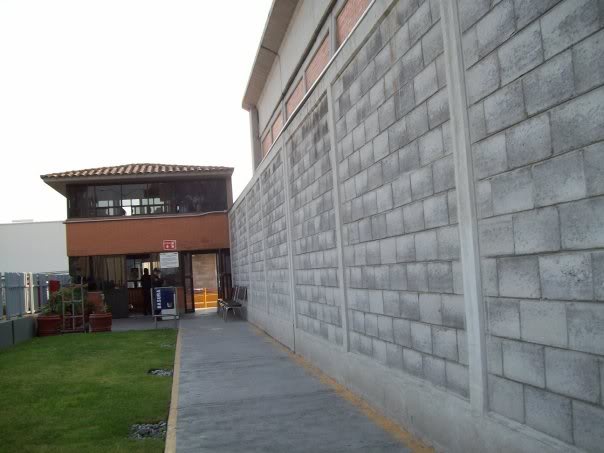
Entrance to the Colección Jumex.

Colección Jumex is located within the factory of the eponymous juice company, a bunker on the edge of Mexico City, accessible only by taxi. Before sliding open the metal walls blocking the entrance, security guards question you and check your identity.  It's open only via appointment and walled off from the congested streets of the DF.  To put it another way: it would be hard to imagine a white box purer than this.  (In our two-hour stay, we saw only two other visitors.)


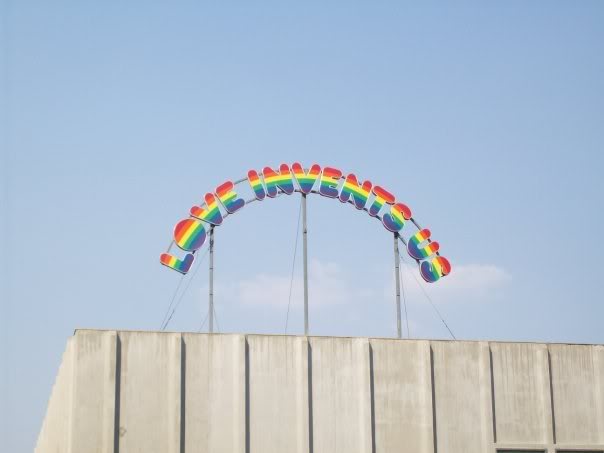
Ugo Rondinone, Love Invents Us, 1999, neon, Perspex, transluscent film, aluminum, 310 x 721 x 10 cm.

Above the concrete block walls, a Rondinone sign.  Within the walls of corporate Mexico on top of La Fundación Jumex's storage facility, its admixture of sincerity and irony had never seemed so perfect.


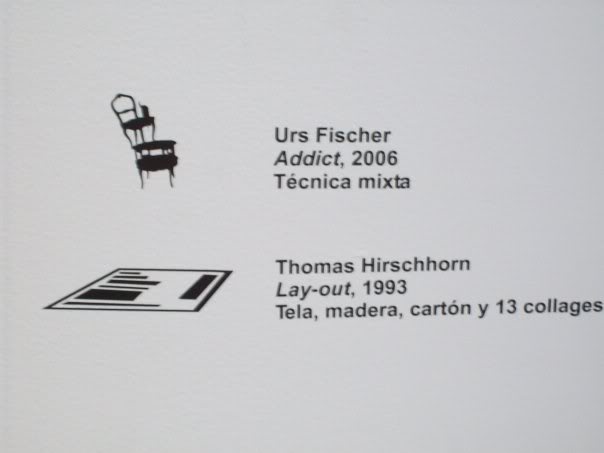
Clever, adorable labels with little icons identify each work.

It was a smart presentation of pleasurable favorites with a needlessly incendiary title. Focusing solely on the Swiss artists in the collection, it presented a simple thesis well: the days of nationalist art are long over, washed away by an entrenched globalism, at least within the art markets of Chelsea, Berlin, and London.


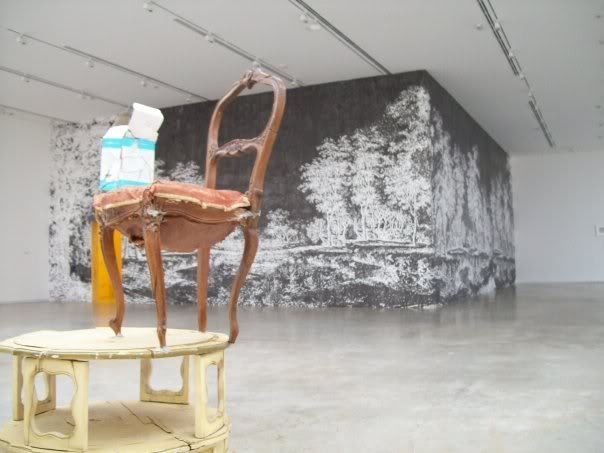
Front: Urs Fischer, Addict, 2006, mixed media.
Back: Ugo Rondinone, Where Do We Go from Here?, 1996, ink on wall, playwood, yellow neon, 4 DVDs, 4 projections, 500 x 1200 x 1000 cm.


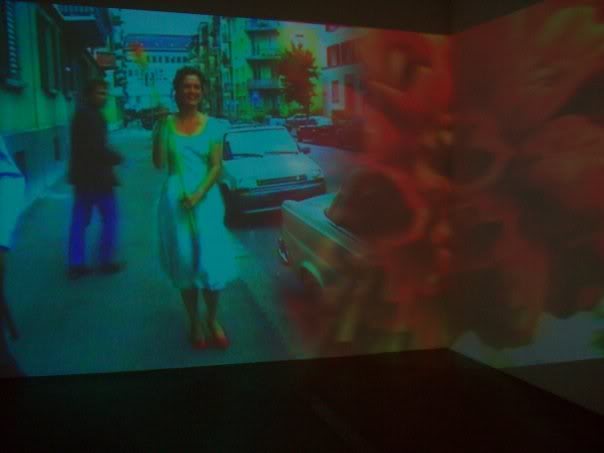
Pipilotti Rist, Ever Is Over All, 1997, video installation, dimensions variable.

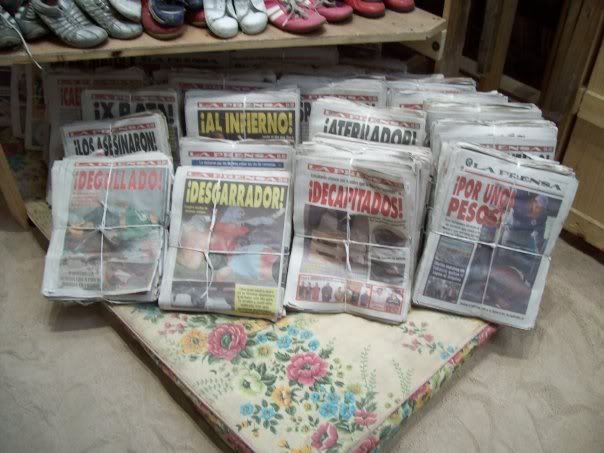
Any exhibition that features Pipilotti Rist's video of a Dorothy-figure wandering down the street, smashing car windows, and smiling to police officers will instantly earn my affection, but there were other charms as well: little icons identifying the art on display and an installation in the offices upstairs by a Mexican artist named Moris, which required you to climb a ladder and jump a wall, dodging barbed wire.  Containing tabloids filled with stories of gang violence and organized crime, it injected the reality outside the pristine walls into the center of the collection.


Moris, Hermoso paisaje No. 5 (el baldio), 2008, installation.


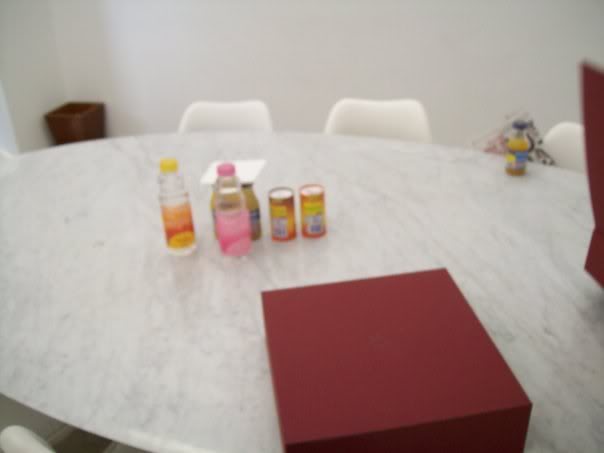
Free, delicious Jumex beverages are available for all visitors.

The real joy, admittedly, had to do with the exclusivity of the affair, viewing art that only a few are likely to see in an environment that - however ridiculous, elitist, and cloistered - would be hard to improve upon.  The young employees were tinkering happily with a recently-acquired video work; there were free drinks (Jumex-brand, clearly), a gargantuan research library (in which sat a full set of Artforums, their bindings seductively cascading along the shelves), and a seemingly limitless supply of art (attested to by the stacks of burgundy, catalogue binders filling the offices).