
Martha Friedman, Rubbers, 2010. Cast silicon, pigment, and metal, 134 ½ x 3 ½ x 3 in. at Wallspace's "Swagger, Drag, Fit Together." Photo: 16 Miles
- Drawing Pat Steir's "The Nearly Endless Line" at Sue Scott Gallery in New York. [Art Clogged]
- Martin Bromirski visits Katharina Grosse's sprawling MASS MoCA show. Her last one-person show in New York was in 1997. [Anaba]
- Alec Soth's top 10 (plus a few) photography books of 2010 includes Thomas Demand, Hannah Höch, and Chris Verene. [Little Brown Mushroom Blog via Ocular Octopus]
- A concise archive of artist's editions, catalogues, and books. [The Cottage Library]
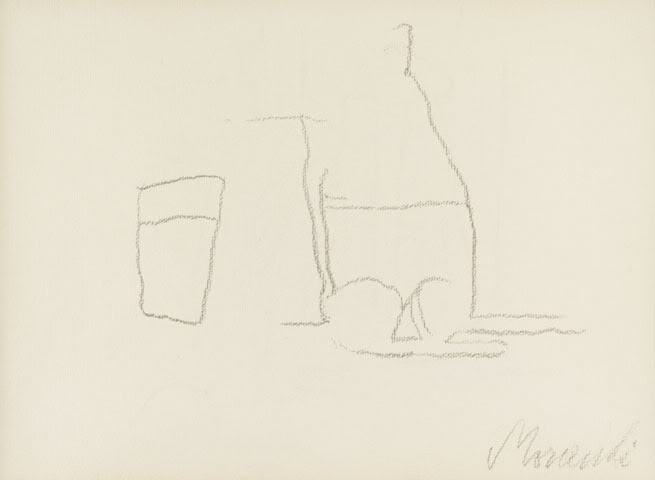
- A Morandi still life with a delicious-looking croissant. [Feasting on Art]
- Will Cotton: "I do love sugar. But I used to have other vices too. I think the other vices have just fallen by the wayside, and sugar has stepped up a little bit to take their place." [The 99 Percent]
- "It seems to me that Saltz just took a shot at something new, intrigued by the prospect of quick and unmediated feedback." Sharon Butler on art critics and the Internet. [Two Coats of Paint]
- New York experimental masters Excepter tackle "Little Drummer Boy," "Deck the Halls," and "Carol of the Bells." It sounds even better in the new year. [A Million Keys]
- "The dreamer emerges, not as a collection of biologic urges, but as the mastermind capable of creating such a nuanced, intricate and meaning-laden world." Elif Batuman on "Why Criticism Matters." [New York Times]
- Cracklings, wafer cookies, Daniel Spoerri, and more: With Nicole Caruth and Megan Fizell (of Feasting on Art, mentioned above!), I recently wrote about art involving food and art involving food. [Art21]
- In anticipation of Joe Bradley's Canada/Gavin Brown doubleheader, a classic review in Frieze (via @gregorg), with commentary by Dan Colen. Conveniently, work by Martin Barré goes on view at Andrew Kreps this Saturday evening.