Showing posts with label Dia. Show all posts

Tuesday, July 19, 2011

Classic New York Magazine Art-Dealer Profiles [Collected: Throwback Edition]

I thought it might be nice to revisit some of New York's profiles of art dealers from the past 40 or so years since there are some remarkable ones hiding in Google Books' archive. They are rich with with romance and heartbreak, high drama and petty squabbles, like any great summer read, and they show the New York art world on its way to becoming what it is today, sometimes with uncanny prescience. Here are some of my favorites.


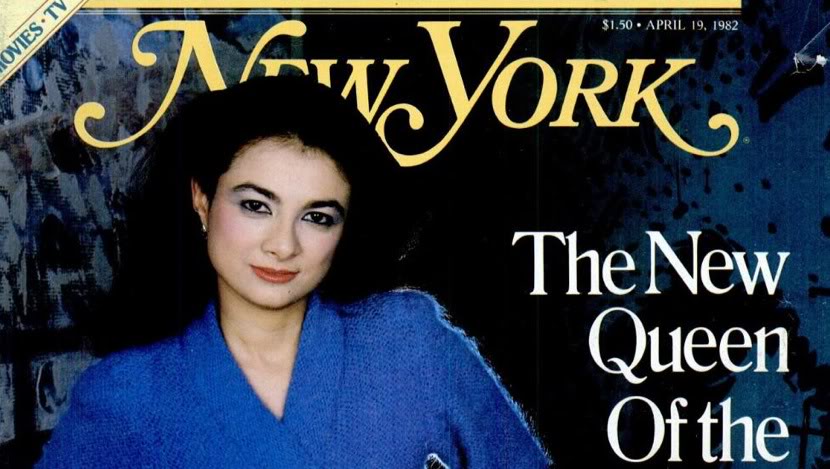
Mary Boone, New York, April 19, 1982. Photo by Larry Williams

"The New Queen of the Art Scene," by Anthony Haden-Guest, April 19, 1982:
"Salle is 29, and articulate, with a dark, Jesuitical face. He and Schnabel are close friends, but, as is usual between artists, theirs is not the simples of friendships. Last year, the two agreed to exchange artworks. Schnabel chose first. When David Salle visited Schnabel's studio, he found his own canvas—painted on by Julian Schnabel. 'We'll make art history,' Julian explained."
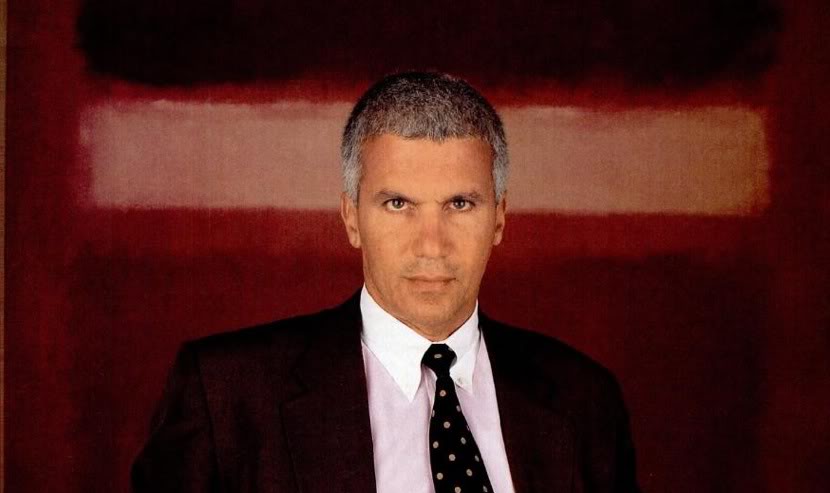

Larry Gagosian, in front of a painting by Mark Rothko, New York, September 2, 1991. Photo: James Hamilton

"Art à Gogo," by Andrew Decker, September 2, 1991:
"After graduation, he took odd jobs, including parking cars and working at the William Morris Agency. In the mid-seventies, he started selling posters on the sidewalks near UCLA. 'Real schlock,' he says, laughing. 'I'm being painfully honest. It was like a kitten playing with balls of yarn, or sea gulls flying over a foggy shore. I'm not responsible for it.'"
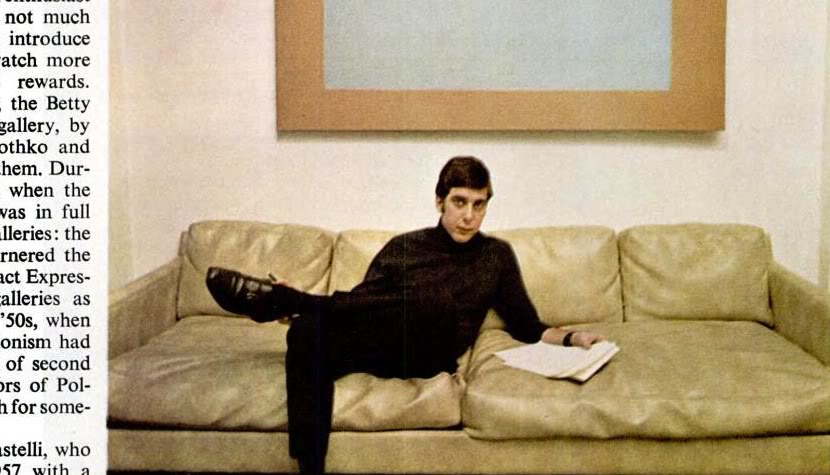

Klaus Kertess and an early Ralph Humphrey, New York, May 20, 1968. Photo: Herb Goro

"The Gallery of the Year," by Rosalind Constable, May 20, 1968:
"Critics are struggling to find a name for this branch of Minimalism. 'Urban Pastorale,' suggested one. 'Romantic Minimalism,' said another. 'Abstract Luminism,' said a third. Critics on the whole don't like it (yet), find it 'empty.' But critic Lucy Lippard is enthusiastic: 'As the eye of the beholder catches up with the eye of the creator,' she says firmly, 'empty,' like 'ugly,' will become an obsolete criterion."


Arne Glimcher, in front of a painting by Chuck Close, in New York, October 10, 1988. Photo: Louis Psihoyos

"The Art of the Dealer," by Edith Newhall, October 10, 1988:
"Even when Glimcher was in Africa last summer, dealers, artists, curators, and the rest were gossiping about his future. The rumor was that he had given up the art business and sold Pace to Charles Saatchi, the British advertising tycoon and contemporary-art collector. ('I hear that it was proposed but it was turned down,' says art critic Robert Hughes.)"
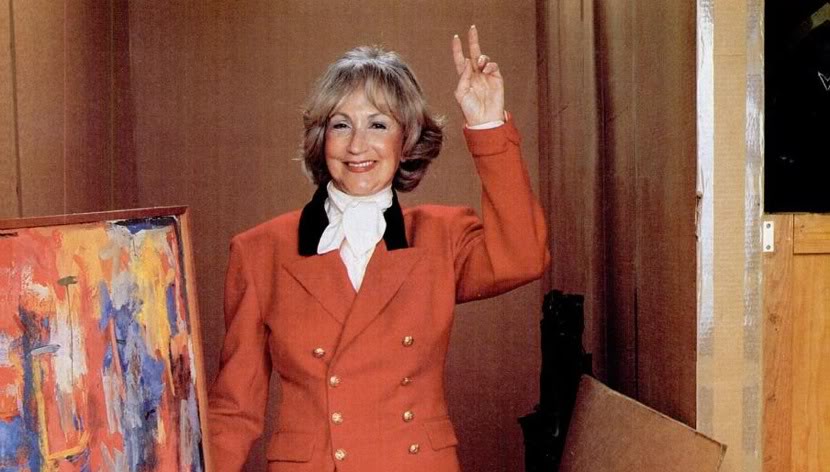

Ethell Scull, with Jasper Johns's Out the Window and Black Target. Photo: Jean Pagliuso

Ethel Scull is not an art dealer, I know, but this is a heartbreaker of a piece, and it feels like the right one to end on.

"Back on Top With the Mom of Pop Art," by John Duka, June 9, 1986:
"On May 14, the two sides convened at the warehouse. With Ethel were Raoul, Myrna, and a representative of Sotheby's. On Bob's side, Epstein and two purchasers attended. First choice in selecting a piece was to be decided by a coin toss. Felder produced a quarter, but Epstein wouldn't use it. After some shouting, a neutral quarter was found. Epstein called heads. It came up tails. Ethel had won again."

Wednesday, June 15, 2011

Ryan Trecartin, Trash Can Art, the Sumi Ink Club in Brooklyn, a 24-Hour McCall Film, etc. [Collected]


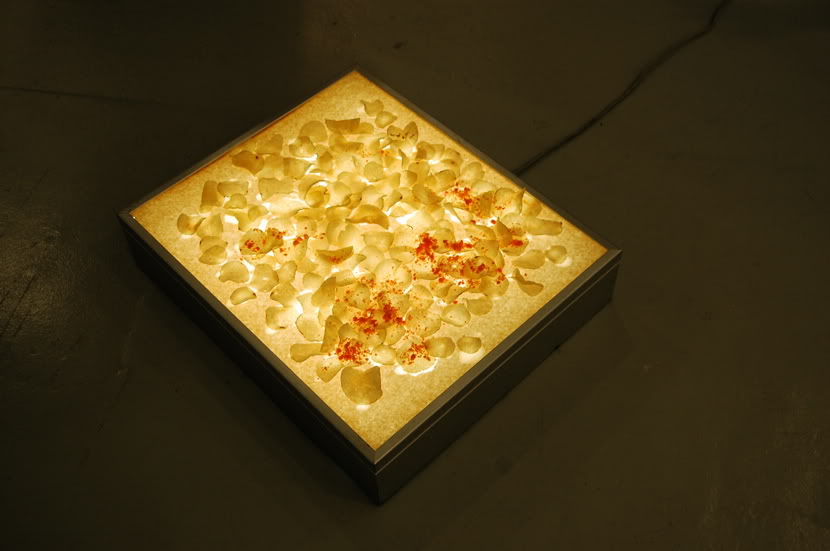
Anicka Yi, Midcentury Olfactory Brutalism, 2010. Light box, transparency paper, potato chips, ground Cheetos dust, 24 x 21 x 5 in., in "Belief & Understanding" at Nicole Klagsbrun, New York, through July 28, 2011.
  • In advance of his upcoming show at MoMA P.S.1, Ryan Trecartin is showing sections of his four-part piece Re'Search Wait'S online. Rhizome and DIS Magazine have posted pieces, and The Awl and Huffington Post will follow up later this week. [Rhizome, DIS Magazine]

  • Are public garbage cans the hottest thing in art right now? Klara Lidén has a trove of them at the Venice Biennale, David Bernstein is doing a performance with a New York bin at Sommerkampf in Piermont, New York, and L&M is showing a pioneering example, the 2003 Jeff Koons Walrus Seal Trash Cans at Art Basel. [Contemporary Art Daily, Sommerkampf, Art 42 Basel]

  • Related to the above: Kim Levin's ARTnews cover article, "Talking Trash," on the history of detritus and rubbish in modern and contemporary art. [ARTnews]

  • Robert Morris and Olivie Mourgue. [YHBHS]

  • Richard Prince on photographer Miroslav Tichý, from a book of Prince's essays that will be published in September. [Los Angeles Review of Books]

  • On Mark Fisher's recent explication of hauntology, Ariel Pink, and a lot more, at NYU. [Rhizome]

  • Jamie Sterns writes precise, honest classified ads for art-world jobs. [Ya Ya Ya]

Calendar
  • June 15: Herbalife is a controversial L.A.–based nutrition and weight-loss company with annual sales of more than $2.7 billion. A multi-level marketing company that some have accused of being a pyramid scheme, it is also, according to DIS Magazine, "the premiere commercial cult." At 7 pm, at the current location of Gresham's Ghost, DIS presents "a re-contextualization of the official Herbalife dance performed by tweens and choreographed by Richard Kennedy." [Gresham's Ghost]

  • June 15: A postcard for Demetrius Oliver's Argentum piece, available at the Studio Museum in Harlem, reads, "To observe this work gaze at the Harlem River after sunset." Below this text it lists four dates: March 19, April 18, May 17, and June 15. There is a full moon tonight. [SM]

  • June 16: With the Wisconsin Supreme Court ruling 4-3 yesterday that the state's new collective-bargaining law can go into effect, it sounds like a good time to watch Native Land, the 1942 documentary by Leo Hurwitz and Paul Strand about labor struggles and American fascism. Skip work, if you can. It's at the Museum of Modern Art at 1:30 pm. [MoMA]

  • June 18: The Sumi Ink Club, the itinerant drawing project initiated by Sarah Rara and Luke Fischbeck, the founders of the estimable Lucky Dragons, visit Rawson Projects, drawing together 12 pm to 6 pm. [RP]

  • June 18: At noon, The Artist's Institute and Light Industry present Anthony McCall's Long Film for Ambient Light (1975) at Dia:Chelsea, 535 West 22nd Street, 5th floor. It runs until noon the next day. The work was first shown at the Idea Warehouse, a performance space created by Alanna Heiss's Institute for Art and Urban Resources at 22 Reade Street in 1975, the year before the opening of Heiss's next major project, P.S.1. "The work used no actual film or projector," McCall wrote of the piece. "Three distinct elements combined to form the ‘film,’ and no one of these was regarded as prior to the other two." Light Industry has a stunning archive of documents relating to the piece. [LI]

  • June 19: "Ryan Trecartin: Any Ever," opens. [MoMA P.S.1]

Thursday, May 19, 2011

"Tilted Arc" and Drawing, Koons and the Met, Childe Hassam, etc. [Collected]


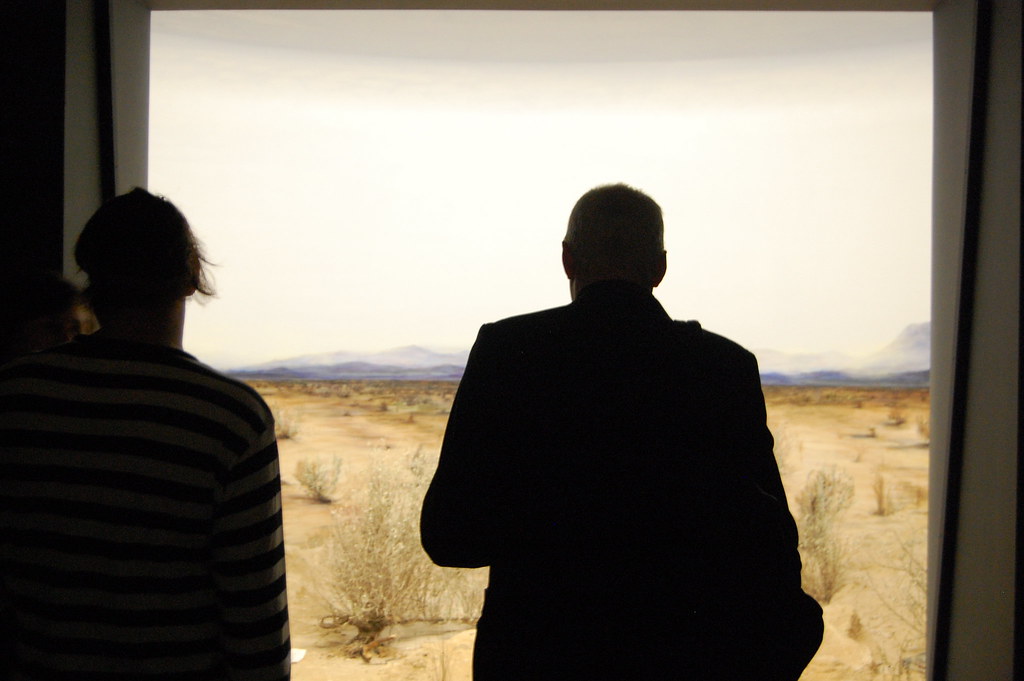
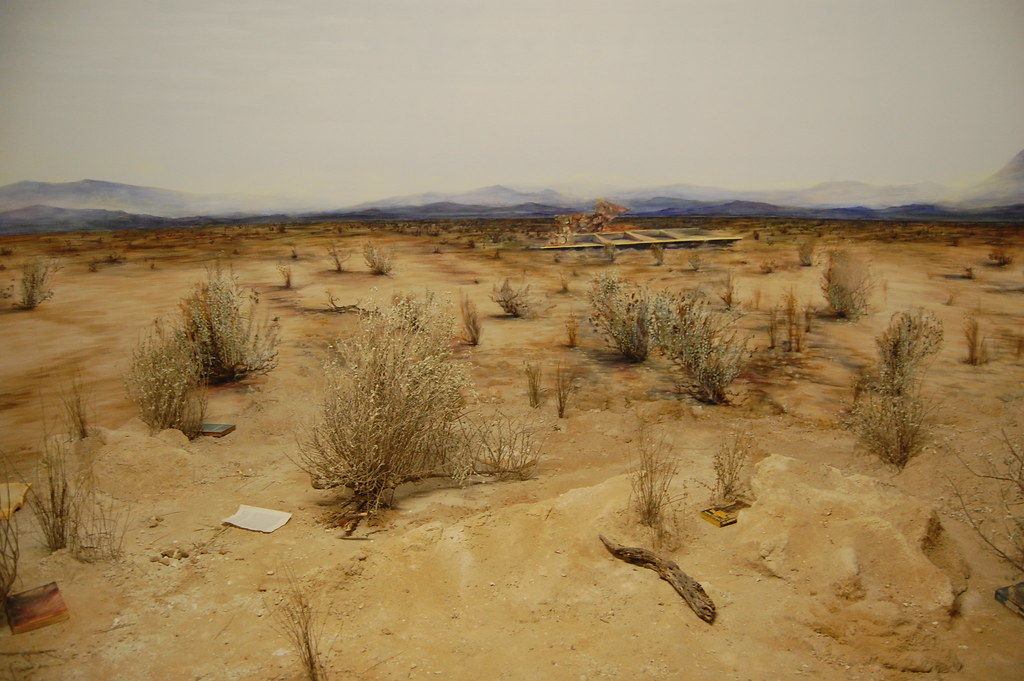
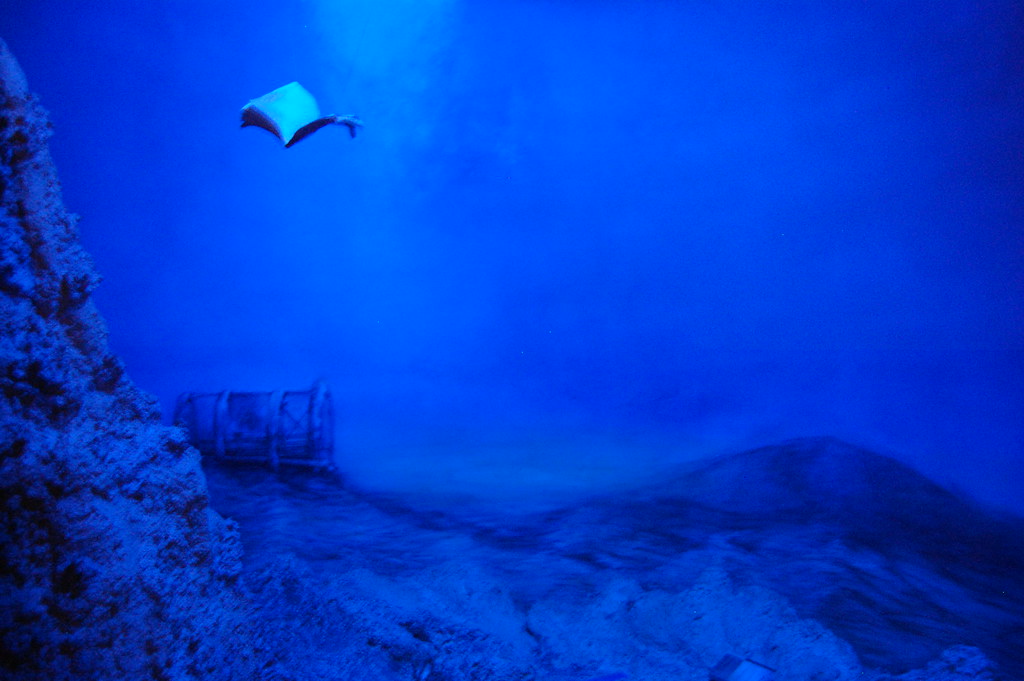
Koo Jeong A, Mystral, 2010, in "Koo Jeong A: Constellation Congress," at Dia at the Hispanic Society, New York, through June 26, 2011. Photos: 16 Miles [more]
  • The United States Government destroys art: Greg Allen on Richard Serra's post-Tilted Arc drawing show at Castelli in 1989. [Greg.org]

  • "If it looked like an anti-tank fortification, it was ahead of its time." — John Perreault on Tilted Arc, in a piece on Serra's current drawing show at the Metropolitan Museum of Art. [Artopia]

  • Jeff Koons is loaning paintings to the Met, Laura Gilbert notices. [Art Unwashed]

  • Tyler Green surveys recent and proposed arts-funding cuts in the U.S. and asks, "Why aren't Americans angrier?" [Modern Painters]

  • Mark Grotjahn, Amanda Ross-Ho, Jonas Wood, et al.: Picks from "Greater LA," the giant show now on view on the second floor of 483 Broadway in SoHo. [Two Coats of Paint]

  • Hotelier Andre Balazs is looking forward to the extension of the High Line. "As you walk along it, the intimacy and titillation is very tactile, very suggestive,” says Balazs, of the elevated park. "It’s a sexual way of interacting with the city. ... Walking from 13th Street to 30th Street along 10th Avenue is utterly banal. ... But walking from 13th to 30th Street on the High Line feels like you’re on your way to an orgasm.” [NYT]

  • 1918: "CHILDE HASSAM ARRESTED." — "Mr. Hassam then congratulated the policeman, saying that if every one was as alert there would not be so many dangerous enemy aliens traveling about the country." [NYT]

  • May 19: "We Regret To Inform You There Is Currently No Space Or Place For Abstract Painting," featuring Daniel Turner, Ben Schumacher, Sarah Crowner, and more, at Martos Gallery, 6–8 PM. [MG]
  • May 20: David Reed, Katy Siegel, and Lynne Cooke discuss Jo Baer's work, at The Artist's Institute, 6:30 PM. [TAI]

  • May 21: Hilary Lloyd at Artists Space, 6–8 PM. [AS]

  • May 22: Spring Open House 2011 at MoMA PS1, 12–6 PM. [MoMA PS1]

  • May 23: "Fünf Räume" ("Five Rooms") at the Austrian Cultural Forum, 6–8 PM. [ACF]

Tuesday, April 19, 2011

Robert Irwin and the Intersection of 42nd Street and 5th Avenue in Manhattan


42nd Street and 5th Avenue, New York, New York, April 17, 2011. Photo: 16 Miles

I am never one to turn down the breezy and beautiful train ride up to Dia:Beacon — unless, of course, a plush bus ride is available, as there was this weekend, thanks to Dia, which organized shuttle service to the performances of Robert Whitman's new piece, Passport, along the Hudson River, not far from the museum, on Saturday and Sunday. (The Saturday performance was canceled because of lightning.) The meeting point for the bus in Manhattan was the intersection of 42nd Street and 5th Avenue, which sounded oddly familiar to me, though it took a while for me to figure out exactly why that was.

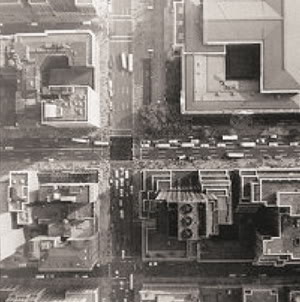
That intersection, 42nd Street and 5th Avenue, is the exact spot where Robert Irwin produced Black Plane, which involved painting the entire intersection with blacktop sealer as part of his 1977 solo show at the Whitney. A very young Ian Frazier reports from the scene of the creation of the work, on the evening of May 2, 1977, in the June 6 issue of the New Yorker:
"He [Irwin] could not take part in the painting himself, having returned to his house in Los Angeles, but the other night, at about eleven o'clock, Richard Marshall, the curator of the Irwin show, three other members of the Whitney staff, and two friends of the artist arrived at Forty-second and Fifth to paint the intersection. They had with them a permit from the Department of Highways, four five-gallon cans of Peerlux Acrylic Latex Blacktop Sealer, and six rollers with long handles. … They began to apply the sealer in long roller strokes, being careful not to get any on the white crosswalk lines. A photographer for the Whitney recorded the event with a Nikon camera with a Vivitar Auto/Thyristor flash. He had the crew pose dipping their rollers in one of the five-gallon cans."

Robert Irwin, Black Plane, installation at 42nd Street and 5th Avenue, New York, May 2, 1977, reproduced in Art in America, July/August 1977. Photo: Warren Silverman

Unfortunately, I don't have that photograph, but I do have this beauty, pictured above, taken by Warren Silverman and printed in that year's summer issue of Art in America, which is conveniently accessible at the New York Public Library's Stephen A. Schwarzman Building, located mere feet from the intersection. You can see at least some of Irwin's freshly sealed blacktop in the image, but it looks to me — though is impossible to be certain — like this was taken before the entire square was done. Frazier says that workers could only paint one quarter of the road at a time, allowing traffic to continue in at least one lane of each street, and the foreground here looks a great deal shinier than any other part of the intersection.

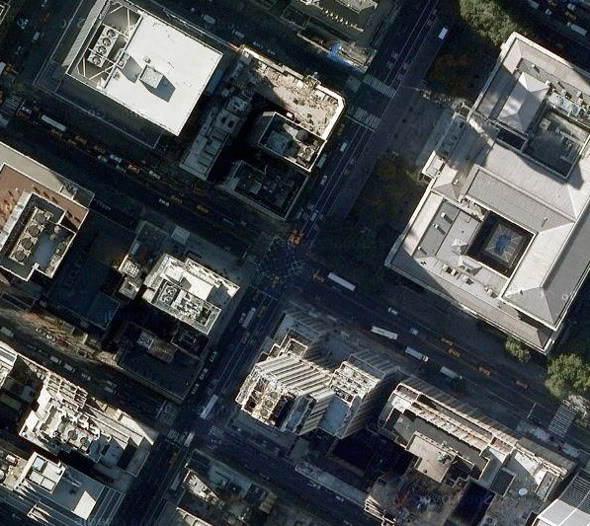
I imagined Black Plane as a classic example of Irwin's interest in the intimate details of minute perception: one black laid down on top of another, two different shades that are barely distinguishable, as in an Ad Reinhardt painting. But in a 2001 interview conducted at John Wesley's Greenwich Village apartment, Irwin tells then Chinati Foundation director Marianne Stockebrand, "I stepped outside the cherished frame of the museum and painted the graying plane of the intersection." It is black on gray, and definitively so, as this aerial photo provided to Chinati by the Whitney confirms, pictured below. It is a strange black square floating within Manhattan's grid. I never quite realized just how gray some stretches of New York's streets are. (The aerial shot is presented as a mirror image in the newsletter; I have reversed it so that it appears as it does in other official reproductions.)


Robert Irwin, Black Plane, May 2, 1977, reproduced in the Chinati Foundation newsletter, volume 6, December 2001, page 23. Photo: Whitney Museum of American Art

Few people actually saw the piece from the sky, of course. Breaking the institutional frame was the point of the work, as Irwin says above, and his biographer, Lawrence Weschler, concurs. "There are hundreds of shadow squares just as remarkable all up and down the block," Weschler imagines Irwin saying, in his brilliant biography of the artist, Seeing Is Forgetting the Name of the Thing One Sees (1982). "The point is to attend to them."

To return to the account in the New Yorker: Frazier registers one other strange parallel between that night in 1977 and the one this past Sunday, nearly 34 years later: a nearly full moon. Here's Frazier again:
"It was a balmy night with an almost full moon, and moonlight was reflected in the wet sealer. After the crew had painted a quarter of the intersection, they had to wait for it to dry before they could move the barricades, so they went to Pete Smith's Hall of Fame Bar, on Forty-second Street, for a while.

"What with painting the intersection a quarter at a time and waiting for the sealer to dry, 'Black Plane' was not finished until about three in the morning. At about one-thirty, a police car pulled up. A blond policewoman whose name tag said 'Petersen' got out. She walked over and looked at the barricades and the group with the rollers. 'What are you doing?' she said."

A more recent aerial view of 42nd Street and 5th Avenue, New York. The black square in the intersection was, for a time, lined with a diagonal white grid. Photo: Google Maps

Tuesday, April 5, 2011

Eisenhower at the Met, Lippard vs. Benglis, the Titanic, Dia, etc. [Collected]


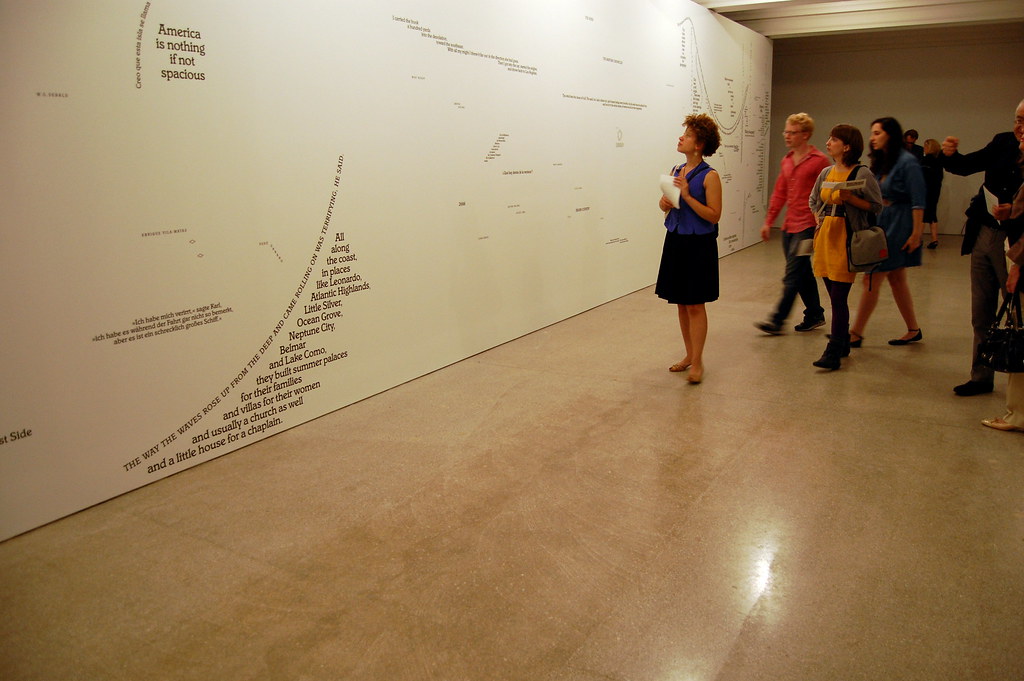
Detail view of Glenn Ligon, Notes on the Margin of the Black Book, 1991–93. Off-set prints and text, 91 off-set prints, framed: 11 1/2 x 11 1/2 in. each; 78 text pages, framed: 5 1/4 x 7 1/4 in. each. In "Glenn Ligon: AMERICA" at the Whitney, New York. Photos: 16 Miles [more]
  • While doing research in the Metropolitan of Museum Art's archives, the director of the Monuments Men Foundation recently discovered a recording of the provocative speech about culture and war that General Dwight Eisenhower delivered at the museum in 1946. Laura Gilbert reports on the fascinating piece and shares the story of the Americans who advocated taking German–owned artworks as spoils of war. [Art Unwashed]
  • Tough choices on Thursday evening: Lucy Lippard is presenting a lecture called "Ghosts, the Daily News and Prophecy: Critical Landscape Photography" at the School of Visual Arts at 7:00 pm, while Lynda Benglis will speak on "Refiguring the Spiritual" up at Columbia at 6:30 pm. [SVA and Columbia]
  • From the museum-spectacle department: on April 14, the Guggenheim will be the site of two performances of Dominique Gonzalez-Foerster's Titanic–inspired T.1912. Tickets are $30, though you can spring for a $200 "First Class" ticket that will get you champagne and dessert. [Guggenheim]
  • Dia will stage simultaneous performances of Robert Whitman's Passport at Riverfront Park in Beacon, New York, and the Alexander Kasser Theater in Montclair, New Jersey, on April 16 and 17. [Dia]
  • Donald Judd's wood boxes at Dia:Beacon versus wood boxes "with some slutty heels on them" in SoHo. [C-Monster]
  • "Jorge Pardo -- recycles midcentury design to no account that I can see. Ruined the floors of the lobby of the old Dia building with 'colorful' tile-work." — Tweet-length descriptions of contemporary artists by John Perreault. [Artopia, via @gregorg]
  • Rainer Ganahl's Bicycling 51st Street and 8th Avenue (2001) is a bird's-eye video of the artist doing just that in a rather dangerous–looking manner. [Ganahl.info]
  • "Studio visits are cultural dates that have the anxieties of making good impressions but also have a specific decorum and sometimes objectives." — Jamie Sterns on the rules and rituals of the studio visit. [Ya Ya Ya]

Friday, November 12, 2010

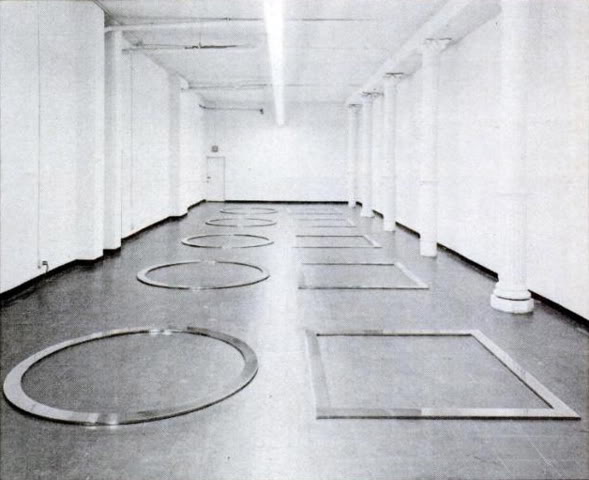
Walter De Maria's "Equal Area Series" in 1977


Walter De Maria, partial view of Equal Area Series, 1976–77. Installed at 19 Waverly Place, 1977. Photo: New York Magazine, October 31, 1977

Back when I was in college, I interned in the education department at Dia:Beacon and gave tours of the museum. When the weather was warm, we would start outside the building, slipping into Robert Irwin's tiny entrance space and then venturing into the sunlit former Nabisco box printing factory. At which point, a look of confusion would often come over the visitors' faces. They were presented with two cavernous rooms, empty except for 12 sets of nearly identical metal circles and squares set in a row: Walter De Maria's Equal Area Series, 1976-77. (Each square is one inch longer than the next, ranging from six feet to seven feet, and the area of each circle matches the area of the square sitting next to it.)

As a way to inaugurate a giant new building and introduce visitors to the sort of phenomenological weirdness scattered throughout the museum, it was a clever curatorial move, albeit an anticlimactic one (which was probably the point). Many people were not fans of the work. At the end of tours, I would often ask the guests which pieces they did not like, and De Maria's shapes almost invariably won that vote. Art historian Terry E. Smith was also not a fan of its placement, writing: "They are not quite large enough to command the space given them. They seem like quoits — silver, yes, but lost in an abandoned playground."

I mention all of this because, while digging around trying to find articles about Walter De Maria the other day, I came across an article by Art News editor Thomas B. Hess in the October 31, 1977 issue of New York about an exhibition of the "Equal Area Series" at 19 Waverly Place in Greenwich Village in 1977. Some very helpful people at Dia informed me that it was a one-off show in an abandoned grocery store, which appears to have been a considerably more intimate space than the Beacon museum. (From Hess's description, it sounds like Smith would have been a fan.) Hess, who made the rounds of a number of Dia-related installations for his piece, shared this epic description of Equal Area Series:
"The closeness of the dimensions sharpens your eye for distinctions, just as a long rest in music alerts you to the faintest sounds. Once you grasp De Maria's serial theme, you can try to visualize the 6-foot square nesting with machine precision inside the 6-foot 10-inch one. When this most obvious of interrelationships is clarified, your eye scans the floor for more subtle ones. You begin to watch circles being squared — the dream of Pythagoras. You approach the mystery of of pi, eternally uneven standard that somehow finds resolution among de Maria's steel propositions.

"Everything develops like clockwork — or, better, like a sonata — from stated theme, through an allegro of increments, to a finale of equilibriums (the equivalent areas). There's a hint of fatality — of inevitabilities."

Hess also visited De Maria's New York Earth Room (1968/1977), 280,000 pounds of dirt spread across the floor of the second-story gallery of Heiner Friedrich (who founded Dia with Philippa Pellizzi — born de Menil — and art historian Helen Winkler) at 141 Wooster Street. Hess, who championed De Maria's work, also wrote this wonderful description of the Room:
"What confronts you in Heiner Friedrich's elegantly dégagé whitewashed shop is a manure-brown mass the prohibits you from entering the premises; it keeps art from being shown or bought there and in general claims all the attention, like a spoiled child in a roomful of adults. It's infantile behavior, and of course the earth suggests anal eroticism, while in the background lurks the manly little chap who, to universal acclaim, pipes up, 'Look, look, the emperor has no clothes.'"

For Hess, the room was dirty and raucous and radical, which is fascinating to read since most of the writing about it more recently — Friedrich made it a permanent installation — has treated it reverentially, as a quiet Zen respite from the bustle of SoHo. (If you have a New Yorker subscription, this 1990 item about the installation is a treat.) And that is how I had always thought of it. However, having read Hess's piece, I can't wait to go visit it again, and see it a bit differently.

Thursday, November 26, 2009

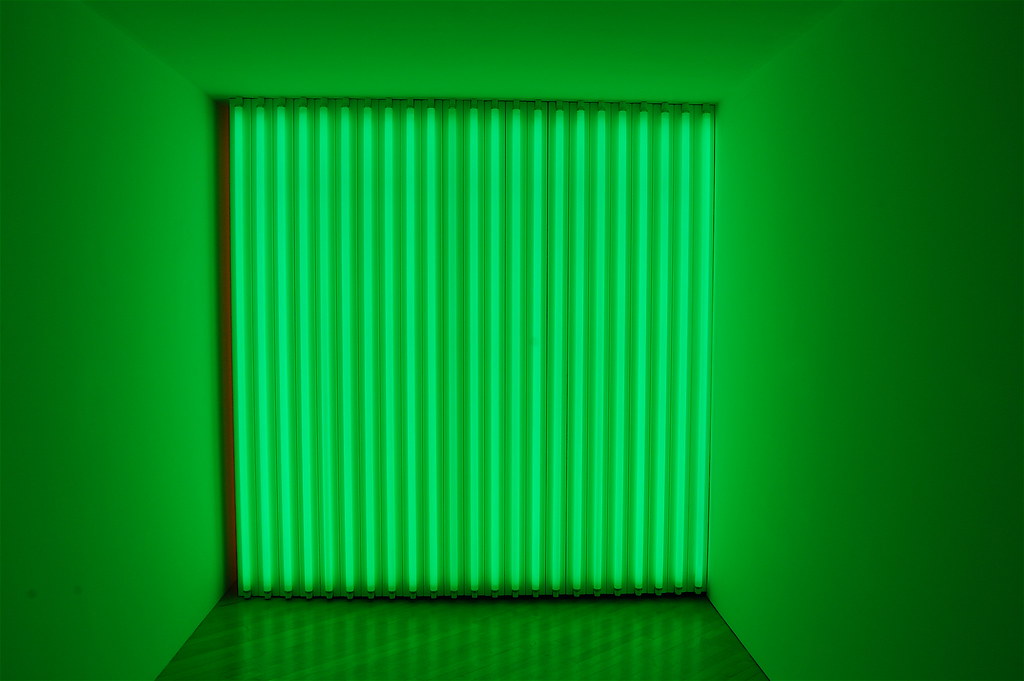
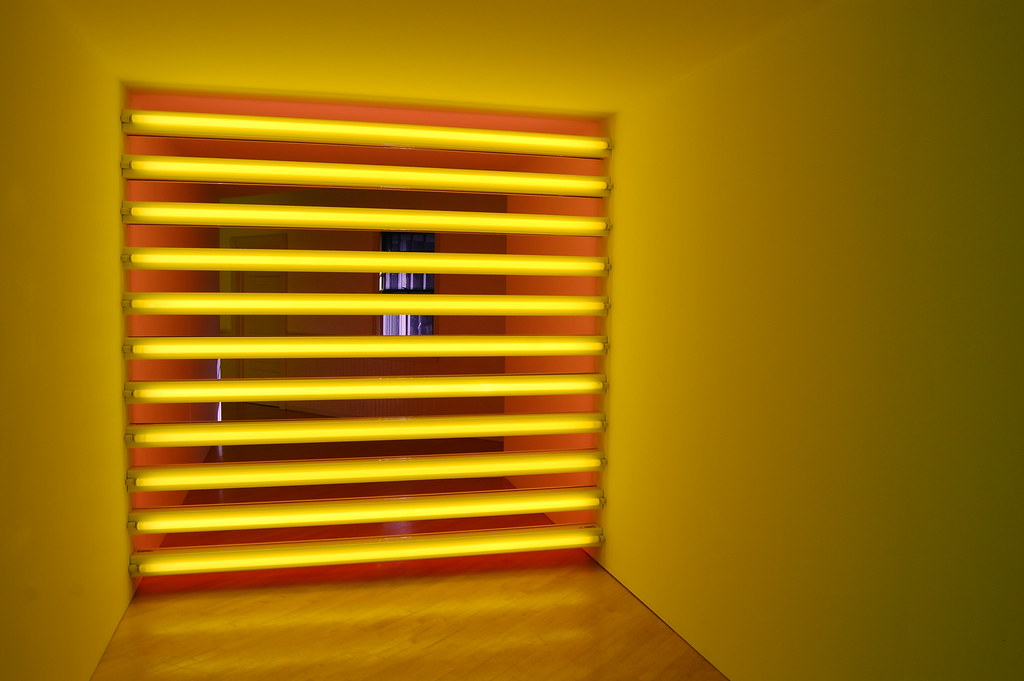
Dia's Dan Flavin Institute [Photographs]


Dan Flavin, untitled (in honor of Harold Joachim) 3, 1977. Photos: 16 Miles [more]

Happy Thanksgiving, America. We'll be back with a nice assortment of surprises on Monday, November 30.

In the meantime, if you find yourself in the New York area, I'm going to highly recommend a trip out to the Bridgehampton to see the Dan Flavin Institute. Located in a 1908 firehouse, it's one of the last remaining relics of Dia's ambitious plan to provide many of its artists with buildings devoted to a selection of their work. (The Fred Sandback Museum closed in 1996.) With work spanning almost two decades, it provides an elegant synopsis of the artist's work in fluorescent light. As winter approaches, and the Hamptons empties out, it's an especially wonderful trip.


Dan Flavin, untitled (to Jan and Ron Greenberg), 1972-73.


Dan Flavin, untitled (to Jan and Ron Greenberg), 1972-73.


Dan Flavin, untitled (to Robert, Joe and Michael), 1975-81.

Monday, March 2, 2009

Upcoming Talks [Calendar]


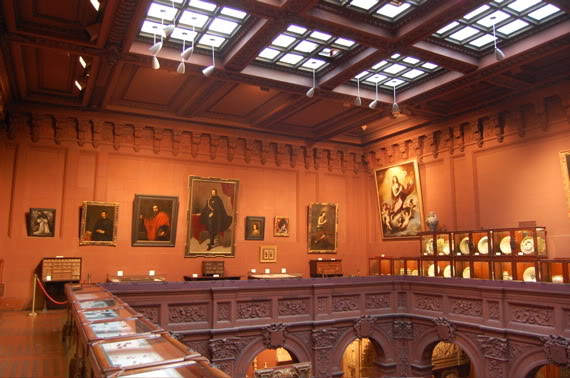
The Hispanic Society of America.  Photo: 16miles

The New York art fairs open up this week.  In the realm of academia, though, there are also big things happening this month.  Here are our picks for the best talks, listed chronologically and to be updated throughout the month.  They include former Guild & Greyshkul partner Sara VanDerBeek on her photography, two Dia events, another in the new Elizabeth Dee-initiated space, X, that used to belong to Dia, and a pair of talks featuring Hal Foster, who easily wins the award for best lecture titles.

International Center for Photography, 1114 Avenue of the America, New York, NY
Wednesday, March 4, 2009, 7:00 pm

Art in General, 79 Walker Street, New York, NY
Saturday, March 7, 2009, 3:00 pm

The Hispanic Society of America, 613 West 155th Street (entrance on Broadway), New York, NY
Saturday, March 14, 2009, 2:00 pm

Isaac Julien on Andy Warhol [$6 regular; $3 student]
Dia Art Foundation, 535 West 22nd Street, New York, NY
Sunday, March 22, 2009, 6:30 pm

X, 548 West 22nd Street, New York, NY
Thursday, March 26, 2009, 7:00 pm

Cooper Union, Wollman Auditorium, Cooper Square New York, NY
Monday, April 6, 2009, 6:00 pm

Tuesday, April 29, 2008

Jerry Saltz on 40 Years of Art in New York City

Jerry Saltz, adopting the chronological format of Foster, Buchloh, Bois, and Krauss in Art Since 1900, has published a list of the major events of the last forty years in New York art. (There's also an abridged version in New York.) There won't be many surprises for anyone who's been paying some degree of attention, but he does mention a few pieces that unfortunately don't get talked about much anymore: Walter De Maria's New York Earth Room, Daniel Joseph Martinez's I Can't Ever Imagine Wanting to Be White, and Alan Sonfist's Time Landscape.

While New York's editors isolate the inclusion of a 1986 Warhol self-portrait as a serious 'argument starter', the real controversy would seem to come from the 2004 entry (emphasis added):
Having opened a 292,000-square-foot space in upstate Beacon, N.Y., the year before, Dia, under director Michael Govan ... unforgivably closes down Dia’s West 22nd Street building. Thus, Govan oversaw the loss of the first space in Chelsea -- one of the most important exhibition sites in the world. This is the most lamentable misstep in New York exhibition history.

Even if you can't get endorse that type of hyperbole, there are still enough great moments to make it worth reading. A choice anecdote from Saltz's 1993:

At a dinner given for Anselm Kiefer, after his opening at Marianne Goodman Gallery, raw food is served to the crème-del-a-crème of the art world as they sit at long white tables atop a floor covered with white sand, as actors mimed dance. The decadent dinner marks the last gasp of 1980s hubris. As we entered the dining hall, artist David Salle looked at me and said, "They’re going to kill us all." And then he left.

Saturday, March 1, 2008

A Post-Weiss, Post-Riggio, Post-Govan Dia

The resignation of Jeffrey Weiss from Dia was announced via e-mail this morning, another hard hit for a foundation that has seen many of them, and the Times published fairly extensive coverage. It's impossible not to admire his honesty in the press release and Times coverage, in which he basically says that he doesn't think he was an ideal fit for the position of rebuilding Dia's finances and reestablishing a position in New York City.

From the Times: “It took me too far away from curatorial and scholarly work. ... I had an idea that being director of Dia would be different because it is such a small place.” The tricky issue with Dia seems to be this very notion of its scope: it's always been a fairly lean operation that's tackled and achieved idiosyncratic and oftentimes wonderful things. It moved into Chelsea before everyone else, it built and maintains Dia:Beacon relatively cheaply, and has provided vital (if varying and selective) support for contemporary art activities for over three decades. These incredible successes, coupled with the rise of the contemporary art market over the past decade, have set almost unbelievably high expectations for the institution.

What I've always loved about Dia (and - full disclosure - I used to intern for them in a very minor capacity) is their willingness to fund and support the bizarre and unusual. Keeping Walter De Maria's New York Earth Room, The Broken Kilometer, and Lightning Field, not to mention Michael Heizer's City isn't cheap (in terms of both maintenance and opportunity costs for that real estate). The pressures coming from many corners of the art world seem to demand that Dia starting thinking big or go home, an attitude that their board hasn't exactly repudiated, always openly stating their desire to have a permanent foothold in New York City.

After banking almost $40 million on their recent sale of their famed Chelsea building, Dia has the means to start a legitimate fund raising campaign for the space in New York. Indeed, the New Museum pulled off just such a triumph, so we know it's possible (the immediate economic environment perhaps notwithstanding). It's going to need to raise big money if it wants to grasp those enormous ambitions, though, and with Riggio out of the picture (and no major donors immediately in view) that's going to be tricky. Ultimately, it seems they need to develop a coherent rationale for why they need the space. Are they trying to serve as an almost-permanent temple for the group of minimalists and conceptualists that rose to fame in the 1960's and 1970's that their founders collected (and are being remembered as the newest - and perhaps last - Greatest Generation in art history) that their founders collected, or do they want to actively engage upcoming and mid-career artists as they've done recently with the video work of Sadie Bennings and the wonderful Francis Alÿs exhibit at the Hispanic Society of America? For now, I'm hoping for the second option. (It also seems like it would be easier to raise money for these more public activities, though that's conjecture.)

Tyler Green points out that three major New York art centers are now in need of directors: the Met, the Guggenheim, and Dia. The first two are guaranteed to emerge from their search intact (and, in the case of the Guggenheim, almost any shift would be an improvement of their current direction). But Dia is in a more precarious position. While the Times and many art professionals still focus their attention on its every move, it's a name that hardly has the cachet of many of its 'competitors' (particularly the New Museum, after its all-out media blitz). If Dia's board decides to pursue the goals that so many are hoping they will they're going to have to act quickly. Surely there must be some abandoned warehouses sitting across the East River waiting to be snatched up.

Friday, February 15, 2008

Larry Gagosian

From Christopher Knight's review of the Broad Contemporary Art Museum (BCAM) at the Los Angeles County Museum of Art (LACMA):
Of 176 works on three floors, 139 are by artists who have shown with the same gallery -- Gagosian, commonly considered today's leading commercial powerhouse. That's nearly 80%. BCAM turns out to be GCAM. Such a narrow vision feels insecure, more investment deal than adventure.

Quality journalism. It'd be interested to see a breakdown of other collections based on institutional / commercial representation over the years. What percentage have been affiliated with Castelli or the Dia Foundation, and so forth?